The 8-Second Swing: How Vollering's Late Attack Just Rewrote the Economics of the Tour de France Femmes
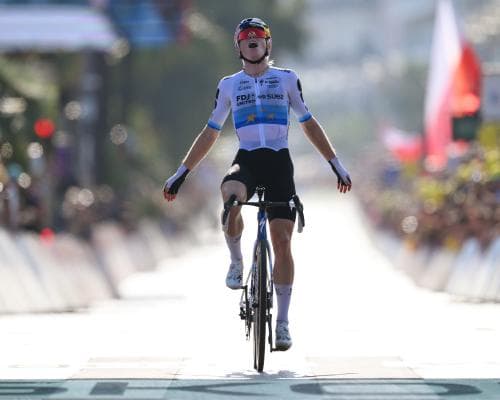
In the high-stakes world of elite sport, fortunes are often decided in seconds. But in the Tour de France Femmes, those seconds are now worth more than ever. Demi Vollering, the Dutch powerhouse for FDJ United-Suez, didn't just win stage eight—she rewrote the financial script of the entire race with a brutal, late-race attack that left her rival Kasia Niewiadoma-Phinney gasping and the yellow jersey hanging by an eight-second thread. For anyone who thinks cycling is just about pedaling, think again. This is a story about asset allocation, risk management, and the kind of high-velocity decision-making that would make a hedge fund manager blush.
The numbers are stark: Vollering leads the general classification by a mere eight seconds going into tomorrow's final stage. That's less time than it takes to tie a shoelace, yet it represents a chasm in terms of prize money, sponsorship leverage, and legacy. The difference between first and second in the Tour de France Femmes isn't just a trophy—it's a payday that can run into the hundreds of thousands of euros, not to mention the multiplier effect on future contract negotiations and endorsement deals. For a sport still fighting for equal prize money and visibility, every second is a line item on a balance sheet that could tip the scales for an entire team's budget.
Let's break down the mechanics of the move that shook the peloton. This was supposed to be a sprinter's stage—a day for the fast-twitch muscle fibers to shine. Instead, Vollering and her FDJ United-Suez squad turned it into a chess match on wheels. With 1.2 kilometers to go, Vollering launched a searing attack on the final climb, catching Niewiadoma-Phinney off guard. The Polish rider was visibly furious at the finish, accusing Célia Gery of blocking her into the barriers—a move she called "childish" and a breach of fair play. Whether that's gamesmanship or outright obstruction, it doesn't matter to the timekeepers. Vollering crossed the line 17 seconds ahead of Niewiadoma-Phinney, who finished third behind Elisa Longo Borghini. That time bonus, combined with the stage win, flipped the entire classification.
The financial ripples here are enormous. Vollering's team, FDJ United-Suez, is backed by a French lottery and a utilities giant—both of which are now seeing their branding plastered across every highlight reel, news article, and social media post. An eight-second lead is the kind of narrative gold that sponsors pay top dollar for. It's the difference between a team being a footnote in the race's history and being the headline act. For Niewiadoma-Phinney's Canyon/Sram squad, the loss is more than just a jersey; it's a potential hit to their visibility in a crowded market where every euro of sponsorship is fought over with the intensity of a final-kilometer sprint.
This isn't just about cycling—it's a signal for how wealth is built and protected in the broader sports investment landscape. The ultra-wealthy who pour capital into teams, from private equity firms to billionaires like Jim Ratcliffe (who owns INEOS Grenadiers), are watching this race with the same intensity as a quarterly earnings report. The volatility of an eight-second lead is a reminder that in sports, as in markets, the biggest returns come to those who can time their moves perfectly. Vollering's attack was a calculated risk—a bet that the legs would hold, the gap would stick, and the bonus seconds would be enough. It paid off, but only just. Tomorrow's final stage is the ultimate stress test: one false move, one moment of hesitation, and the entire position could be wiped out.
For the wealthy, the lesson is clear: never underestimate the value of a single decisive move. Whether it's a late-stage attack on a mountain climb or a contrarian bet on a beaten-down asset, the winners are those who can absorb the risk and execute with precision. The eight-second lead is now the most valuable asset in women's cycling—a tiny, fragile cushion that could be worth millions in career earnings and team valuations. As Vollering rolls into the final stage, she's not just riding for glory; she's riding for a payday that will echo through the sport for years. And for Niewiadoma-Phinney, the math is brutal: she needs to find nine seconds somewhere, anywhere, or watch the yellow jersey—and all its financial rewards—slip away. In this race, as in any market, the last move is often the one that matters most.