The Carabao Cup's Billionaire Playground: How Football's 'Lesser' Trophy Moves Serious Money
There's a scene from the Carabao Cup's first round that tells you everything about the modern football economy: Burnley, owned by the Alan Pace-led ALK Capital, needing penalties to see off League Two's Notts County. On the surface, it's a footnote in the fixture list—a Championship side scraping past a minnow. But for the money minds watching, it's a reminder that every round of this 'lesser' cup is a line item on a billionaire's balance sheet. The prize fund is modest—winners pocket around £100,000 per round—but the real capital is in the exposure, the broadcast fees, and the chance to test squad depth that's been bought with leveraged debt and private equity cash.
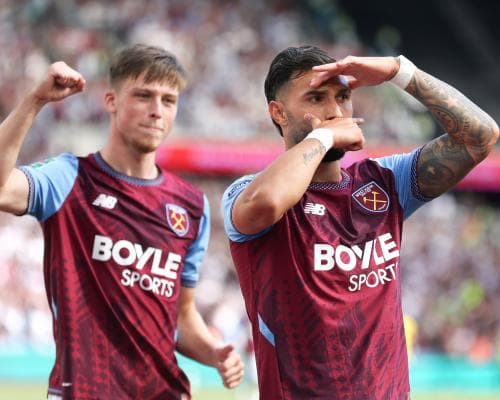
The tournament's first round was a festival of shootouts—AFC Wimbledon, Reading, Millwall, Shrewsbury, Doncaster, Burnley, and Preston all advanced via spot-kicks—but the numbers behind the drama are anything but trivial. West Ham, owned by Czech billionaire Daniel Křetínský (net worth estimated at $9.3 billion), needed a comeback to beat Portsmouth 3-1, a result that keeps alive their hopes of a deep run and the accompanying £2 million-plus in potential broadcast revenue. For clubs like Burnley, the math is starker: a single televised tie can cover a week's wage bill. The tournament is a low-stakes lottery ticket for the wealthy, but for the clubs themselves, it's a chance to balance books and showcase assets to the global market.
The mechanics are pure financial engineering. Prize money is tiered—losing in round one nets you nothing, but winning three rounds can bring in £300,000, plus a share of gate receipts. For a League Two club like Salford City—owned by the Class of '92, including Gary Neville and David Beckham—a penalty shootout loss to Shrewsbury means lost revenue from a potential second-round tie against a Premier League giant. That's the real prize: a home fixture against Liverpool or Manchester City can generate £1 million in gate receipts and global broadcast fees. The wealthy understand this; they're not buying football clubs for the trophies, but for the cash-flow optionality and the brand halo that comes with a cup run.
The heritage angle is equally rich. This competition, first played in 1960, has become a petri dish for billionaire experimentation. Take Leicester City, owned by Aiyawatt Srivaddhanaprabha (net worth $2.5 billion), who edged Northampton 1-0—a result that protects their investment in a squad that cost £200 million to assemble. Or consider the Walker family's Manchester City, whose former player Kyle Walker smashed in the deciding penalty for Burnley—a nod to how the tournament's history is intertwined with the wealth that now defines it. For the ultra-rich, owning a club is a passion play, but the Carabao Cup is where they test their managers' ability to rotate squads without bleeding value.
What does this signal for markets? The Carabao Cup is a leading indicator of football's financial stratification. The 'big six' clubs often field weakened teams, treating the trophy as a nuisance, while the mid-tier clubs—like West Ham and Burnley—treat it as a revenue opportunity. The trend is 'up' for the tournament's commercial value: broadcast rights for the EFL (which includes the Carabao Cup) rose to £935 million in 2023, a 35% increase from the previous cycle. For investors, that's a signal that football's secondary competitions are becoming premium assets, ripe for monetization through streaming deals and sponsorship. The wealthy aren't just buying clubs; they're buying into a media ecosystem where every penalty shootout is content, and every upset is a click.
Looking ahead, the second round draw will be the next catalyst. For the billionaires in the boardroom, the question isn't who lifts the trophy—it's who can turn a cup run into a springboard for promotion, a player sale, or a shirt sponsorship bump. The Carabao Cup may be the 'lesser' trophy, but for the smartest capital in football, it's a proving ground for financial discipline. The next time you see a penalty shootout, don't just watch the drama—watch the balance sheets. The real winners are the ones who've already hedged their bets.
More in MONEY