The World Cup as Ultra-Luxe Spectacle: Why the 2026 Tournament Was Really an Invitation to Do It All Again
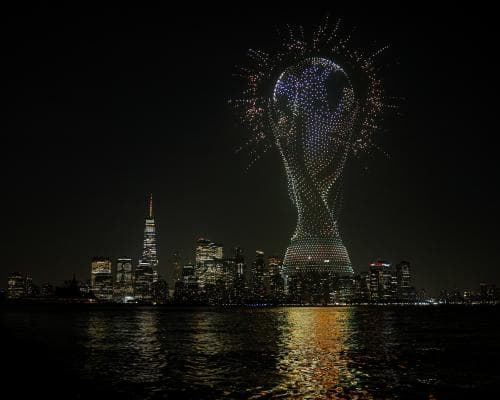
You do not, under any circumstance, have to hand it to FIFA. But you do have to acknowledge that the 2026 World Cup was a triumph of the very thing that defines luxury travel: the art of making the impossible feel inevitable. The soccer was, by most accounts, interesting and dramatic but rarely great—yet that hardly mattered. Because for the crowd that matters most to this desk—the one that books private jets, charters superyachts, and secures suites in stadiums where the air is thick with champagne and the view is always perfect—the 2026 tournament was less about the beautiful game than about the beautiful game of being there.
Consider the numbers. The whole thing made vast sums of money for its organizer—more, by an order of billions, than even FIFA itself had projected. But for the luxury traveler, the real currency was access. The expanded field of 48 teams worked out fine, as the worst teams were, by and large, not the debutants. And now, in rooms filled with the sportocrats who shape the global calendar, a further bloating to 64 teams is being talked about less as a fringe idea than as a natural next step. For the ultra-wealthy, this is not a horror—it is an invitation. More matches mean more opportunities to parachute into a host city, stay at the best hotel, eat at the chef's table, and leave before the crowds get thick.
The Americanization of the World Cup was, in many ways, a gift to the luxury traveler. The countdowns, the half-time shows, the championship rings, the commercial breaks, the "let's get ready to rumble" guy—all of it was designed to fill every second with spectacle. And for those who could afford the premium experience, every second was curated. The hydration breaks, controversial and mandatory, were a masterstroke of branding. FIFA claims it made no additional revenue from these glorified commercial breaks, but you can be absolutely certain that the value created for broadcasters will be brought up in the next round of rights negotiations. For the traveler who values time above all else, these breaks were a moment to refresh, to network, to be seen.
What does this signal about the future of luxury travel? It signals that the mega-tournament is no longer just a sporting event—it is a movable feast of exclusivity. The wealthy no longer want to simply watch; they want to be part of the narrative. They want the backstage pass, the private suite, the after-party that never makes the news. And FIFA, for all its flaws, understands this better than any other governing body. The 2026 World Cup was a proof of concept: that you can take a global event, super-size it, and still sell the top-tier experience for a premium that would make a Monaco hotelier blush.
Where do the wealthy go next? They go to the next edition, wherever it may be. They go to the 2030 tournament, which will span three continents, or to the 2034 edition, which will likely be in Saudi Arabia. They go not for the soccer—though they will enjoy it—but for the feeling of being at the center of something that the rest of the world can only watch on a screen. The 2026 World Cup's legacy is not a trophy or a memory. It is an invitation to do it all again, bigger, better, and more exclusive. And for those with the means, the answer is always yes.