The Billionaire’s Mudflat: Why Germany’s East Frisian Islands Are the World’s Most Exclusive Quiet Zone
The crackling sound is barely audible. It’s the rustle of a forgotten sweet wrapper, the fizz of a half-opened bottle of Champagne. But this is no party. I’m ankle-deep in cold, grey mud on the Wadden Sea flats off Norderney, one of Germany’s East Frisian islands. My guide calls it the Wattknistern—a natural symphony played by tens of thousands of mud shrimp. For the ultra-wealthy, this is the new ultimate luxury: a silence so profound that the earth itself speaks.
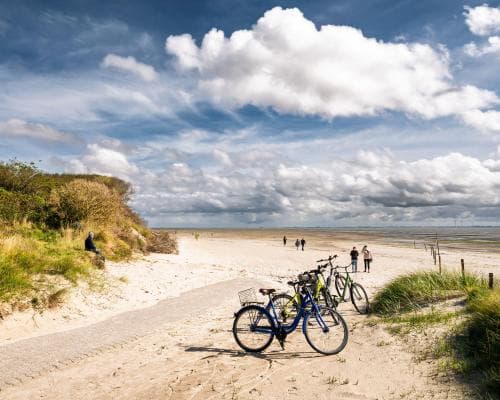
Here, on a Friday evening, the town’s bars throb with music. But fifteen minutes south, along a bike lane through grassy dunes, the world changes. You leave the sound of money—the clink of glasses, the hum of a private helicopter—and enter a Ruhezone, a highly protected quiet zone. This is the Wadden Sea, a UNESCO World Heritage site and a national park since 1986. Seven inhabited islands form this chain: Borkum, Juist, Baltrum, Langeoog, Spiekeroog, Wangerooge, and Norderney. Each has its own character—Juist with its horse-drawn carriages, sleepy Spiekeroog with its red-brick history—but all share the same rare currency: emptiness.
The numbers are staggering. Over fifty miles of tidal flats, millions of migrating birds, grey seals, and a biodiversity that rivals any private nature reserve. But the real wealth lies in what you cannot count. The feeling of standing on an exposed seabed at low tide, watching orange-beaked oystercatchers scurry and spoonbills wade through shallow water. The moment you flip over a cluster of wild oysters and startle a crab that raises its pincers like a tiny gladiator. This is not a safari you book; it’s a private audience with the planet.
Norderney was one of Germany’s first North Sea seaside resorts. Its historic villas were built for the health benefits of briny air—a 19th-century version of a wellness retreat. Today, those same villas sit alongside modern havens like Inselloft Norderney and Michelin-recommended Oktopussy, where summer scallops arrive with caramelised miso-cauliflower purée. My personal sanctuary became Marienhöhe, a dune-top pavilion built over a hundred years ago, where I ate delicately battered fish with warm potato salad. The price? A fraction of a St. Tropez lunch. The experience? Priceless.
What does this signal about wealth and taste? The old money chased marble and gold leaf. The new money chases quiet. The East Frisian islands are the anti-Hamptons, the anti-Saint Barths. Here, status is not measured by the length of your yacht but by how far you can walk without hearing a car. (Only two islands permit cars; Norderney is one, but the best way to explore is still by bike.) You zoom past the Weiße Düne beach, past the 1874 lighthouse, until you hit a sign that says: no further. That sign is the ultimate status symbol. It means you have arrived at a place where even the most determined hedge fund manager must stop.
Looking forward, this is the frontier of luxury travel. The ultra-wealthy are increasingly seeking destinations that offer not just privacy, but planetary silence. The East Frisian islands deliver that in spades—miles of mudflats, marshes, and the crackling whisper of a million shrimp. The only question is whether you’re ready to trade your helicopter for a bicycle, your penthouse for a dune-top pavilion, and your noise for the sound of the earth breathing. If you are, the mud awaits.
The Experience
To walk the Wadden Sea mudflats at sunset, book a private guide through the Norderney tourist office and request the Ruhezone permit for the most exclusive access.