The Ultimate View from the Bridge: A Russian Warship Off the Cornish Coast
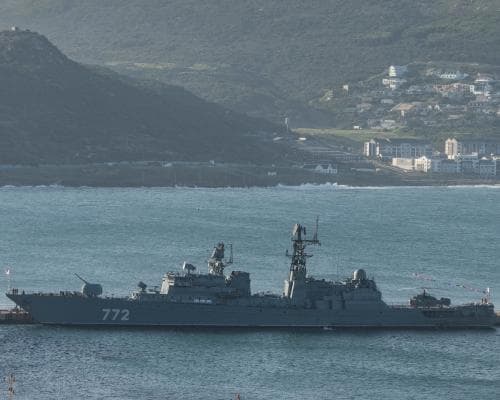
Imagine the morning light breaking over the English Channel, the sea a sheet of hammered pewter. You are aboard a 60-metre motor yacht, sipping a perfectly pulled espresso, when the captain’s voice comes over the intercom: a Russian warship, the Neustrashimy, has just announced it will fire its main cannon. Not in the Black Sea. Not in some distant, sanctioned exercise zone. Forty-five miles off the coast of Devon. This is not a scene from a Tom Clancy novel. This is a Tuesday in late March, and for a select few with the right connections and a taste for the extraordinary, it is the most exclusive event of the season.
The Neustrashimy—a 130-metre frigate armed with a 100mm cannon capable of spitting 50 rounds a minute—conducted a 30-minute firing drill at 9.30am in international waters south of the UK. The patrol vessel HMS Tyne, which had been tracking the Russian ship, repositioned five miles away to allow the exercise. For the ultra-wealthy who have grown bored of private islands and heli-skiing, this is the new frontier: witnessing, from a safe and privileged distance, the raw mechanics of global power. Think of it as a live-action documentary, with a champagne flute in hand and a stabilised deck beneath your feet.
The access is, of course, the point. This was no public spectacle. The Neustrashimy’s sudden announcement—a short-notice test that even caught British defence sources off guard—meant that only those already positioned in the Channel could observe. And who is positioned there? Yacht owners, charter guests, and the occasional billionaire with a taste for maritime strategy. The frigate’s 100mm cannon, capable of reaching targets 20 kilometres away, fired across a stretch of water that is ordinarily a thoroughfare for superyachts bound for the Scilly Isles or the French Riviera. To be there, to feel the concussive thud through the hull of your vessel, is to understand that luxury is no longer about comfort alone—it is about proximity to history.
What makes this moment so rare is its sheer audacity. Russian warships have been a constant presence in British waters throughout 2026—the Admiral Grigorovich fired warning shots near a pleasure yacht south of the Isle of Wight just last month—but a live-fire exercise at such close range is virtually unprecedented. British defence sources admitted they could not recall the last time a Russian vessel test-fired its main cannon so near the UK. The Channel is one of the busiest commercial waterways in the world; firing exercises are usually conducted with extreme caution. That the Neustrashimy chose to do this now, on the day Andy Burnham became prime minister, is a piece of geopolitical theatre that the well-heeled traveller can now book a berth to witness.
For the luxury traveller, this signals a shift in the very definition of exclusivity. The ultra-wealthy have already conquered the obvious: private jets, remote lodges, bespoke safaris. What remains is the unscripted, the dangerous, the diplomatically charged. Charter brokers in Monaco and London are already fielding discreet inquiries: Can we arrange a viewing of the next Russian naval exercise? Can we get close enough to see the Gatling guns without being mistaken for a target? The answer, for now, is yes—if you have the right contacts, a vessel with a military-grade AIS transponder, and a captain who knows the difference between international waters and a red line.
Where do the wealthy go next? Not to a spa in the Maldives. Not to a chalet in Gstaad. They go to the edge of the map, where the rules are written by admirals and foreign ministers. They go to the English Channel in spring, when the sea is cold and the air smells of salt and cordite. They go to watch a frigate fire its cannon, because the ultimate luxury is not a room with a view—it is a view of the world’s most powerful forces, playing out in real time, with you as the sole, silent witness.