The Ultimate VIP Pass: What It Really Takes to Command the Backstage Kingdom
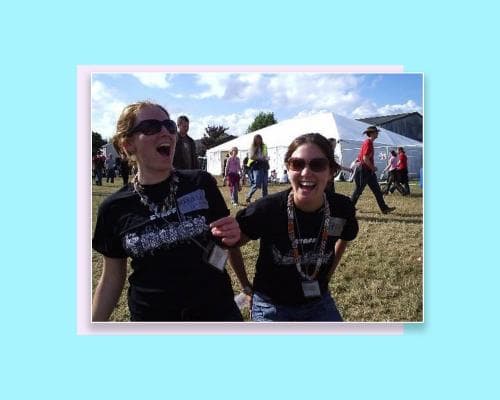
Power doesn’t always wear a suit. Sometimes it’s a 22-year-old Australian in a muddy field, clutching a walkie-talkie in one hand and the keys to a shipping container full of vintage Champagne in the other. That was me in 2004, working artist liaison at a British music festival. And I have never felt more powerful before or since. For the ultra-wealthy, access is the ultimate currency. But true access—the kind that lets you decide whether a headliner gets their preferred rosé or a golf buggy after an ill-advised mushroom trip—is a rarefied art. This is the story of what it takes to orchestrate chaos into luxury, one rider request at a time.
My friend Hannah and I were Australians living in a shared London house, grinding through graduate jobs by day and chasing festival season by summer. Our role was deceptively simple: manage the backstage dressing rooms, keep the artists happy, and maintain order. In practice, it meant interpreting a spreadsheet of “rider requests” that looked like a fever dream of alcohol brands. I remember staring at the list and exclaiming, “Wow, look at all the booze the band Contingency has ordered!” We later discovered Contingency wasn’t a band at all—it was the staff allocation. That sea container held our secret power: the ability to grant or withhold the libations that fueled the entire backstage ecosystem. The pay was low, the shifts were 14 hours, and the currency was charm. Weaponized cheer, I called it. A smile that could calm a frazzled manager or redirect a wandering drummer.
The craftsmanship of this world isn’t in the music—it’s in the invisible choreography. Every detail mattered, from the temperature of the rider beer to the precise placement of the rider snacks. Band members themselves were often gentle, even kooky. But their managers? Pushy, demanding, and occasionally absurd. One manager insisted that the lead singer of a pop group—due to headline the main stage—couldn’t walk the short distance from her tent to backstage. “She’s done mushrooms and doesn’t think she can walk,” he told me. I said no to the golf buggy. That was my call. In that moment, I held more real power than any hedge fund manager. The rarest commodity wasn’t the booze or the buggy—it was the ability to say no with a smile, and make it stick.
For the festival crew, this was a lifestyle. Some were professional roadies, traveling year-round. Others, like Hannah and me, took annual leave from our graduate jobs to work the summer circuit. It was a cost-neutral way to experience the electric hum of live music while meeting everyone from the district kazoo orchestra (10 a.m. slot, bless them) to the likes of Bonobo, Fat Freddy’s Drop, Hot Chip, and Four Tet. These artists were kind, polite, and utterly unassuming backstage. I’d watch them eat chocolate bars in dressing-room corners, unrecognizable, then transform into gods the moment they stepped on stage. Sia performed on my stage when she was still “just” a jazz singer. She went on to become a multimillionaire writing for Rihanna and Beyoncé. I saw the spark before the flame.
What does this signal about wealth and taste? That the most exclusive experiences are not the ones you can buy—they are the ones you earn through grit, wit, and a willingness to sleep in a tiny tent after midnight prowls through the festival grounds. The backstage area is the festival’s hypocentre, a place where geeky musicians become stars, and where the children of famous artists muck around nonchalantly as if it’s just another Tuesday. For the ultra-wealthy, this kind of access is the holy grail: not a VIP box, but the ability to shape the experience itself. It’s the difference between watching a show and being part of its engine.
Looking forward, the festival economy is evolving. The lines between public and private, performer and patron, are blurring. For those who can afford it, bespoke festival experiences now include private chef tents, curated artist meet-and-greets, and even the chance to sponsor a stage. But the true connoisseur knows that the real magic lies in the chaos—the walkie-talkie, the sea container, the 4 a.m. camaraderie. That kind of power can’t be bought. It can only be earned, one smile at a time.
The Experience
For a taste of backstage alchemy without the 14-hour shifts, inquire about our private festival concierge service—curated access to the world’s most exclusive music events, from Glastonbury to Coachella.