Afriland Properties Names Agatha Obiekwugo Chairman as Lagos Real Estate Giant Reshuffles Leadership
Afriland Properties appoints Agatha Obiekwugo as board chairman, replacing Emmanuel Nnorom after a decade-long tenure.
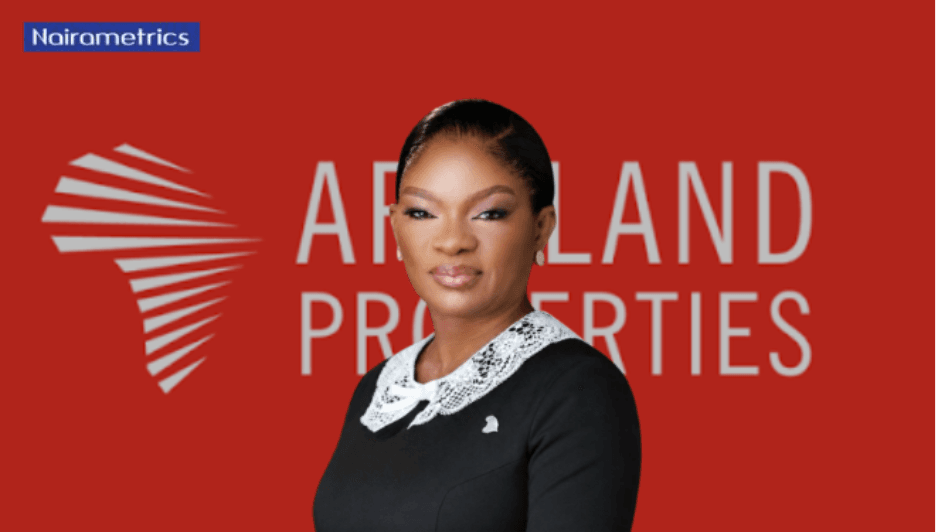
For anyone tracking the quiet mechanics of Nigerian capital, a boardroom change at Afriland Properties is never just a name swap. It is a signal about who gets to steer one of Lagos's most visible real estate players through an era where concrete costs more, credit is tighter, and the country's property market has become a battlefield of patience and deep pockets. So when Afriland Properties Plc announced on Monday, August 31, 2026, that Agatha Obiekwugo would take over as Chairman of its Board of Directors, the move landed with the weight of a strategic pivot, not a routine formality.
Obiekwugo replaces Emmanuel Nnorom, a man who held the chairmanship for over a decade after joining the board in 2014. The company's statement framed Nnorom's exit as a retirement, and the board expressed gratitude for his leadership. But the succession is equally about what Obiekwugo brings to the table. She has been a Non-Executive Director since October 2018, sitting on the Finance, Risk and General-Purpose Committee, as well as the Nomination, Audit and Governance Committee. That committee history matters: she has spent years inside the company's risk architecture and governance machinery, which means she does not need a learning curve to understand where the bodies are buried or the balance sheets strained.
To outsiders, Afriland Properties might look like just another Nigerian developer. But in the local context, it is a bellwether. The company has been expanding its property portfolio and sharpening its domestic position, even as the broader Nigerian real estate sector wrestles with brutal headwinds: construction costs have climbed steeply, financing expenses remain elevated, and demand patterns have shifted as currency volatility and inflation squeeze both corporate tenants and individual buyers. A chairman with Obiekwugo's profile — more than 30 years across banking, commerce, information technology, consulting and oil and gas — signals that Afriland is betting on governance discipline and cross-sector financial acumen rather than bravado.
Her appointment, announced through Managing Director and CEO Azubike Emodi, is a continuity play disguised as a change of guard. Emodi's statement leaned heavily on her prior involvement in board committees, suggesting that the company values institutional memory at a time when external shocks demand internal stability. In a market where many Nigerian firms have struggled with succession crises or leadership vacuums, Afriland's orderly handover is itself a statement of maturity. It also underscores a broader trend across Africa's corporate landscape: boards are increasingly turning to operators with diversified experience, especially women who have proven their mettle in male-dominated sectors like oil and gas and banking.
For international readers who follow African wealth, this matters beyond one company's org chart. Nigeria's property sector is a proxy for the health of its middle class and its institutional investors. When a firm like Afriland chooses a chairman with deep risk-management credentials, it is acknowledging that the era of easy land grabs and speculative builds is over. The future belongs to firms that can navigate high-interest environments, manage construction inflation, and still deliver returns to shareholders who have grown wary of flashy projects with weak fundamentals.
Obiekwugo's rise also reflects a quiet but real shift in Nigerian corporate governance: the old boys' network is no longer the only route to the top. Her appointment is not a token gesture; it is a calculated bet on competence. As she assumes responsibility for overseeing the board's strategic direction, the market will watch whether Afriland can convert its existing portfolio into resilient cash flows, or whether the headwinds prove too strong even for a veteran operator. The next few quarters will tell whether this handover is the beginning of a new chapter or just a well-managed continuation of the same struggle. Either way, for those who track capital in Africa, this is a name to remember — and a boardroom to watch.
More in MONEY