Africa's real investment bottleneck isn't capital—it's governance, says UBA's Elumelu
Tony Elumelu tells Norwegian-African summit that weak governance, not lack of funds, keeps investors away from Africa.
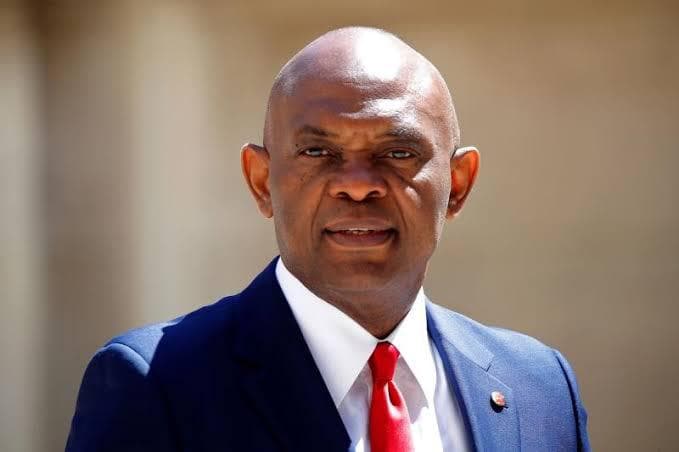
Listen closely when a man who runs one of Africa's largest banking groups tells a room of Nordic investors that the continent's problem isn't money—it's the way it is governed. Tony Elumelu, chairman of United Bank for Africa (UBA), used the Norwegian–African Business Summit in Oslo to deliver a blunt message: Africa has the resources, the youth, and the ambition, but it keeps scaring away the very capital it needs because too many governments still operate as clubs for the connected few.
The core of his argument was simple, and it cut through the usual talk of infrastructure gaps and currency risks. "Why is Africa not the preferred destination? To me, it is governance, to a large extent," Elumelu said. He pushed further, telling African leaders that the fix is not more aid packages or flashy summits, but the unglamorous work of making rules fair, transparent, and predictable. "Create the right operating environment, improve governance standards, and people will come to invest in your environment," he added. For an outsider, this might sound like boilerplate corporate-speak. But for anyone tracking capital flows into Africa, it is a rare moment of candor from a man who has built a fortune navigating exactly these systems.
Elumelu is not a detached commentator. He is the founder of Heirs Holdings, the force behind UBA's presence in 20 African countries, and the man whose name now defines a generation of young entrepreneurs through his $100 million empowerment program. When he speaks about governance, he speaks from the inside—he has seen what happens when a banking license is granted on merit versus who you know. His warning against systems that "confer undue advantage or benefit to some, to the exclusion of others" is a direct reference to the patronage networks that still shape business climates from Lagos to Nairobi. For international readers, this is the invisible tax that never appears on a balance sheet: the cost of navigating opaque regulation, the risk of a policy reversal when a minister changes, the quiet understanding that your competitor's cousin works at the regulator.
His Oslo speech lands at a moment when African governments are competing harder than ever for foreign direct investment, yet the numbers tell a sobering story. Global investors have been circling the continent's energy transition and tech boom, but deal flow remains patchy, and much of it concentrates in a handful of markets with relatively stronger institutions. Elumelu's point is that the bottleneck is not global liquidity—it is the willingness of African leaders to surrender the discretion that lets them favor insiders. He framed this as an existential choice: continue with systems that enrich a few and scare off the rest, or embrace the transparency that turns a one-off investment into a sustained flow. "When we have more transparency in governance... then you get to genuinely talk about transforming Africa in a sustainable fashion," he said.
There is a personal thread here too. In August, Elumelu shared a story on X about being made a bank branch manager at 27, appointed by HRM Ebitimi Banigo during Nigeria's banking sector overhaul. He faced deep skepticism because of his age, yet he led a branch of the emerging AllStates Trust Bank and proved that capability, not pedigree, drives results. That early lesson—that merit can win if the environment allows it—has become the spine of his leadership philosophy and his advocacy for youth. It is no accident that the same man who fought for a shot as a young banker now argues that governance is what gives the next generation their shot.
What Elumelu is really saying, beneath the summit diplomacy, is that Africa's wealth story will not be written by commodity prices or diaspora remittances alone. It will be written by whether governments can convince investors that the rules will not change mid-game. For the international reader who watches African markets from afar, this is the key signal: the continent's biggest homegrown capitalist is telling his own leaders that the ball is in their court. The capital is ready, the projects are ready, the people are ready. What remains to be seen is whether the governance will catch up.


