Afreximbank’s $1.35bn bet on Dangote Refinery rewires Africa’s energy future
Afreximbank leads $1.35bn of a $4bn syndicated loan for Dangote Refinery, refinancing Africa's largest industrial bet.
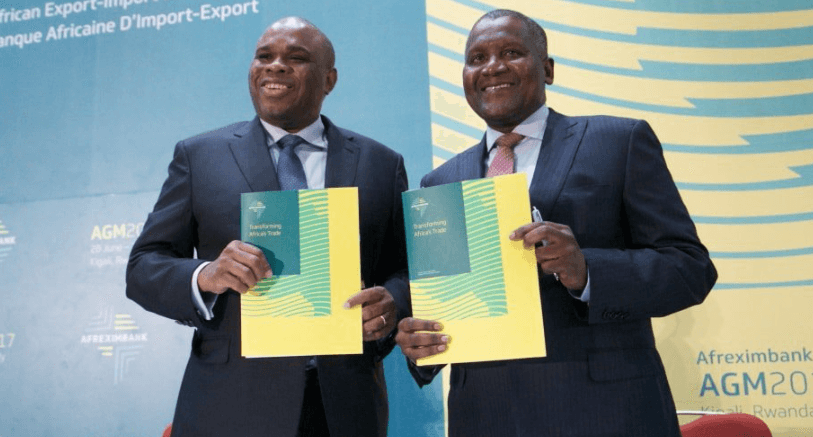
There is a moment in every continent’s economic story when the old rules quietly stop applying. For Africa, that moment may have just been signed in Cairo, where the African Export-Import Bank committed $1.35 billion of its own money to refinance the Dangote Petroleum Refinery — a single-train behemoth on the outskirts of Lagos that processes 650,000 barrels of crude a day. This is not merely a loan. It is the largest share of a $4 billion syndicated facility, one of the biggest in recent African financial history, and it is being led not by a Western bank or a Gulf sovereign fund, but by an African institution insisting that the continent’s development be financed from within.
The deal, announced on Afreximbank’s website over the weekend, sees the bank act as Mandated Lead Arranger for the syndication, with its own $1.35 billion contribution dwarfing the participation of other lenders. The money refinances capital already spent on building the Dangote Refinery and Petrochemicals Complex — the largest single-train refinery anywhere on the planet — and it also eases the operational strain on Dangote Industries Limited (DIL), Africa’s biggest industrial conglomerate. For outsiders, the numbers matter, but the architecture matters more: this is a refinancing, not new construction funding. It frees up DIL’s balance sheet, allowing the refinery to pivot from building to selling, and it signals that the hardest part of the project — the decade of construction, the cost overruns, the endless skepticism — is now being treated as sunk cost by lenders who believe in the asset.
To understand why this matters, you have to understand who Aliko Dangote is in the African imagination. He is not just Nigeria’s richest man; he is the continent’s most visible bet on industrialization, a man who built a cement empire across dozens of countries and then decided, against nearly all advice, to build a refinery that would end Nigeria’s humiliating dependence on imported fuel. Nigeria is Africa’s largest oil producer, yet for decades it has shipped its crude abroad and bought back refined petrol at a premium. The Dangote Refinery, which began operations in February 2024, was supposed to break that loop. Afreximbank has been there since the start, providing financing for crude supply and product offtake, ensuring the plant doesn’t stall for lack of raw material or buyers. This new facility locks that support in place, and it does so with a rhetoric that is almost revolutionary: Professor Benedict Oramah, Afreximbank’s president, put it bluntly when he said Africa’s development can only be meaningfully financed from within.
That rhetoric is not just talk. The syndicated facility attracted leading African and international financial institutions, but the fact that an African bank took the largest slice is a structural shift in how the continent’s big projects get funded. For decades, African infrastructure was financed by the World Bank, the IMF, or Chinese state banks, often with conditions attached or with supply-chain strings pulling toward Beijing. Afreximbank’s leadership here suggests a new playbook: African institutions taking the first loss, setting the terms, and inviting others to follow. It is a confidence signal that ripples far beyond Lagos. If this refinancing works — if the refinery runs at capacity, exports petrol to the continent, and generates hard currency — it will be the template for every future mega-project from the Congo’s hydropower to Mozambique’s gas fields.
What makes this deal particularly sharp is the timing. Global energy markets are in flux, with the West courting African gas and oil as alternatives to Russian supply, while the energy transition casts a long shadow over fossil fuel investments. A 650,000-barrel refinery is a bet that oil demand will remain robust for decades, and that Africa’s own consumption — currently starved by import bottlenecks — will grow explosively. Dangote is effectively saying that Africa’s energy security is a bigger prize than global decarbonization timelines. Afreximbank is betting alongside him, and the syndication’s success suggests other financiers agree, at least on the numbers. The refinery is already producing petrol for the Nigerian market, and the refinancing will accelerate its ability to supply the entire continent, potentially reshaping regional trade flows in a sector that has been dominated by European and Indian refiners.
Looking forward, the real test is operational, not financial. The refinery has faced technical hiccups and feedstock challenges, and Nigerian crude supply has not always been reliable. But Afreximbank’s continued involvement — from crude financing to offtake agreements to this refinancing — creates a closed loop that de-risks the enterprise. If Dangote can run the plant at full tilt, Nigeria’s fuel imports could plummet, the naira could find firmer footing, and Africa’s largest economy might finally export refined products instead of raw barrels. For anyone watching African wealth, this is the story to track: not a billionaire’s yacht, but a banker’s signature on a loan that could change how the continent powers itself. The money is committed. The refinery is running. Now the world watches whether Africa’s biggest industrial dream can finally cash its own check.


