The $400 Billion Question: Why AstraZeneca's Crown Jewel Should Stay Put
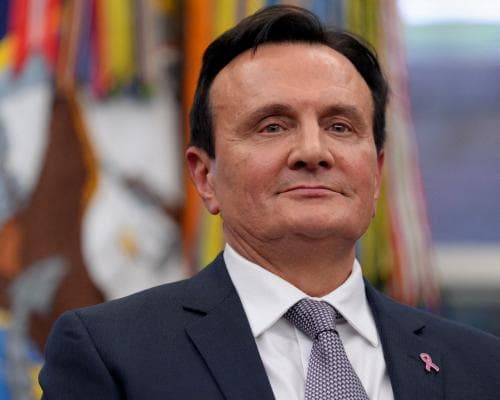
Imagine owning a racing yacht that has won every regatta for a decade. The sails are tuned, the crew is flawless, and the hull cuts through the water like a blade. Now imagine the owner, restless for a new thrill, deciding to bolt on a second, heavier hull—just to see what happens. That, in essence, is the scenario swirling around AstraZeneca and its legendary skipper, Pascal Soriot. The rumor mill, ignited by a Financial Times report, whispers of a $400 billion mega-merger with Bristol Myers Squibb. For the world's wealthiest investors, this is not just a boardroom chess move; it's a test of whether Soriot, the man who saved AstraZeneca from the clutches of Pfizer's spreadsheet-wielding raiders in 2014, is about to trade his Midas touch for a game of financial Russian roulette.
Let's set the stage with numbers that would make a sovereign wealth fund blink. A combined entity would be worth roughly $400 billion—a sum larger than the GDP of most nations. The deal would see AstraZeneca absorb a $133 billion rival, and to do that, it would have to take on a mountain of debt that would make Everest look like a speed bump. Jefferies' analysts, the sharp-eyed sentinels of the City, put it bluntly: 'If there is one company that doesn't need financial engineering, it's AZ.' They're right. Soriot has built his empire on a different currency—science. His playbook has been a masterclass in organic growth, smart licensing, and a daring bet on China's biotech boom. This isn't a company that needs a quick fix; it's a compounding machine that has consistently hit its targets, most recently reaffirming a bold 2030 revenue goal of $80 billion.
But what's the allure of BMS? The target's crown jewel, the cancer drug Opdivo, is a blockbuster, yet it faces a 'patent cliff' that will see its sales plummet by 2030. Buying BMS would mean inheriting that cliff, a gaping hole in the revenue stream that would require billions in cost-cutting to justify the premium. Soriot has always framed such corporate surgery as 'anti-patient,' a stark contrast to his mantra of backing science. It's a baffling pivot. The only logical, albeit cynical, appeal is the dream of creating an unbeatable oncology colossus. But Soriot's own strategy—supplementing internal R&D with targeted partnerships, especially in China—has already created a formidable cancer franchise. Why dilute that with a debt-laden behemoth that brings its own set of problems? The synergies are theoretical; the debt is real.
This is where the luxury lens sharpens. In the world of high-end assets, be it a Patek Philippe or a Bugatti, the value lies in rarity, heritage, and flawless execution. AstraZeneca, under Soriot, has been the Patek of pharma—a brand built on meticulous craftsmanship, not flashy acquisitions. A mega-merger would be like taking that Patek and strapping it to a gaudy, diamond-encrusted bracelet. It might sparkle, but it would compromise the very integrity that made it a masterpiece. The ultra-wealthy understand this intuitively: true status comes from owning something that works impeccably, not from piling on more for the sake of scale. Soriot's legacy is already secure; a risky financial adventure could tarnish it irreparably.
There's also the unspoken specter of regulators. Two oncology giants merging would inevitably draw antitrust scrutiny, leading to a long, distracting process that would divert attention from the mission. And why now? Soriot, at 67, is in the twilight of a storied career. He doesn't need this headache. The smart money says this flirtation will be quietly shelved, a brief dalliance that never makes it to the altar. The market seems to agree, with AstraZeneca's shares holding steady, a vote of confidence in the status quo.
So, what does this mean for the discerning investor? It's a reminder that the greatest luxury is often restraint. Soriot's 'winning formula'—focus, science, and a long-term view—has created more wealth than any debt-fueled merger ever could. The next 18 months promise 20 high-value drug readouts, any one of which could be the next blockbuster. That's the real treasure. For those with capital to deploy, the message is clear: bet on the craftsman, not the empire builder. Let the BMS talks evaporate like morning mist. AstraZeneca's crown is already glittering; it doesn't need a $400 billion reset button.
The Experience
To witness the power of strategic patience in action, consider a private briefing with a healthcare-focused fund manager, or a curated tour of AstraZeneca's cutting-edge R&D facilities in Cambridge—where the next decade of medical breakthroughs is being written.