A 19-Year-Old's Death Exposes the Hidden Cost of Cycling's Boom
The death of Finlay Tarling at the Volta a Portugal has ignited fury over race safety, revealing a sport stretched thin by rising costs and governance gaps. For the wealthy backers and investors fueling cycling's expansion, this is a stark warning that money without oversight can turn deadly.
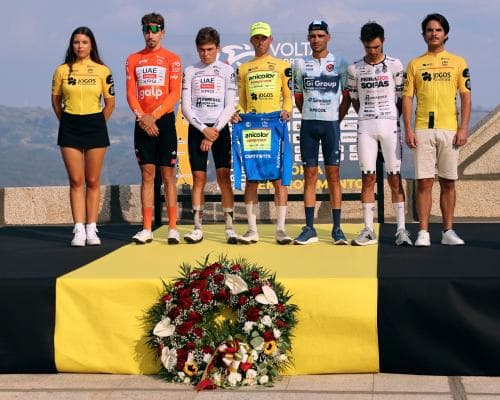
Finlay Tarling was 19, a rising star from a family that knows the sharp end of the peloton. His older brother Josh rides for Ineos, the deep-pocketed squad owned by Jim Ratcliffe, a billionaire who has poured fortunes into cycling and football. But on Friday, on a rain-slicked road in Portugal, Finlay collided with a non-race vehicle driving against the flow of the race. He died. The professional peloton is not just mourning. It is furious. And for anyone who thinks of cycling as a quaint European pastime, this tragedy is a brutal reminder that the sport has become a high-stakes, high-cost enterprise where safety is often an afterthought.
The Volta a Portugal is not the Tour de France. It is a second-tier race, but it is exactly the kind of event where young riders like Tarling cut their teeth, hoping to catch the eye of a WorldTour team. The sport's expansion has been relentless — new races, new markets, new money. But that growth has not been matched by investment in the basics: closed roads, trained marshals, and race vehicles that obey traffic laws. The Cyclistes Professionnels Associés, the riders' union, said it was 'furious' and 'speechless.' Jérôme Pineau, a former French pro who rode Grand Tours for over a decade, went further, calling the safety measures 'catastrophic.' He said it was 'a constant miracle' that more riders had not died. That miracle ran out on Friday.
The numbers behind this tragedy are telling. Organizing a multi-stage race like the Volta a Portugal requires hundreds of police officers, dozens of motorcycles, and a logistics network that can cost millions of euros. But sponsorship revenue is unevenly distributed. The richest teams — like Ineos, with its estimated $200 million annual budget — can afford the best equipment and staff. The race organizers, especially in smaller countries, often operate on thin margins. They cut corners. They rely on local volunteers. They hope for the best. Pineau pointed directly at the UCI, cycling's governing body, saying it must enforce stricter approval processes. 'If security is not guaranteed, if the organisers are not capable of it, they should not be authorised to organise the event,' he said. The UCI and the Volta organizers have not yet commented. Silence is not an answer.
This is not just a sporting issue. It is a capital issue. Cycling has become a playground for billionaires and corporate giants. Ratcliffe's Ineos, the UAE team backed by Emirati state money, and the Saudi-funded teams have transformed the sport's economics. They chase prestige, marketing reach, and geopolitical influence. But they do not own the races. The races are run by independent organizers, often with limited budgets and even less accountability. The result is a dangerous mismatch: the athletes are world-class, the money is global, but the safety infrastructure is stuck in the amateur era. When a non-race vehicle drives into the peloton, it is not just a driver's error. It is a systemic failure. And that failure is now measured in a young man's life.
For wealth builders and investors, the Tarling tragedy is a case study in the cost of growth without governance. Every industry that scales too fast — tech, crypto, even real estate — hits a moment where the infrastructure lags the ambition. In cycling, that moment has arrived with a body count. The sport's commercial value is real: broadcast deals, sponsor activations, and a global fan base that skews affluent. But if riders cannot trust that a race will keep them alive, the talent pool will shrink. Parents will pull their kids out of the sport. Sponsors will rethink their exposure. The money will flow elsewhere. This is not a hypothetical. It is a slow-motion crisis that just claimed a 19-year-old.
The next move is not just up to the UCI. It is up to the people who write the checks. Team owners, race directors, and the billionaires who love the sport must decide whether they are building a sustainable enterprise or a lottery. They can fund independent safety audits, mandate closed roads, and penalize organizers who fail to meet standards. Or they can keep writing checks for flashy rosters while hoping the roads stay clear. Tarling's death is a signal. The market is watching. And the price of inaction is no longer just a crashed stage — it is a funeral.


