A 126 km/h Thunderbolt and a City's Tears: Racing Santander's Return Is a Masterclass in Emotional Capital
Racing Santander's emotional La Liga return, sealed by 19-year-old Sergio Martínez's stunning strike, underscores how sporting heritage and local loyalty are becoming rare, high-value assets in an era of globalized, private-equity-owned football. For wealth builders, the scene at El Sardinero is a reminder that authentic, community-rooted brands can command outsized premiums.
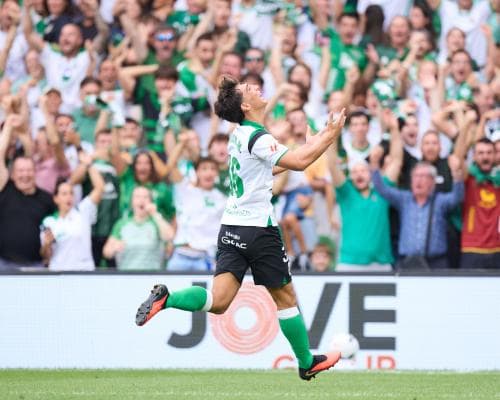
There are goals that win matches, and then there are goals that stop time. On Sunday afternoon at El Sardinero, 22,413 people watched a 19-year-old kid from the coast smash a bouncing ball at 126 km/h into the top corner, and for a split second, the entire stadium forgot how to breathe. Sergio Martínez, who has worn Racing Santander's badge since he was 10, had just scored on his La Liga debut — a cartoonish, comic-book rocket that tore through the air and through 14 years of waiting. His legs gave way. His eyes filled. And all around him, a city that had been starved of top-flight football since he was five years old absolutely lost it. This wasn't just a goal. It was a payout on a decade and a half of emotional investment.
Let's get the numbers straight, because in the world of elite football, emotion and economics are inseparable. Racing Santander's return to La Liga after 14 years in the wilderness isn't just a sporting triumph; it's a financial event. The club, which spent years mired in administration, relegation battles, and the kind of existential dread that would make a distressed-debt investor wince, is now back in the game's richest domestic league. La Liga's broadcast revenue pool — roughly €1.6 billion annually — will now flow, even if modestly, into Santander's coffers. For a club that was recently surviving on gate receipts and goodwill, that's a lifeline. But the real capital here isn't the TV money; it's the emotional equity that Sergio's strike crystallized.
This is where the story gets fascinating for anyone who understands value. Sergio Martínez isn't a mercenary; he's a homegrown product, a kid from just along the coast who climbed into the stands to hug his grandad after his first game for the club. His captain, Álvaro Mantilla, was born and raised 5km away, and was also making his top-flight debut. Jorge Salinas, another 19-year-old from Santander, was out there too. This is a rare thing in modern football: a starting XI built on local roots, not global scouting algorithms. In an era where private equity firms like CVC and Silver Lake are buying up stakes in leagues and clubs, where ownership groups treat players as liquid assets, Racing Santander just proved that the most valuable currency is still belonging. The club's badge, worn since childhood, is worth more than any sponsorship deal.
For wealth builders, the lesson is sharp and uncomfortable. The football industry has been financialized to the point of absurdity — transfer fees are securitized, stadiums are branded, and even fan loyalty is monetized through tokens and memberships. Yet here, in a mid-sized city on the Cantabrian coast, the most powerful asset is something you can't put on a balance sheet: collective memory. The 22,413 people in the stands weren't just watching a game; they were reclaiming a piece of their identity. That's the kind of intangible that drives real, sustainable value. When Sergio's shot hit the net, it wasn't just a goal — it was a dividend on years of suffering, paid in pure euphoria. Try pricing that with a DCF model.
The market implications are subtle but real. For investors eyeing football clubs as alternative assets, Racing Santander's story is a cautionary tale. The clubs that thrive in the long run aren't necessarily those with the biggest wage bills or the slickest data analytics. They're the ones with deep community roots, the ones that can generate genuine, unmanufactured emotion. That's why clubs like Athletic Bilbao, with their Basque-only policy, or Borussia Dortmund, with their famous Yellow Wall, command such loyalty. Santander just showed that even after 14 years in the wilderness, that emotional capital doesn't depreciate — it compounds. For a city and a club that have known more relegations than promotions, this moment is a reminder that patience, when paired with authenticity, can yield returns that no hedge fund can match.
Looking ahead, the question is what Racing does with this windfall. The club's management, likely wary of the excesses that doomed them before, must balance ambition with sustainability. The money from La Liga will help, but the real prize is the talent pipeline. Sergio Martínez, Álvaro Mantilla, and Jorge Salinas are proof that the academy works. If Racing can hold onto these kids — or sell them for top dollar — they'll have turned emotional capital into financial capital. That's the alchemy every club dreams of. And for the rest of us, it's a reminder that in a world of synthetic hype and manufactured buzz, the real thing still matters. The kid's tears, the captain's euphoria, the city's roar — that's the asset class of the future. It just doesn't show up in your portfolio.


