The Beautiful Game, Reimagined: A Collector's Guide to Football's Future
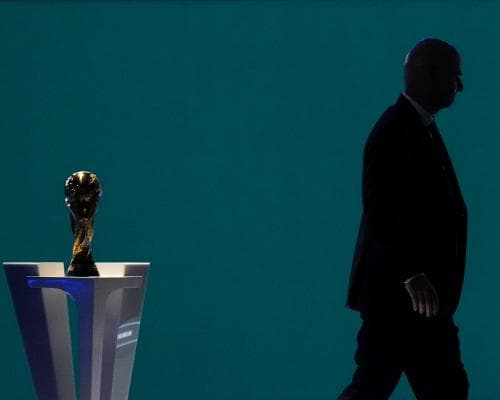
There is a moment in every great collector's life when they realize that the true value of their prize lies not in its price tag, but in its provenance. For the custodians of football—the sport that commands more global devotion than any religion, more capital than most nations—that moment has arrived with the force of a perfectly struck free kick. The recent World Cup, that quadrennial carnival of passion and profit, exposed a fissure in the game's foundation: the very body meant to protect its soul has been caught bending its own rules for commercial gain. As one insider confides, 'They have shown that they will bend the rules to make them more money.' For those of us accustomed to acquiring only the finest things in life, this is a clarion call: the most valuable asset in sport is not a trophy, but trust.
Consider the paradox at the heart of football's governance. The same organization that orchestrates the planet's most-watched spectacle also writes the laws that govern it—a conflict of interest as glaring as a counterfeit Rolex in a boardroom. The solution, whispered in the corridors of power and echoed by reformists like Miguel Maduro, is a radical separation of powers. Imagine, if you will, a luxury conglomerate where the marketing arm and the legal department answer to different masters. 'There would have to be a Chinese wall between these entities,' Maduro argues, 'and they would have to have different incentives.' This is not mere bureaucratic tinkering; it is the art of curation applied to governance. By dividing Fifa into distinct entities—one for commerce, one for regulation, one for development—the game could finally align its incentives with its ideals.
The craft of this reform is delicate, requiring the precision of a master watchmaker. Those who maximize commercial income must not be beholden to regulatory rules, and vice versa. This separation would allow each arm to pursue excellence without the taint of conflict. For the ultra-wealthy who collect clubs as others collect paintings, this means a more stable investment environment. For the fans—the true patrons of this art—it promises a game where the outcome is determined by skill, not by the whims of a governing body desperate to monetize every moment. The recent World Cup's manipulation of suspension lengths and half-time durations was a masterclass in how not to preserve legacy. It was akin to a jeweler altering a diamond's cut to fit a cheaper setting, diminishing its inherent brilliance.
External regulation, that least glamorous of necessities, emerges as the cornerstone of this new era. 'Change needs to be imposed from the outside. It won't happen from the inside,' Maduro insists, echoing the sentiment of every collector who has ever had to authenticate a piece through an independent expert. Just as a rare vintage is validated by a third-party auction house, football needs an independent body to hold its stewards accountable. The courts, those arbiters of fairness, must become the final referees. This is not about punitive oversight; it is about ensuring that the game's integrity remains as pristine as a freshly conditioned leather boot.
For the connoisseur of sport, this moment is both a warning and an opportunity. The market for football clubs has never been hotter, with sovereign wealth funds and tech billionaires vying for a piece of the world's most passionate pastime. Yet the true value lies not in broadcast rights or merchandise sales, but in the game's unassailable authenticity. A football match is a living performance, a piece of theater that cannot be replicated or mass-produced. Its rarity lies in its unpredictability, its beauty in its fairness. As the governance debate unfolds, those who invest in the sport's future must also invest in its ethical foundation. The next great acquisition, whether a club in the English Premier League or a stake in a South American talent factory, will be judged not by its balance sheet, but by the integrity of its stewardship.
Looking ahead, the future of football is not written in the stars but in the statutes. The reforms being proposed now—the separation of powers, the imposition of external oversight—are the blueprints for a game that can survive its own success. For the ultra-wealthy who have made football their passion project, this is a call to action. The most luxurious thing one can own is not a trophy or a team, but a legacy of fair play. As the world's attention turns to the next World Cup, the true test will be whether the game's custodians can resist the siren song of short-term gain. If they can, the beautiful game will not only endure but flourish, a testament to the enduring power of sport done right. And for those of us who watch from the best seats in the house, that will be the ultimate prize.