The $10 Billion Question: Inside the Legal Battle Over Trump's Empire
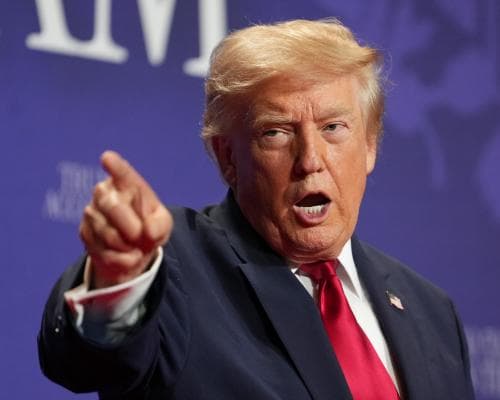
In the rarefied world where fortunes are measured in billions and reputations are curated as carefully as a wine cellar, a quiet legal skirmish in a Miami courtroom has exposed the fault lines beneath the gilded surface. The protagonists: a former president whose name is synonymous with luxury real estate, and the BBC, a broadcaster whose investigative lens rarely flinches. At stake is not just a libel claim, but the very architecture of a business empire that has long been a barometer of aspirational wealth.
The dispute centers on a 2024 BBC documentary about the January 6 attack, which Trump alleges damaged his brand and, by extension, his business interests. His legal team has argued that the broadcaster's request for financial records—spanning the hundreds of entities held by the Trump family trust—is "shockingly broad" and politically motivated. But last month, a judge ordered the former president to produce those records by August 6. Now, a temporary halt has been issued, giving Trump's lawyers room to narrow the claim to pure reputational harm, a move that could render the financial discovery moot.
For the uninitiated, this is not merely a legal tussle; it is a masterclass in how the ultra-wealthy protect their most valuable asset: the narrative. Trump's brand has always been built on the illusion of limitless success—gold-plated penthouses, private clubs, and a name that promises access. The BBC, however, contends that his public reputation is inseparable from his business performance. Their lawyers argue that if Trump seeks $10 billion in damages, the numbers must be on the table. How else to quantify the value of a name that has graced everything from steaks to skyscrapers?
The case offers a rare glimpse into the mechanics of wealth preservation. For collectors and connoisseurs, the Trump empire is a peculiar artifact—a conglomerate of licenses, properties, and deals that have weathered bankruptcies, scandals, and a presidency. The family trust holds assets ranging from Manhattan towers to Scottish golf links, each with a story that adds to the mystique. But the legal wrangling reveals a more mundane truth: even the most glittering portfolios are subject to scrutiny when the stakes are existential.
What makes this particularly fascinating is the intersection of media and money. The BBC's documentary, which aired in the UK, was not a puff piece. It was a hard-hitting examination of a day that shook American democracy. Trump's decision to sue, and to seek damages that could fund a small nation's GDP, is a bold assertion of brand protection. Yet, as his lawyers now seek to narrow the claim, one wonders if the strategy is about shielding secrets or simply avoiding the awkwardness of having a forensic accountant pore over decades of balance sheets.
For the luxury market, this case is a reminder that wealth is often a performance. The ultra-wealthy do not just own assets; they curate an image. Trump's legal maneuverings—first demanding discovery, then seeking to limit it—mirror the behavior of a collector who wants the world to see the masterpiece but never the restoration work. The temporary halt is a pause in that performance, a moment where the spotlight dims and the audience is left to imagine what lies beneath.
As the case moves forward, the outcome will reverberate beyond the courtroom. If Trump succeeds in narrowing the claim, he will have set a precedent for public figures to shield their financial affairs from scrutiny while still pursuing astronomical damages. If the BBC prevails, it will have cracked open the vault, forcing a reckoning with the true value of a name. Either way, the saga is a compelling chapter in the ongoing story of how power, money, and media collide.
In the end, this is not just about Donald Trump or the BBC. It is about the fragile line between private wealth and public trust. For those who collect fine art, rare cars, or prime real estate, the case is a cautionary tale: your assets may be yours, but their story is never fully in your control. The judge's decision, when it comes, will be more than a legal ruling—it will be a statement on the value of a reputation in an age where everything can be questioned, and nothing is off the record.