The 0.1% That Saved a Chancellor: Inside the UK’s War-Tested Economy
Picture this: You are in a Mayfair boardroom, the scent of old leather and fresh coffee hanging in the air. Outside, the city hums. But the news ticker is flashing headlines from the Middle East, and your energy desk just flagged a 15% spike in crude. Any other economy would be flat on its back. Yet here, in this quiet room, the numbers whisper something different. The UK economy grew by 0.1% in May. It is not a roar. It is a breath. And for the ultra-wealthy, that breath is everything.
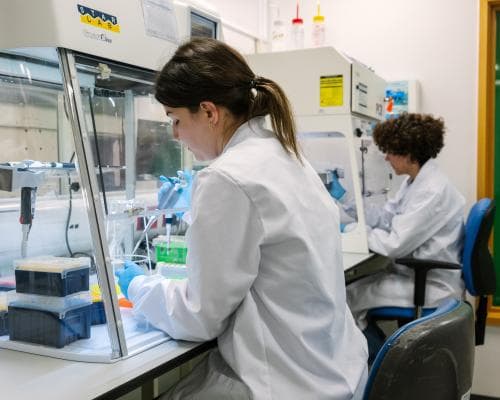
The Office for National Statistics confirmed what the optimists hoped: GDP rose, reversing April’s 0.1% dip, exactly in line with the forecasts that matter. The headline number is modest—almost invisible. But look closer. Services output climbed 0.3%, and the real star was scientific research, surging 5.1%. That is not a statistic; it is a signal. In a world rattled by war, the smart money is doubling down on knowledge, on labs, on the kind of intellectual property that no missile can touch. The production side—manufacturing and construction—took hits of 0.5% and 0.8% respectively, but the services sector absorbed the blow like a well-tailored suit absorbs a sudden rain shower.
The context here is everything. This is not a normal economic cycle. The Iran conflict has sent energy costs into a spin, and the conventional wisdom said the UK would stumble. It did not. Rachel Reeves, the outgoing chancellor who is expected to hand the keys to Shabana Mahmood, gave a defiant Mansion House speech this week. She defended her record, and the data backs her up. Over the three months to May, GDP growth stood at 0.7%—a modest slowdown from the 0.8% in the three months to April, but still robust. As Liz McKeown, the ONS director of economic statistics, put it, “the economy recorded robust growth.” That word—robust—is rare in times like these.
For the connoisseur of luxury markets, this resilience is the real prize. Think about what it takes to keep a portfolio afloat when geopolitics roils the waters. The ultra-wealthy do not just watch GDP; they watch the cracks. And here, the cracks are narrow. The International Monetary Fund recently upgraded its UK growth forecast for the year to 1%, up from 0.8% in April. That is not stellar, but it is steady. And steady, in a world of volatility, is the new exclusivity. The kind of stability that allows a family office to commit to a new private jet charter, or a collector to bid on a rare Patek Philippe, without the gnawing fear that the ground will shift tomorrow.
Of course, the picture is not without shadows. The Resolution Foundation warns that more than half of the £23.6 billion in fiscal “headroom” Reeves left herself could be wiped out by the war’s effects. Oil prices have spiked again. The construction sector is down 0.8%, and manufacturing is struggling. Suren Thiru, chief economist of the ICAEW, called the rebound “dishearteningly weak.” But here is the truth that matters to the discerning: the economy is not collapsing. It is holding. And in the rarefied air of the top 1%, holding is the difference between a good year and a great one.
What does this mean for the luxury market? It means the appetite for rare, tangible assets—art, vintage cars, prime London real estate—remains intact. The services sector, buoyed by scientific research, is a quiet engine of wealth creation. The ultra-wealthy are not panicking. They are recalibrating. They are moving capital into sectors that weather storms: research, education, high-end services. The Treasury’s own words—“the fastest growth in the G7 in the first quarter”—are not just political spin; they are a reassurance to anyone holding a significant stake in this economy.
So here is the takeaway for the collector, the investor, the one who reads the tea leaves before the rest of the world has boiled the water. The UK economy’s 0.1% growth in May is not a footnote. It is a testament to resilience in the face of chaos. It is a reminder that, when the world burns, the best-built structures hold. For those with the means to act, the message is clear: stay the course. The science labs are humming. The services are steady. And the war, for all its fury, has not broken this economy. That is the kind of exclusivity money cannot buy—but it can certainly leverage.
As Andy Burnham prepares to take the helm, the uncertainty remains. But for the ultra-wealthy, uncertainty is just another word for opportunity. The question is not whether the economy will boom. It is whether you are positioned to ride the quiet, resilient wave.
The Experience
To explore bespoke investment opportunities in London’s resilient services and research sectors, schedule a private consultation with our wealth advisory team.
More in BUSINESS
The Great Unwinding: Why London’s Vanishing Stock Market Is a Quiet Signal for Discerning Capital
The 70-Cent Swing: How a Brief Peace Reshaped the Economics of Ultra-Luxury Travel
The $85 Barrel and the $1 Trillion Surplus: How Geopolitical Fire and AI Fever Are Reshaping the Fortunes of the Ultra-Wealthy