The 70-Cent Swing: How a Brief Peace Reshaped the Economics of Ultra-Luxury Travel
Picture this: You are standing on the tarmac in Geneva, your Gulfstream G650ER already humming. The fuel truck pulls away, and the captain hands you a revised cost sheet. For one glorious month, the price to fill your wings dropped by nearly ten percent. That was June. That was the brief, shimmering window when a US-Iran peace deal sent energy markets into a temporary lull—and the world’s wealthiest felt a rare, welcome breeze in their balance sheets.
The numbers are stark. In June, the consumer price index—the broadest measure of what things cost—cooled to an annual rate of 3.5%. That is down from a three-year high of 4.2% in May. Month-over-month, prices actually fell by 0.8%, the steepest single-month drop since the pandemic shutdowns of April 2020. The culprit? Energy. Gasoline prices plunged 9.7% from May to June. Fuel oil—the diesel and kerosene that powers everything from your superyacht’s generators to your helicopter’s turbines—dropped 9.2%. Even apparel ticked down 0.6%, though that is hardly the concern of someone who buys their cashmere by the bolt.
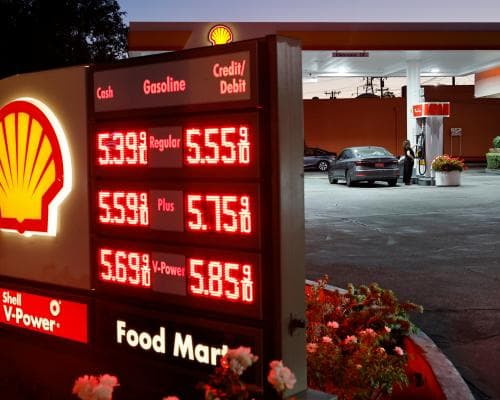
But here is where it gets interesting for the discerning spender. Core inflation—the Fed’s favorite metric, which strips out volatile food and energy—barely budged, settling at 2.6% annually and flat month-over-month. That tells you everything: the peace was a sugar rush, not a structural shift. The energy index was the sole hero. And it was a short-lived hero. The ceasefire has since collapsed. Brent crude, which had tumbled to a low of $67 per barrel in early July, shot back to $80 by late July. The national average for a gallon of regular gasoline? It climbed to $3.87 last week—70 cents higher than a year ago. For the owner of a 150-foot motoryacht that burns 100 gallons per hour at cruising speed, that 70-cent swing means an extra $70 every hour at sea. A transatlantic crossing? That is a five-figure surcharge.
This volatility is precisely what makes the luxury travel sector so fascinating right now. Delta Air Lines reported last week that it has passed 60% of its extra fuel costs onto consumers—and expects high airfares to persist. For the private-jet set, this is a different calculus. A fractional ownership operator might absorb the spike in jet fuel, but the daily charter market adjusts in real time. The brief June dip was a rare moment when a last-minute flight to St. Tropez or a repositioning leg to Aspen cost noticeably less. Those who booked in June caught a break. Those who waited until July are paying a premium again.
What does this signal about wealth and taste? It underscores that even the ultra-wealthy are not immune to macro forces—but they are uniquely positioned to ride them. The brief peace allowed a pause in the relentless upward march of operating costs for private aviation, superyacht cruising, and even the maintenance of multiple residences. Yet the underlying message is one of resilience. The American job market added an average of 111,000 jobs per month from April through June. The labor market remains steady. The Fed, meeting on July 28 and 29, will weigh these crosscurrents. Inflation is still well above the 2% target. But for those with assets to manage and travel to plan, the lesson is clear: windows of opportunity open and close fast. The wise buyer locks in fuel contracts or charter rates when they see a dip. The rest pay the 70-cent premium.
Looking forward, the Strait of Hormuz remains a geopolitical fulcrum. Donald Trump’s recent assertion that the strait—through which a fifth of the world’s oil and gas passes—will stay open “with or without Iran” only adds to the uncertainty. For the luxury consumer, the takeaway is not to panic but to be nimble. The next peace deal—or the next escalation—will come. The truly sophisticated portfolio includes a fuel-hedging strategy for the yacht, a flexible charter agreement for the jet, and a willingness to move when the moment is right. After all, the best luxury is not just what you own—it is knowing exactly when to use it.
The Experience
To navigate these volatile fuel markets with precision, consider a bespoke fuel-management consultancy that works exclusively with superyacht and private-jet owners. One call could save you six figures on your next season’s cruising.
More in BUSINESS
The $85 Barrel and the $1 Trillion Surplus: How Geopolitical Fire and AI Fever Are Reshaping the Fortunes of the Ultra-Wealthy

The Stagflation Aristocracy: How Australia’s Ultra-Wealthy Are Reading the Populist Surge

The Hidden Price of a Storefront: Why America’s Best Cafés Are Being Sued Into Silence