The $85 Barrel and the $1 Trillion Surplus: How Geopolitical Fire and AI Fever Are Reshaping the Fortunes of the Ultra-Wealthy
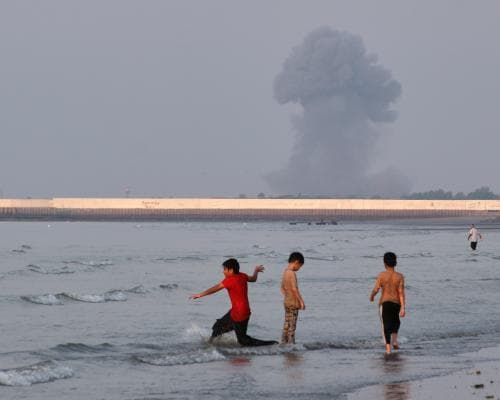
Picture this: a tanker slips through the Strait of Hormuz under a moonless sky. Two miles away, another vessel takes fire. By morning, Brent crude has jumped past $85 a barrel. For the rest of the world, it’s a headline. For the ultra-wealthy, it’s a signal. A signal that the tectonic plates of global capital are shifting again—and that those who read the map correctly will not just preserve their fortunes, but multiply them.
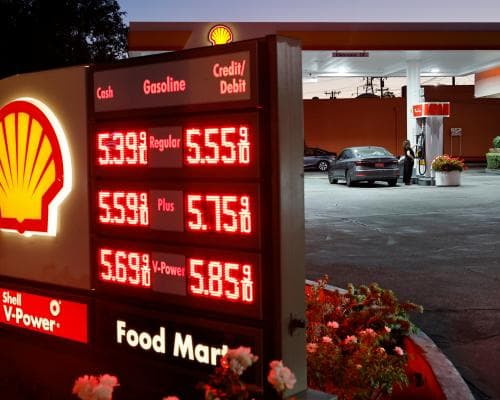
Let’s get into the numbers, because in this world, numbers are poetry. Oil prices climbed more than 2% after the U.S. launched a third consecutive night of strikes against Iran. Brent crude touched $85.64 in early London trading before settling at $85.15. European gas prices hit a three-month high. Meanwhile, on the other side of the world, China’s exports surged 27% in June—the biggest jump in four months. That’s $125.6 billion in trade surplus in a single month. The country is on track to post a trade surplus above $1 trillion for the second year running. The driver? Not cheap toys or textiles. It’s chips. Computing power. The raw hardware feeding the global AI boom. Exports of semiconductors and AI-related components are soaring, offsetting the drag from a sluggish domestic property market and geopolitical headwinds.
Now, let’s talk about what this means for the connoisseur of wealth. A barrel of oil at $85 isn’t just a commodity price—it’s a statement on scarcity, on the fragility of supply chains, on the cost of power. For those who own the assets—the refineries, the shipping lines, the energy futures—this is the sound of compounding. For the collector, it’s a reminder that the rarest things in life (a first-growth Bordeaux, a Patek Philippe Grand Complication, a waterfront villa in Monaco) are priced not just in dollars, but in the tension between global stability and chaos. The Strait of Hormuz is the world’s most expensive choke point. Every missile fired there adds a premium to everything that moves. And the ultra-wealthy understand that premium better than most. They don’t just watch the news; they hedge against it.
What does this tell us about taste and the luxury market? Two things. First, the AI boom is creating a new class of wealth—faster, younger, more global. The Chinese export surge is not about manufacturing trinkets; it’s about building the neural networks of the future. The people behind those chips are buying private jets, contemporary art, and waterfront compounds in the Maldives. Their money is “new,” but their appetite for exclusivity is ancient. Second, the geopolitical friction is accelerating a flight to hard assets. Gold is climbing. Real estate in stable jurisdictions—Singapore, Dubai, Switzerland—is tightening. The $85 barrel is a reminder that liquidity can vanish overnight, but a 1962 Ferrari 250 GTO or a penthouse on the Upper East Side? That stays.
Looking ahead, the smart money is watching two vectors. The first is energy: if the Middle East conflict escalates, $100 oil is not a fantasy. The second is AI infrastructure: China’s export machine is now a proxy for global tech demand. The economist Xu Tianchen at the Economist Intelligence Unit points to a better second half for China, fueled by expansionary policy and a potential de-escalation in the Middle East. But he also flags domestic demand as a drag—retail flat, fixed-asset investment negative. For the ultra-wealthy, this means one thing: diversification isn’t a strategy, it’s a survival instinct. The portfolios that win will hold energy plays, AI-related equities, and trophy assets in jurisdictions far from the blast radius. The Strait of Hormuz may be on fire. But the smartest money is already building a lifeboat—and making sure it has a wine cellar.
The Experience
For a private briefing on how to position your portfolio for geopolitical volatility and the AI boom, book a confidential consultation with our wealth advisory desk. We’ll review your holdings over a curated tasting of Château Margaux 2005.