The Great Unwinding: Why London’s Vanishing Stock Market Is a Quiet Signal for Discerning Capital
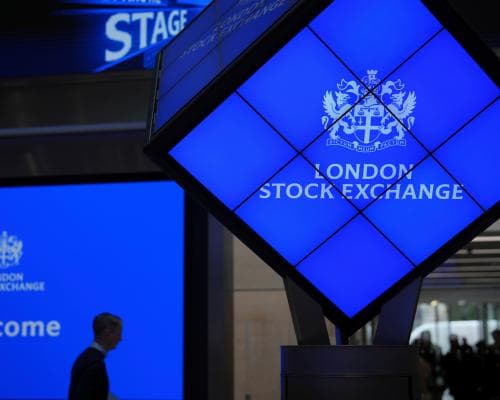
Picture a dinner party in Belgravia. The clink of crystal, the low hum of a vintage Bordeaux. And then someone drops a number: £285 billion. That’s the value of market capitalisation that has quietly slipped out of London’s stock exchange since the start of 2023. Not in a crash. Not in a panic. In a steady, almost elegant, procession of takeovers and relocations. For the ultra-wealthy, this isn’t a headline about politics or regulation. It’s a signal. A signal about where the world’s most liquid, most ambitious capital is choosing to live.
Consider the math. In the past two years, 154 bids have landed on UK companies worth more than £100 million each—a combined £165 billion in stock market value. Add to that seven giants moving their primary listings abroad, mostly to the United States, pulling another £120 billion with them. Total outflow: £285 billion. Inflow from new listings? Just £6 billion. That’s not a market. That’s a memory. The broker Peel Hunt called its recent report on this phenomenon “Selling the Family Silver.” The title is perfect. It feels like a stately home auction, where the portraits come down one by one, and the buyers are always from somewhere else.
This is where craftsmanship meets capital. Take the three bids that landed on a single Thursday. Rotork, a Bath-based maker of safety valves for pipelines, fell to Swiss group ABB for £4.1 billion. Gooch & Housego, a specialist in precision optics for aerospace and defence, was bought by a US investment firm for £346 million. Ramsdens, a financial services and pawnbroker firm, also went to American buyers for £230 million. The shareholders got premiums of 73%, 41%, and 49% respectively. For a portfolio, that’s a win. For a market, it’s a slow bleed. These aren’t distressed assets. They are finely engineered, generational businesses. They are being priced out of their own home.
The deeper story is about taste and trust. The ultra-wealthy have always understood that liquidity is a form of freedom. London’s exchange was once the clubhouse for that freedom—a place where a family office could park capital in a solid industrial firm and watch it compound over decades. Now, the clubhouse feels empty. The UK’s listing rules were tweaked to allow founders to keep outsized voting power, à la Silicon Valley. But that’s a minor fiddle. The real gravitational pull is the United States, which now accounts for roughly 70% of the world’s stock market value. For most companies under the £10 billion mark, liquidity naturally flows to New York. It’s not malice. It’s physics.
Does this matter to someone building a multi-generational portfolio? Absolutely. A stock market is not just a scoreboard. It’s a mechanism for deploying capital into wealth-creating assets. When that mechanism stalls, the smart money doesn’t wait for a fix. It moves. The chancellor’s various “Mansion House” accords were meant to boost capital flows, but they focused heavily on infrastructure and private assets—hard to trade, hard to value. Public markets, the ones that offer daily price discovery and instant liquidity, were given a stamp-duty holiday and a cap on cash ISAs. That’s like polishing the brass on a sinking ship.
Looking forward, the signal is clear. For those who can read it, the takeaway isn’t despair. It’s opportunity. When an entire market is underpriced by international standards, and boards are under pressure to sell, the patient buyer with a global lens can acquire assets at a discount. The family office that understands this will not mourn London’s decline. It will redeploy. It will look at the companies being bid away—precision optics, industrial valves, niche financial services—and ask: what else is undervalued here? The answer, for now, is plenty. The silver is still on the walls. You just have to know where to look.
The Experience
For a curated briefing on undervalued London-listed assets and private-market alternatives, schedule a confidential consultation with our capital strategies desk.