The Sentinels: War, Science, and the Art of the Impossible
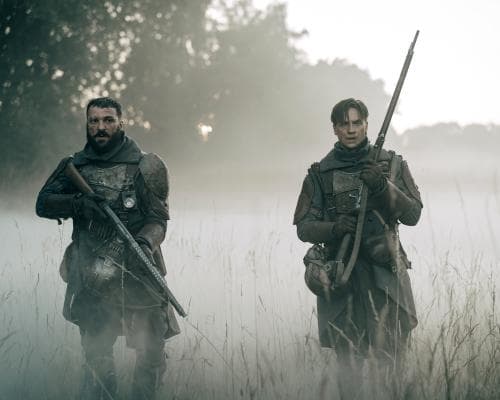
There is a particular pleasure in watching a series that knows exactly what it is, and The Sentinels, the French super-soldier thriller that has been quietly gripping BBC Four’s late-night slot, has never once wavered. As the final two episodes arrive, the dovetailing of political intrigue and battlefield action feels less like a plot resolution and more like a perfectly executed watch movement — every gear clicking into place with a satisfying, almost audible finality. The mission to free Mazauric, the scientist whose genius set this entire counterfactual nightmare in motion, hangs by a thread, and the show makes you feel every frayed strand.
This is not the kind of luxury that can be bought at auction or ordered from a catalog. It is the luxury of narrative confidence, of a story that trusts its audience to keep up with the moral murkiness of its premise. The Sentinels imagines a first world war where the trenches are not just filled with mud and despair, but with genetically engineered soldiers, grown in laboratories and deployed as weapons. It is a chilling idea, rendered with the kind of restrained, atmospheric production design that makes even the most mundane scenes feel like a Caravaggio painting — all shadow, texture, and unspoken menace.
The craft here is worth dwelling on. The show’s creators have built a world that feels lived-in, from the grimy field hospitals to the opulent drawing rooms where generals and politicians play their deadly games. The action sequences are choreographed with a balletic brutality that recalls the best of French cinema — think Jean-Pierre Melville meets the trenches of 1914. And the performances, particularly from the actors playing the super-soldiers themselves, carry a haunted quality that elevates the material beyond mere genre entertainment. These are beings who were never meant to exist, and the series never lets you forget the existential weight of their creation.
For collectors of television, The Sentinels is a rare find — a show that rewards patience and attention, and that refuses to spoon-feed its audience. It is the kind of programming that BBC Four has become known for: intelligent, foreign-language, and unapologetically adult. In an era of streaming algorithms that push the same five shows to everyone, there is something almost decadent about a series that demands you lean in, that doesn’t explain every twist, and that trusts you to hold multiple, contradictory ideas in your head at once.
The market for such content is small but devoted, and it is telling that The Sentinels has found its home on a channel that has become a refuge for the discerning viewer. It signals a taste for the cerebral, for the historically literate, and for the kind of speculative fiction that asks not just “what if,” but “what then?” The show’s finale, which ties together the threads of political betrayal, scientific hubris, and the human cost of progress, is a reminder that the best stories are not those that give us easy answers, but those that leave us with the right questions.
As the credits roll on this final episode, one cannot help but feel a pang of loss — not just for the characters, but for the kind of television that The Sentinels represents. It is a rare, almost anachronistic pleasure, like finding a first edition in a dusty bookshop or a vintage bottle of Burgundy in a cellar you thought you had emptied. For those who have followed the series from the beginning, the ending will feel earned, even inevitable. And for those who have yet to discover it, there is the quiet thrill of knowing that a complete, perfectly crafted work awaits — a small, dark jewel in the crown of contemporary television.