Richard E Grant’s Odyssey: A Star’s Pilgrimage to the Mythic Mediterranean
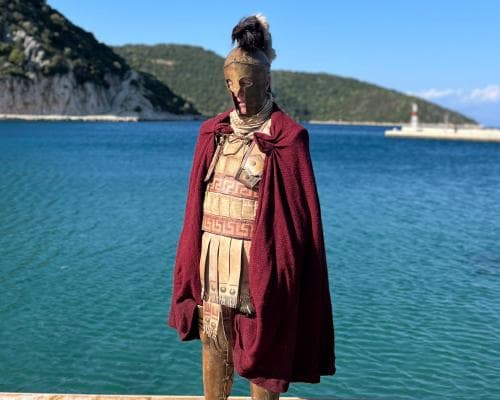
There are celebrity travelogues, and then there are pilgrimages. When Richard E Grant—the man who made 'Withnail and I' a cult classic and stole scenes in 'Can You Ever Forgive Me?'—announces he has been obsessed with Homer’s 'Odyssey' since he was 18, you don’t just get a holiday special. You get a masterclass in how the ultra-wealthy and culturally curious turn a holiday into an odyssey of the soul. In Channel 4’s 'Richard E Grant’s Very Modern Odyssey,' the actor sets sail for the Mediterranean’s most storied isles, beginning in Malta, where he is, in his own words, 'utterly bewitched' by everything he encounters. And we, the viewers, are utterly bewitched by him.
The premise is deceptively simple: follow the places that may have inspired Homer’s epic, from the azure grottoes of Malta to the Ionian shores where Odysseus might have wept for home. But Grant is no mere tour guide. He is a thespian with a soul on fire, reading passages of the epic with the same reverence a sommelier reserves for a Romanée-Conti. The camera lingers on his expressive face as he stands before ancient stone, and you feel the weight of three millennia. This is not a documentary; it is a love letter to the idea that the past is not past, but alive, shimmering beneath the surface of every bay and cliff.
What makes this journey so compelling is Grant’s unapologetic romanticism. He doesn’t pretend to be a scholar; he is a fan, a devotee, a man who first fell for the poem as a teenager and has carried it with him like a talisman. The production values are sumptuous—drone shots of turquoise water, sun-drenched terraces, and the kind of light that makes you want to book a villa immediately. But the real luxury here is access: to Grant’s mind, to his memories, to his unfiltered delight. He dines with local historians, sails with fishermen who still tell tales of Cyclops and sirens, and, in one particularly moving segment, recites Odysseus’s farewell to Calypso with tears in his eyes. It is the kind of television that reminds you why you fell in love with stories in the first place.
For the collector of experiences—the person who has already skied Verbier, safaried in Botswana, and chartered a yacht in the Aegean—this odyssey offers a new kind of acquisition: meaning. Grant’s journey is a masterclass in how to travel with intention, turning a mere itinerary into a narrative. The destinations are not new, of course. Malta has been a playground for the rich since the Knights of St John, and its palazzos and private clubs are as exclusive as any in Monaco. But Grant’s lens reframes them, inviting the viewer to see beyond the five-star hotels and into the mythic strata. The episode’s pacing is unhurried, almost meditative, a deliberate counterpoint to the frantic modern world. It’s a reminder that true luxury is not speed but depth.
The market for such cultural travel is booming. High-end tour operators like Abercrombie & Kent and Virtuoso report a surge in 'mythological itineraries'—trips that pair archaeological sites with private lectures and gourmet dining. Grant’s show, airing at 8pm on Channel 4, is perfectly timed to ride this wave. It’s not just about seeing; it’s about understanding. And in a world where the ultra-wealthy are increasingly seeking authenticity over ostentation, this is the ultimate status symbol: a mind enriched by the past, a spirit moved by poetry. Grant, with his effervescent charm and genuine erudition, is the ideal guide—part raconteur, part scholar, part wide-eyed boy.
What does this signal about the current state of luxury taste? It suggests that the new gold standard is experiential literacy. The ability to quote Homer while sailing past a grotto is worth more than a Patek Philippe. The show’s aesthetic—muted linens, espadrilles, and a well-worn paperback—is a direct rebuke to flashy logos. It whispers, rather than shouts, of a life well-lived. And Grant, who has never lost his own wonder, embodies this ethos effortlessly. He is not performing; he is sharing. That rarest of things in an age of curated images: a genuine soul.
As the episode closes, with Grant standing on a cliff at sunset, the ocean stretching to infinity, you feel the pull of the epic. He has not found Ithaca, of course—that is the point. The journey is the destination. And for the rest of us, the takeaway is simple: the next time you book a villa in the Mediterranean, bring a copy of Homer. Let Richard E Grant be your guide, not just to places, but to a way of seeing. This is television as luxury—unhurried, intelligent, and utterly bewitching. And in a world of fast cuts and louder noise, it is a rare and precious thing.