The Scholar’s Crosshairs: Inside the Playbook That Is Reshaping Academic Power
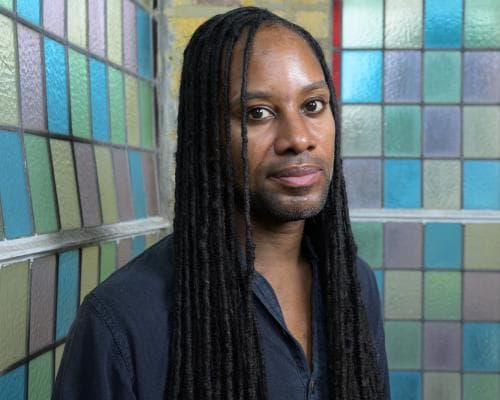
The lecture hall was hushed, the kind of silence that precedes a verdict. Jason Arday, the youngest Black professor in Cambridge’s 800-year history, stepped to the podium at the British Sociological Association’s 75th anniversary conference this spring. He was not there to present a paper on social mobility or to dazzle with data. Instead, he delivered a keynote titled “Wanted Dead or Alive: The Playbook”—and the room, filled with the discipline’s elite, understood immediately that this was not an academic exercise. It was a warning.
Arday’s subject was a quiet, corrosive machinery that has been dismantling the careers of the academy’s most visible Black scholars. He described how conservative activists, armed with citation-trawling algorithms and an appetite for scandal, have turned plagiarism allegations into a weapon of reputational assassination. The playbook, as he outlined it, is simple: find a minor citation error, amplify it through rightwing media, and pressure university boards into severing ties. The first major scalp was Claudine Gay, Harvard’s first Black woman president, who was forced out after just seven months amid allegations that would, in another era, have been settled with a quiet correction. But Gay was not an isolated case. Arday spoke of colleagues who felt like “sitting ducks,” of academics who, after being hounded, took their own lives. The audience, many of whom had privately feared the same, listened in stunned recognition.
What makes Arday’s intervention so significant is not just the content but the context. This was not a protest or a polemic; it was a keynote at the discipline’s most prestigious gathering, delivered by a scholar whose own trajectory—from a working-class upbringing in south London to a Cambridge professorship—embodies the very meritocracy the playbook claims to protect. Arday’s call to arms was explicit: “There isn’t any room to sit there and watch your fellows suffer for no reason. It’s abhorrent, it’s a disgrace and, quite frankly, evil. That’s the cancer that we need to eradicate from academia.” The words hung in the air like a gauntlet thrown at the feet of every dean, provost, and vice-chancellor in the room.
The playbook, as Arday described it, is not confined to the United States. He warned that the same tactics are being deployed in the UK, where high-profile Black academics are increasingly finding themselves under the same microscope. The instruments designed to protect academic integrity—peer review, citation standards, ethics committees—are being repurposed as cudgels. The result is a chilling effect that extends far beyond the individuals targeted. For every scholar who is publicly excoriated, dozens more quietly self-censor, avoiding risky research topics, declining high-profile roles, and retreating from the public square. The academy, which prides itself on the free exchange of ideas, is being taught a different lesson: visibility is vulnerability.
For the collectors and connoisseurs of prestige who read this publication, the story resonates on a different register. The university, like a rare timepiece or a first-edition folio, derives its value from provenance and integrity. A Harvard presidency or a Cambridge chair is not merely a job; it is a certification of excellence, a marker of trust that compounds over generations. When that trust is weaponized, the entire system of value—academic, cultural, and financial—is destabilized. The playbook, in essence, is a counterfeit operation: it produces the appearance of scandal while eroding the very currency of intellectual achievement. Arday’s speech was, in this light, a defense of the asset class itself.
What happens next will define the academy’s future. Arday’s call for solidarity is not just a plea for sympathy; it is a strategy for survival. He urged his peers to defend one another, to refuse the role of silent bystanders in the face of what he called a “cancer.” The question is whether the institutions that benefit from the status quo will heed the warning or continue to trade their most brilliant minds for the illusion of clean headlines. For now, the playbook has been named, and naming, as any collector knows, is the first step to owning a thing. The next move belongs to the players.
As the conference ended and the delegates dispersed, Arday’s words followed them into the corridors and cocktail hours. The playbook may have been exposed, but its authors are still at work. The difference is that now, the targets know they are being watched—and they are watching back. In the rarefied world of academic prestige, that may be the most valuable asset of all.