The Power Play: Amanda Staveley’s Next Act in East London
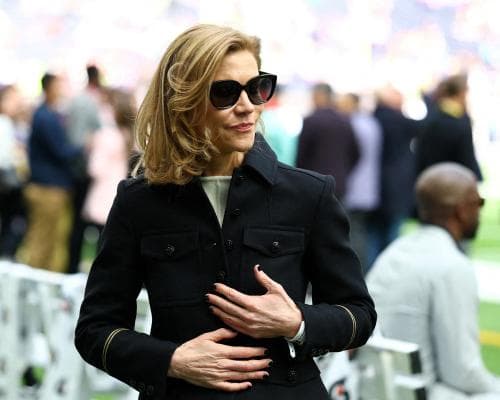
There is a certain art to the takeover—a dance of balance sheets, whispered negotiations, and the quiet weight of legacy. Amanda Staveley knows it well. The woman who orchestrated the most talked-about acquisition in modern football—Newcastle United’s Saudi-backed renaissance—has now turned her gaze east, to the claret and blue of West Ham United. In a move that has sent ripples through the corridors of power at the London Stadium, Staveley’s consortium, alongside her husband Mehrdad Ghodoussi and PCP Capital Partners, has agreed to purchase the Gold family’s 25.1% stake in the club. It is a deal that feels less like a transaction and more like a coronation.
The Gold family’s departure is steeped in sentiment. Vanessa Gold, daughter of the late David Gold, who co-owned the club for over a decade, has been the steward of a legacy her father built with equal parts passion and pragmatism. “As the daughter of David Gold, it was a great honour to step into a joint chair and director role at the club following his passing in 2023,” she said, her words carrying the weight of family history. But sentiment, as any collector knows, must eventually yield to strategy. The previously agreed sale to Czech billionaire Daniel Kretinsky collapsed, a casualty of the sport’s ever-shifting chessboard. Now, Staveley steps in—not as a white knight, but as a master tactician.
For the uninitiated, Staveley is not merely a financier; she is a force of nature. Raised in Yorkshire, educated at Cambridge, she built her reputation brokering deals that others deemed impossible. Her role in the Saudi Public Investment Fund’s acquisition of Newcastle in 2021 was a masterclass in patience and persuasion. That deal transformed a struggling club into a formidable contender, with a state-of-the-art training ground, a squad rebuilt with surgical precision, and a fanbase that once chanted for change now singing her praises. West Ham, relegated to the Championship last season just two years after lifting the Europa Conference League trophy, presents a different kind of challenge. But Staveley has never shied from a challenge; she thrives on the underdog narrative.
The Gold family’s 25.1% stake is not merely a shareholding; it is a piece of football history. David Gold, alongside David Sullivan and Karren Brady, guided West Ham through its move from Upton Park to the London Stadium, a transition that was as controversial as it was transformative. The family trust has held the club’s fortunes in their hands, and now, with the sale pending a pre-emption process that allows existing shareholders to match the offer, the future hangs in a delicate balance. Staveley’s consortium has reportedly agreed to a deal that values the club at a premium, a signal of her confidence in West Ham’s potential. The price, while undisclosed, is rumored to be significant, a statement of intent in a market where football clubs have become the ultimate luxury asset.
In the world of ultra-wealthy collectors, football clubs occupy a unique space—they are not just investments but passports to cultural significance. Staveley understands this better than most. Her acquisition of Newcastle was not about the balance sheet alone; it was about building a legacy that transcends the pitch. West Ham, with its working-class roots and passionate fanbase, offers a similar canvas. The club’s identity is raw, unpolished, and deeply authentic—qualities that the luxury market increasingly craves. In an era where everything is curated, West Ham remains gloriously unvarnished. Staveley’s involvement could bring the sheen of sophistication without erasing the club’s soul, a delicate balance that few have achieved.
What does this mean for the broader landscape of football ownership? It signals a shift from the era of the billionaire playboy to the era of the strategic operator. Staveley is not a passive investor; she is an active architect. Her track record suggests she will not simply write checks but will immerse herself in the club’s fabric, from youth development to stadium atmosphere. The pre-emption process, which gives existing shareholders the first right of refusal, could still complicate matters. Daniel Kretinsky, who holds a 27% stake, may yet exercise his option to buy the Gold family’s shares. But if Staveley prevails, the dynamic will shift dramatically. A club with ambitions of returning to the Premier League under a leader with a proven playbook is a tantalizing prospect.
For the connoisseur of fine things, there is a lesson here: true value lies not in what is, but in what could be. Staveley’s move is a bet on potential, on the intangible magic that turns a struggling club into a dynasty. As the season unfolds and the pre-emption process plays out, the eyes of the football world—and the luxury world—will be fixed on East London. Will Staveley add another jewel to her crown? Or will this be a footnote in a career defined by bold strokes? Either way, the Gold family’s chapter closes with dignity, and a new one begins with promise. In the game of high-stakes ownership, the only certainty is change, and Amanda Staveley has never been one to sit still.