The £33 Million Leak: Inside the Collapse of a Water Empire Serving England’s Garden of Eden
Imagine this: You own a country estate in Kent. The lawns are emerald, the rose garden is immaculate, and the private lake is stocked with trout. Then, the taps run dry. Not for a day, but for months. Your neighbours—the hedge fund managers, the old-money aristocrats, the tech founders who fled London for a slice of the Garden of England—are all furious. And the company responsible? It’s now warning it may not survive until 2028.
That company is South East Water. It serves 2.4 million customers across Kent, Sussex, Surrey, Hampshire, and Berkshire—the very heart of the Home Counties, where a second home is a birthright and a swimming pool is practically mandatory. Its annual report, published on a Friday to bury bad news, reveals a staggering loss of £33 million, up from £14 million the year before. Revenues soared to £352 million, thanks to a 7% bill hike approved by the regulator. Yet the company is bleeding cash. It has £90 million in the bank—enough for 14 months—but it admits there is “material uncertainty” over its survival after July 2027. The board is scrambling for new loans, but no one has signed on the dotted line.
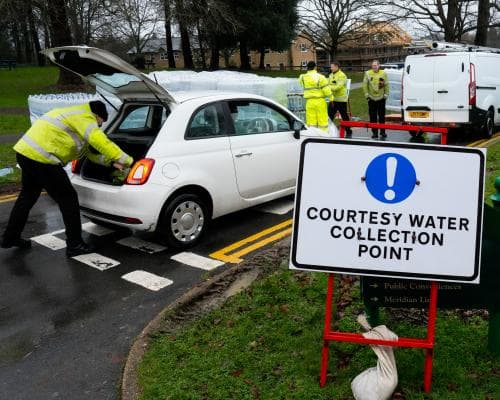
The rot runs deep. Last winter, a series of supply failures in Kent and Sussex left villages without water for weeks. The chair, Chris Train, resigned. The CEO, David Hinton, promised to step down after months of public flogging—but not before pocketing £488,000 in total pay, up from £458,000 the previous year. He forwent his bonus, but the optics are brutal. Ofwat, the regulator, slapped the company with a £30.5 million redress package, adding to the financial sinkhole. And just last month, South East imposed a hosepipe ban in Kent, blaming “extreme weather events fuelled by climate change.” The language is clinical. The reality is a PR nightmare for anyone with a country pile and a thirsty lawn.
This is not a story about a failing utility. It is a story about what happens when essential infrastructure is treated like a high-yield bond. South East Water is drowning in £80 million a year in finance costs—interest payments on the debt loaded onto it by private equity owners. Now, it is considering borrowing from “non-traditional credit markets and high-yield alternative credit providers.” Translation: hedge funds and private debt vultures. If mainstream banks won’t lend, the company will turn to the same players who fund distressed real estate and leveraged buyouts. The irony is thick enough to cut with a platinum knife.
For the ultra-wealthy, this is a flashing red signal. The Home Counties are not just a postcode; they are a lifestyle asset. A water crisis in Surrey is a crisis for the value of every estate, every golf club, every private school. The incoming prime minister is already contemplating putting Thames Water into special administration—a polite form of nationalisation. If South East follows, the state will step in, and the era of privatised water, born in 1989, will end not with a bang but with a leaky pipe.
What does this tell us about wealth and taste? That even the most exclusive address is vulnerable to the mundane: a broken main, a dry reservoir, a boardroom that cannot pay its bills. The luxury market is built on certainty—on the promise that the water will flow, the power will stay on, and the lawn will stay green. South East Water has shattered that promise. For the owners of those country estates, the message is clear: diversify your assets, but also diversify your utilities. A private well might be the ultimate status symbol.
Looking ahead, the clock is ticking. South East Water has until summer 2026 to secure funding, or it will face the same fate as Thames Water. The hedge funds are circling. The regulators are sharpening their knives. And the residents of Kent are stockpiling bottled water. For the reader of this magazine, the lesson is not about water. It is about control. When the infrastructure that supports your lifestyle wobbles, you need a plan B. That might mean investing in a private desalination unit, buying a property with its own borehole, or simply paying closer attention to the annual reports of the companies that keep your world running. Because in the end, even a billionaire cannot drink money.
The Experience
To secure your estate’s water independence, contact our private infrastructure concierge for a curated portfolio of off-grid water systems and sustainable luxury utilities.