“They Decide Who Matters”: A Mother’s Fight to Make the Met See Every Woman
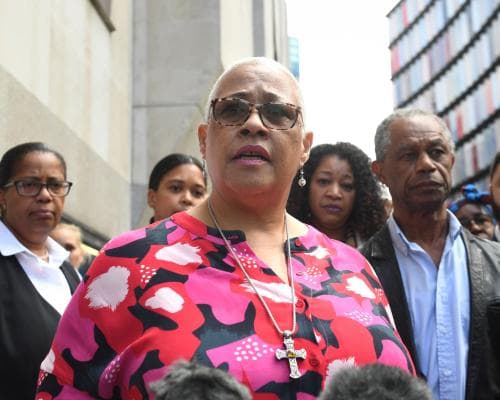
Mina Smallman does not speak like a woman who has been broken by grief. She speaks like a woman who has been sharpened by it. When she heard that Simon Levy—a man who had been allowed to roam free despite a string of sexual assaults—had gone on to murder two more women, she didn’t just shake her head. She picked up her phone and texted the Commissioner of the Metropolitan Police, Sir Mark Rowley. “How many times are you going to stand up publicly and apologise for failures in the Met?” she asked. The question hung in the air, unanswered, like so many others she has asked over the past five years.
Smallman’s daughters, Bibaa Henry and Nicole Smallman, were murdered in a north London park in June 2020. The tragedy was compounded by an almost unimaginable betrayal: two Met police officers took photographs of their dead bodies and shared them in WhatsApp groups, referring to the sisters as “dead birds.” The officers were jailed in 2021, but for Smallman, the incident was not an aberration—it was a window into a culture that decides, case by case, whose life is worth protecting and whose death is worth investigating.
Now, with the Levy case, Smallman sees the same pattern repeating. Levy, 40, was given a whole-life sentence this week for the murders of two women—one a sex worker, the other a mother of four. But here is the detail that stops you cold: the first murder was barely investigated. Police did not connect the dots until Levy killed again. “Because she was a sex worker, she wasn’t taken seriously,” Smallman said. “They didn’t look into her murder until he murdered a mother of four, and then they joined the two cases together. How ridiculous is that. Once again, the Met is deciding who matters.”
Smallman’s activism is not just about her own daughters, though their faces are never far from her words. She has become a voice for the invisible victims—the women whose lives are dismissed because of their profession, their postcode, or their past. She has met with police leaders, spoken to the media, and pushed for systemic change, but she remains deeply skeptical that the Met can reform itself from within. “It’s too big for any senior team to have a hands-on understanding of the day-to-day activities,” she said. “It’s a joke.” Her frustration is not the anger of a bystander; it is the clarity of someone who has seen the machinery of justice up close and found it wanting.
The Levy case is a damning indictment of that machinery. Levy had been convicted of sexually assaulting 11 other women, 10 of them on trains and the London Underground between 2023 and 2025. He was a known predator. Yet he was free to kill. For Smallman, the failure is not just a series of individual errors; it is a systemic blindness to violence against women. She has called for the Met to be broken up, for leadership to be held accountable, and for every case to be treated with the same urgency, regardless of who the victim is. Her campaign is not about revenge—it is about recalibration. She wants a police force that sees every woman as someone’s daughter, someone’s sister, someone who matters.
What Smallman is doing is a form of philanthropy that rarely makes the headlines: she is giving her pain to the public. She is turning her personal tragedy into a lever for institutional change. She has spoken at inquests, appeared on national radio, and met with officials—all while carrying the weight of a loss that would crush most people. Her gift is not money; it is moral clarity. In a world where billionaires fund museums and hospitals, Smallman is funding a more radical project: the idea that justice should not be a lottery. Her impact is measured not in pounds raised, but in the uncomfortable questions she forces the Met to face.
And yet, for all her harsh words, Smallman is not without hope. She continues to engage with Sir Mark Rowley, because she believes that even a flawed institution can change if enough pressure is applied. Her message is simple: stop apologizing, start fixing. Stop treating some lives as expendable, and start treating every case as if the victim were your own. Until then, she will keep speaking, keep pushing, and keep reminding the Met—and the rest of us—that “who matters” is not theirs to decide.