Netanyahu Calls an October Election — Israel’s Wealth Engine Holds Its Breath
Benjamin Netanyahu has done it again. Just when the obituaries for his political career were being drafted, the man who has dominated Israeli politics for three decades called a snap election. On 27 October, Israelis will head to the polls for the first time since the Hamas-led attacks of 7 October 2023 — a vote that is equal parts referendum on national security and personal judgment on a prime minister fighting corruption charges. The Knesset dissolves on Friday, and in its final days, the most far-right government in Israel’s history is rushing through a slate of controversial laws to lock in its agenda before the campaign begins.
For anyone watching the flows of capital in the Middle East, this is the moment the music stops — or at least slows down. Israel’s economy, a $500 billion powerhouse driven by tech exports, defense contracts, and a booming venture capital scene, now faces a prolonged period of political limbo. Elections are inherently destabilizing for markets. They freeze policy, delay budgets, and spook foreign investors who crave predictability. The shekel, which has already weakened against the dollar this year as geopolitical tensions flared, could come under further pressure. Bond yields? Watch them climb as the risk premium on Israeli sovereign debt reprices.
The numbers tell a stark story. Current polling shows Netanyahu’s coalition trailing, with the opposition Likud breakaway party led by Benny Gantz and centrist Yesh Atid gaining ground. But never count Bibi out. He is a political Houdini who has survived multiple elections, a corruption trial, and the worst security failure in Israel’s history. His strategy? Double down on the far-right. His coalition partners — including the extremist Religious Zionism and Otzma Yehudit factions — are using their final days in power to push laws that expand Israeli control in the occupied West Bank and entrench settler violence. This is not just politics; it is a wealth transfer to a specific ideological constituency, backed by cabinet power and funded by state budgets. For investors in Israeli real estate or defense-linked equities, the signal is clear: the government is betting on conflict as a campaign tool.
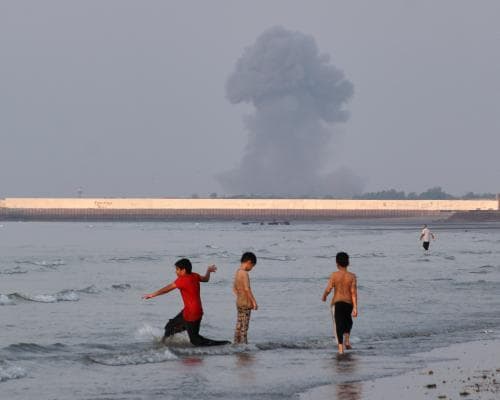
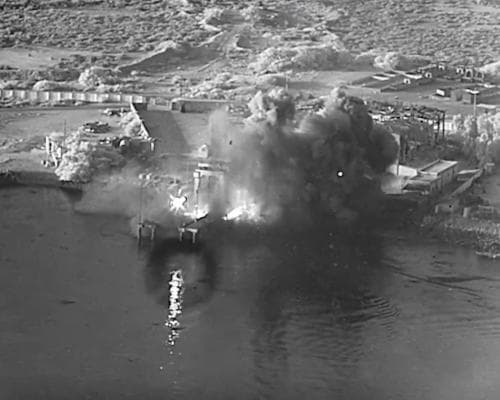
Then there is the regional dimension. The article notes that Lebanese President Joseph Aoun condemned Iranian attacks on Gulf states, calling them designed to keep the region in “permanent tension.” Yemen’s Iran-backed Houthis have struck Saudi Arabia’s Abha airport with ballistic missiles. This is not background noise — it is the context in which Israeli assets are priced. A volatile Israel in an already volatile neighborhood means higher insurance costs, higher hedging costs, and a higher bar for deploying capital. The Tel Aviv Stock Exchange’s TA-35 index, which includes blue chips like Teva Pharmaceutical and Israel Chemicals, has been range-bound for months. An election could break it either way: a decisive win for a stable coalition might trigger a relief rally; a hung parliament or a far-right victory could send capital fleeing to safe havens like U.S. Treasuries or gold.
For the ultra-wealthy with exposure to Israeli tech — think venture capital funds like OurCrowd, or sovereign wealth funds with stakes in Israeli startups — the election adds a layer of optionality risk. Startup valuations in Tel Aviv have already cooled from their 2021 highs, as global tech corrections and local political unrest dampened enthusiasm. An election campaign dominated by security rhetoric and settler expansion could further delay IPOs and M&A activity. The smart money is watching two things: whether Netanyahu can form a stable coalition after the vote, and whether the next government will prioritize fiscal discipline or ideological spending. The latter would mean higher deficits, higher taxes, and a weaker shekel — bad news for dollar-based investors.
History offers a guide. In the 2019–2021 cycle of four elections, Israeli markets underperformed global peers during the prolonged political paralysis. The shekel depreciated, foreign direct investment slowed, and the Bank of Israel had to step in with currency interventions. This time, the stakes are higher. The war with Hamas, the threat from Hezbollah, and the shadow of Iranian proxy attacks mean that any political vacuum is a security vacuum. Markets hate uncertainty, and Israel is about to serve a heaping plate of it.
What does this mean for the wealth builders reading this? Diversify your Israeli exposure. Hedge shekel risk. Watch the polls like a hawk. And remember: in the Middle East, the only constant is that nothing is constant. Netanyahu may defy the polls again, but the smartest capital is already pricing in a bumpy ride through October and beyond.