The Billionaire Who Bought a Palace, Then Rebuilt a Town: Inside the Mad, Magnificent Kynren
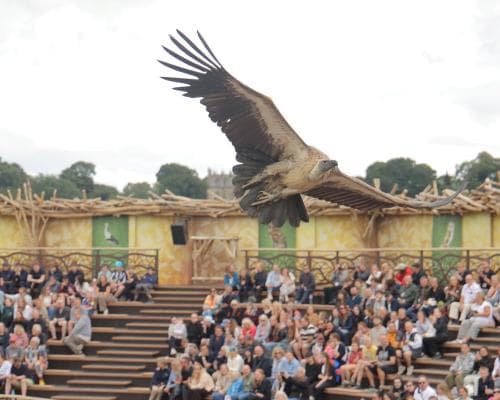
Imagine sitting on a wooden bench in a northern English drizzle, a falcon skimming your hair, as Hans Zimmer-style music shakes your ribs. Two hundred and fifty birds — hawks, kites, pelicans, an owl — carve the sky above a pagan circle. Peacocks strut by a fake river, while actors whisper stories of man and nature. You are not at a film set. You are in Bishop Auckland, a former coal-mining town twelve miles south of Durham, watching Kynren: the Storied Lands. And none of this would exist if one couple hadn’t decided that owning a palace wasn’t enough. They had to own the town’s future.
This is the Ruffer effect. In 2012, investment banker Jonathan Ruffer bought Francisco de Zurbarán’s series Jacob and His Twelve Sons — a set of life-sized 17th-century Spanish masterpieces — at auction. He needed a place to hang them. So he bought Auckland Palace, a gothic colossus dating from the late 1100s. Most billionaires would have closed the gates, installed climate control, and invited only their closest friends. The Ruffers did the opposite. They set up a charity, opened the palace and gardens to the public, and kept buying. They bought the high street. They bought the railway. They bought a Roman fort. They built two art galleries — one dedicated to mining art, one to Spanish Golden Age works by El Greco and Velázquez. Then they built a viewing tower that rises like a stone spine above the town. And then, because a palace and a gallery and a tower weren’t enough, they created a live outdoor spectacle with nearly 250 birds, actors, and a score that rattles your chest.
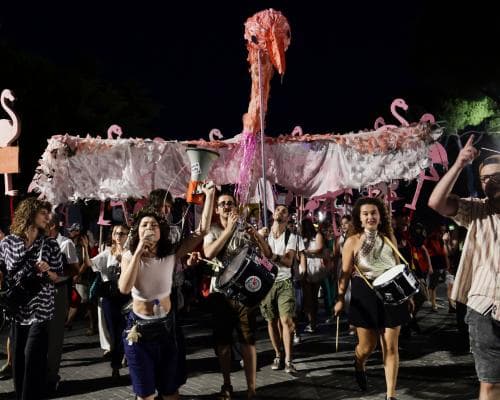
Let’s talk about the craftsmanship. The palace itself is a lesson in stone and patience: archways that feel medieval, a painted wooden ceiling in St Peter’s Chapel that makes you forget what century you’re in. The Zurbaráns hang in the dining room, their pigments still fierce after four centuries. But the real rarity here isn’t the art — it’s the intention. The Ruffers didn’t just preserve. They hired 201 staff, 80 percent from within a ten-mile radius. They built a circular economy where culture pays for itself. The mining art gallery isn’t a dusty local museum; it’s a sleek, ink-black space that treats coal dust as seriously as it treats El Greco. The viewing tower isn’t a folly; it’s a beacon. And Kynren isn’t a theme park; it’s a living, breathing pageant that costs millions to stage and charges admission that barely covers the bird feed. This is patronage as performance.
What does this signal about wealth and taste? It says that the new luxury isn’t a private jet or a superyacht — it’s the ability to reshape a place. To take a town that, twenty years ago, was all discount stores and boarded-up windows, and turn it into a destination where falcons fly and Spaniards hang on dining room walls. The Ruffers have done what every billionaire dreams of: they have bought immortality, not in a vault, but in a community. They have made their mark not with a taller skyscraper or a faster car, but with a palace that breathes, a railway that runs, and a sky full of birds. In an era of quiet luxury, this is the loudest possible statement: I will not just own beautiful things. I will make beauty the engine of an entire town.
Looking forward, Kynren is only the beginning. The Auckland Project continues to expand — more galleries, more performances, more ways to draw the world to this unlikely corner of County Durham. For the ultra-wealthy, the lesson is clear: the most exclusive possession isn’t a painting. It’s a legacy that flies, sings, and hires your neighbours. The Ruffers have shown that money, when spent with imagination and nerve, can turn a former mining town into a living work of art. And if you ever doubt the power of one couple’s vision, go sit in the rain in Bishop Auckland. Watch the birds. Listen to the music. You will feel your bones shake — and your idea of what wealth can do will change forever.
The Experience
Book a private, curator-led tour of Auckland Palace and the Zurbarán collection, followed by VIP seating at Kynren with a post-show dinner in the palace’s gothic dining room. Contact the Auckland Project’s concierge for bespoke arrangements.