The Kitchen Tycoon Rewriting Wakefield's Rugby League Fairy Tale
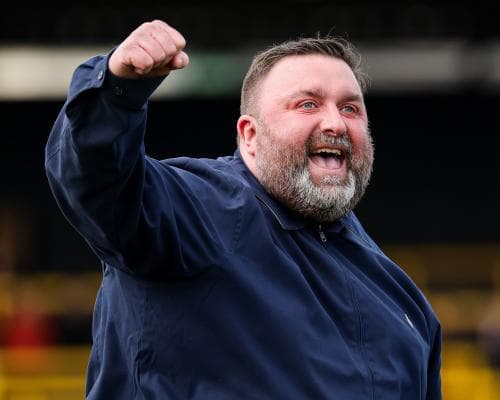
Matt Ellis was born too late. The glory days of Wakefield Trinity—the 1960s when the club ruled rugby league with two league titles and three Challenge Cup wins—are a story his elders tell, not a memory he carries. For most of his life, supporting Trinity meant one thing: mediocrity. A brief playoff flirtation a decade ago was the exception; the rule was a grim scrap at the bottom of Super League, year after year, on a shoestring budget that kept the club alive but never thriving. Then came 2023, the darkest day: relegation to the second tier for the first time in 25 years. But for Ellis, that fall was the spark. He saw not a catastrophe, but an opportunity to rebuild from the ashes.
Ellis is not a billionaire, nor a tech titan, nor a hedge fund mogul. He is the man behind DIY Kitchens, a West Yorkshire company built by his family over decades, selling affordable kitchens to the nation. His wealth is real but hard-earned, rooted in the same working-class communities that pack the terraces at Belle Vue. When he first invested £250,000 in the club during that relegation season, it was a gesture of loyalty. Then he went further—much further. Alongside his family, Ellis bought the club outright, and with it, a promise that made the town's eyebrows rise: Wakefield would win a major trophy within five years. At the time, they were preparing for life in the Championship, a division they hadn't graced since 1998. It sounded like the bravado of a man who didn't understand the sport's harsh economics.
But Ellis understood something deeper: the power of belief. He poured around £10 million of his family's money into the club, not as a vanity project, but as a lifeline. That investment has been transformative. Big-money signings arrived, players who would have never considered Wakefield in their prime. The famous Belle Vue ground, with its crumbling stands and memories, has been revamped, its facilities modernized to match the ambition of its new owner. And plans for a new training ground are accelerating, a signal that this is not a short-term gamble but a long-term commitment. The results have been staggering: in 2024, Wakefield won the Championship at a canter, and now, with seven rounds left in the 2025 Super League season, they sit second, sandwiched between giants Leeds and Wigan.
What Ellis has done goes beyond money. He has rekindled a community's pride. Wakefield is a historic rugby league town, but for decades, its team has been a punchline. Ellis has changed the narrative by showing up, by investing not just in players but in the club's infrastructure, and by speaking with the unshakeable optimism of a fan who refuses to accept second best. "I want to make this club one of the biggest in the country," he says, and you believe him. His approach is a masterclass in philanthropic ownership: not the distant, corporate stewardship of a global conglomerate, but the hands-on, emotional investment of a local boy done good.
The broader impact of Ellis's generosity is felt far beyond the pitch. The club's revival has brought new energy to the town's economy, with matchdays drawing bigger crowds and local businesses thriving. It has given young fans—like Ellis once was—a reason to dream, not of the past, but of the future. And it has challenged the prevailing culture of giving in sport, where billionaires buy clubs as toys and treat fans as customers. Ellis treats Wakefield as a trust, a legacy to be built, not exploited. His five-year promise was bold; he is on track to deliver it in half the time. And in doing so, he is writing a new chapter in the club's history, one where the glory days are not just remembered, but recreated.
For the wider world of philanthropy, Ellis's story is a reminder that extraordinary good can come from ordinary wealth, if it is wielded with heart. He is not writing checks to distant causes; he is investing in the place he calls home, in the club that shaped his identity. His is a philanthropy of belonging, of roots, of shared triumph. As Wakefield Trinity rise, so does the town's spirit, and Matt Ellis—the kitchen magnate with a rugby league dream—has become its unlikely hero.