The Art of Roughing It: Why the Ultra-Wealthy Are Rediscovering the One-Person Tent
The most coveted reservation this season isn’t at a three-Michelin-starred restaurant overlooking the Mediterranean. It’s a patch of damp grass in Devon, shared with a terrier, a spork, and a single gas stove. I know this because I just lived it. And if you think that sounds like a step down from the private-jet set, you’re missing the point entirely.
Here’s the truth the glossy brochures won’t tell you: real exclusivity isn’t about the number of staff or the thread count of your sheets. It’s about the audacity to strip everything away. To sleep in a one-person tent, to share bathroom facilities with a few hundred strangers and the local spider population, and to find joy in a meal thrown together from a village shop. That is the new luxury—not the absence of discomfort, but the mastery of it. My recent week in Devon proved that the most memorable feasts aren’t the ones you order, but the ones you coax into existence from a chorizo, a block of feta, and a little luck.
The numbers tell a quieter story. While the mass market chases glamping pods with heated floors and mini-fridges, a discerning few are going the other way. They’re carrying everything on their backs: a small gas stove or a disposable barbecue, a knife, and a spork. No van with a fitted kitchen. No cooler full of pre-prepped meals. Just you, a key ingredient that doesn’t need refrigeration, and the resourcefulness to build a meal around it. For me, that ingredient was cured chorizo—the kind that ages, not cooks—and feta. With those two flavor bombs, plus olive oil, chilli sauce, and salt, you can turn any roadside find into a feast. Claudia Roden’s spicy potatoes from Rioja, Thomasina Miers’ piperade with baked eggs, or even a simple baba ganoush made from blackened aubergines over a fire pit (tahini optional, audacity required).
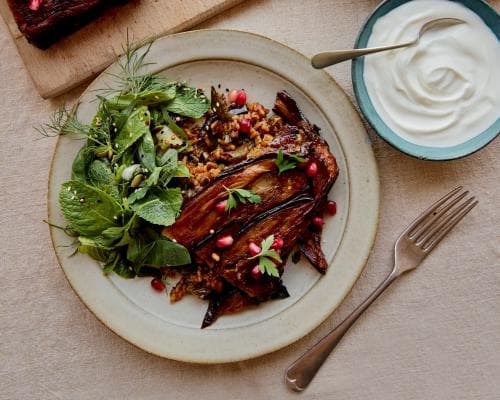
This is craftsmanship at its most elemental. There’s no sous-chef, no imported cookware, no curated playlist. There’s only the flame, the ingredient, and your nerve. At one site, we coaxed a fire from damp kindling and charred aubergines until their skins blistered black. The resulting dip—smoky, soft, and utterly imperfect—was better than any restaurant version because it carried the memory of the struggle. That’s the rarity angle: you cannot buy this experience. You can only earn it, one hard-won flame at a time. And when you pair it with a supermarket pitta and a handful of cherry tomatoes, you understand why the world’s most interesting people are trading their private chefs for a spork.
What does this signal about wealth and taste? It signals a shift from consumption to curation. The old status symbols—the yacht, the chalet, the watch that costs more than a house—are becoming predictable. The new signal is the ability to find pleasure in the primitive. It says: I don’t need the trappings; I have the confidence to go without. It’s the same impulse that drives a billionaire to wear a worn-out pair of boots or drive a twenty-year-old car. It’s not about saving money; it’s about proving you don’t need to spend it. Camping, real camping, is the ultimate flex. It says you can handle the discomfort, and you can still make a damn good meal.
Looking forward, the luxury market will see more of this—not less. The ultra-wealthy are beginning to realize that the most exclusive thing you can own is your own resourcefulness. The next hot ticket won’t be a private island; it’ll be a one-person tent in a field where the village shop sells fresh eggs and the fire pit is free. The true connoisseur will know that the best meal of the year is scrambled eggs and chorizo, eaten with a view of a gently babbling brook, with an elderly terrier at your feet. And they’ll know that the only reservation you need is the one you make with yourself.
The Experience
To experience this yourself, book a pitch at a farm campsite in Devon or the Lake District, pack only a stove, a spork, and a cured chorizo, and let the village shops guide your menu.