The Billionaire’s Shortcut: Sami Tamimi’s Deconstructed Dolma Bake
There is a quiet tyranny in the kitchen that only the truly busy understand: the dish you crave most is often the one that demands the most hours. For the ultra-wealthy, time is the one commodity that cannot be bought in bulk. So when a chef of Sami Tamimi’s calibre announces he has cracked the code on one of the Middle East’s most labour-intensive classics, the world of private chefs and estate kitchens takes notice. This is not just a recipe. It is a liberation.
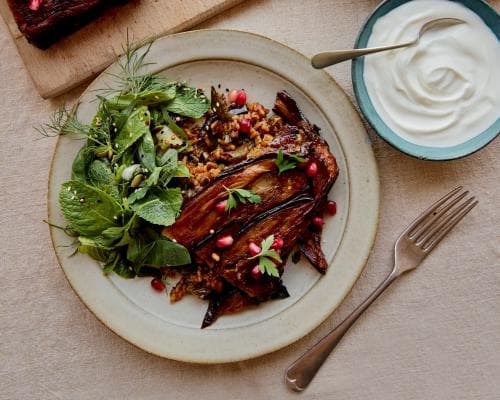
Tamimi, the culinary force behind London’s beloved Ottolenghi empire, has turned the traditional Iraqi dolma—a dish that typically requires coring, stuffing, and rolling individual vegetables and vine leaves—into a single, elegant bake. The original is a labour of love, a slow dance of precision that can consume an entire afternoon. His version? It captures every fragrant note of baharat, turmeric, and pomegranate molasses, but replaces the painstaking assembly with layered aubergine slices and a single, sealed baking dish. The vine leaves, once individually wrapped, become silky and tender when scattered through the filling. The result is a pie that tastes like a family heirloom but cooks like a weeknight secret.
The numbers tell the story of efficiency without sacrifice: 20 minutes of active prep, 90 minutes in the oven, and a 20-minute rest. That is roughly two hours from start to table for a dish that serves six. For a private chef managing a household in the Hamptons or a yacht anchored off Capri, that is a gift. The ingredients themselves are a study in understated luxury—Egyptian rice (a short-grain variety that absorbs flavour like a sponge), freshly ground coffee (a Tamimi signature that deepens the savoury profile), and pomegranate molasses that costs more per ounce than most balsamics. This is not peasant food dressed up; it is heritage refined.
What makes this dish a status signal is not the price per serving—it is the intelligence behind it. The truly wealthy do not flaunt truffles; they flaunt taste. A chef who knows to layer rather than stuff, who understands that a bright, lemony spinach salad with chilli and herbs is the perfect counterpoint to a rich, spiced bake, demonstrates a fluency in flavour that cannot be faked. The pomegranate seeds scattered on top are not garnish; they are a wink. They say: I know the original, and I respect it enough to reinvent it.
This recipe also speaks to a broader shift in luxury entertaining. The era of the multi-course, white-glove dinner is yielding to something more intimate and intelligent: family-style meals that still whisper exclusivity. A dolma bake, served warm or at room temperature with a dollop of yoghurt, invites conversation. It says the host values connection over formality. And in a world where time is the ultimate currency, a dish that delivers depth without drudgery is the rarest commodity of all.
Looking ahead, expect more chefs to follow Tamimi’s lead. The ultra-wealthy are increasingly commissioning custom recipe archives for their homes—dishes that taste like tradition but fit into a schedule that spans continents. This dolma bake is a blueprint. It proves that the best luxury is not about doing more; it is about doing less, better. For those with the means to hire a chef who can execute this vision, the payoff is a meal that feels both effortless and unforgettable. That is the kind of wealth that truly satisfies.
The Experience
Book a private consultation with a chef specializing in Middle Eastern heritage cuisine to adapt this recipe for your home kitchen, yacht galley, or mountain lodge. Taste the shortcut that tastes like tradition.
More in FOOD