The $10,000 Cobb Salad: How a Hollywood Restaurateur’s Midnight Snack Became the Ultimate Status Plate
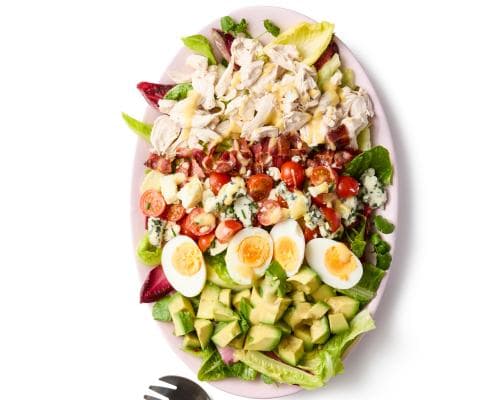
Imagine this: It’s past midnight in 1937. The kitchen at Hollywood’s Brown Derby is closed. The owner, Bob Cobb, is hungry. He opens the walk-in, grabs whatever is left—avocado, bacon, chicken, a wedge of blue cheese—and starts chopping. No ceremony. No recipe. Just a man, a bowl, and a craving.
That midnight scramble became the Cobb salad. And today, it’s one of the most quietly expensive things you can order without a reservation. Not because of the ingredients—chicken, eggs, lettuce, tomatoes, bacon, avocado, blue cheese, chives—but because of the story. The Institute of Culinary Education calls it “the spirit of American ingenuity.” I call it the ultimate flex for people who don’t need to flex.
Let’s talk about what this dish actually demands. The classic version serves four and takes about an hour from start to finish. You poach or pan-fry the chicken—ideally in the same pan you used for the bacon, because fat is flavor. You boil the eggs for exactly ten minutes, then plunge them into cold water. You make a dressing from red-wine vinegar, Dijon mustard, a whisper of garlic, lemon juice, Worcestershire sauce, and a neutral oil. You fry the bacon until it shatters. You arrange everything in neat rows on a bed of cos, watercress, and chicory. Then you crumble Roquefort over the top. Not blue cheese. Roquefort.
That specificity matters. A Cobb salad made with supermarket cheddar and bagged lettuce is a different species. The real thing demands sourcing—a good butcher for the bacon, a cheese monger who knows the difference between Roquefort and Stilton, a farmer’s market avocado that yields exactly when you press it. For the ultra-wealthy, this isn’t a recipe. It’s a supply chain.
What the Cobb salad signals today is taste that doesn’t shout. In an era of gold-leaf burgers and truffle-oil everything, this dish stands for restraint. It says: I know what good food is, I know how to make it, and I don’t need a tasting menu to prove it. It’s the kind of meal you serve at a private box during the Super Bowl—satisfying, easy to eat with one hand, and impressive without being pretentious. It’s game-day food for people whose game day includes a helicopter commute.
The market has noticed. Private chefs now charge upward of $10,000 for a weekend of bespoke cooking, and the Cobb salad is often one of the first requests. Not because it’s difficult—it’s not—but because it’s personal. It requires a chef who understands the client’s preferences: smoked tofu instead of chicken, grilled zucchini instead of bacon, or, if you insist, a double portion of avocado because the client flew in from California and knows what a real avocado tastes like. The original Brown Derby recipe calls for four different leaves. The modern version calls for a conversation.
So what does the Cobb salad tell us about the luxury market in 2025? That the most coveted things aren’t always the most complex. That provenance matters more than presentation. That a dish born from a late-night kitchen raid can become a symbol of quiet, unshakable confidence. The billionaire who orders a Cobb salad isn’t showing off. He’s showing he knows.
And that, honestly, is the most expensive thing of all.
The Experience
Book a private chef through your concierge service for a bespoke Cobb salad dinner, sourced from your preferred purveyors and tailored to your exact palate.