FIFA’s $20 Billion Bet: Selling the World Cup to Private Capital
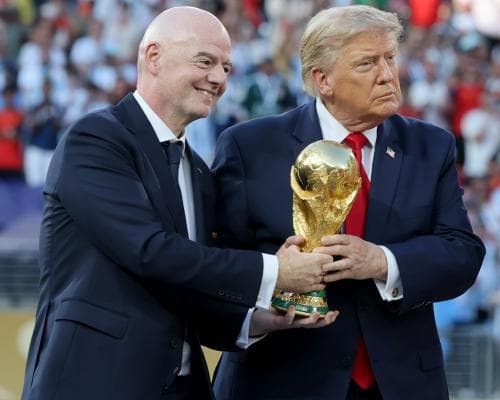
Football’s governing body is about to do something that would make a private equity partner blush: sell a piece of the World Cup itself. FIFA has confirmed it is working with JP Morgan to create a new entity called FIFA Forward Enterprise (FFE), which will raise hundreds of millions — and eventually billions — by selling a significant stake in the commercial rights to the men’s and women’s World Cups, plus the Club World Cup. The valuation floating around Zurich and New York? Roughly $20 billion. Yes, that’s billion with a B.
Let’s be clear about the scale here. FIFA says the plan will unlock “over $10 billion” in distributions back to its 211 member associations. That’s on top of the $15 billion-plus in revenue the organization already expects from the 2026 World Cup in the United States, Canada, and Mexico. The mechanism is classic financial engineering: create a separate corporate vehicle, sell equity in that vehicle to institutional investors, and use the upfront cash to fund development and, presumably, pad FIFA’s coffers. The lead investor search is being run by Thrive Capital, the firm founded by Josh Kushner — brother of Jared Kushner, Donald Trump’s son-in-law. For the wealth set, that name alone signals serious deal flow.
The pushback was immediate and theatrical. UEFA issued a statement accusing FIFA of “attempting to sell the soul of football.” Elite European clubs are privately fuming, and sources say UEFA is considering legal action. The core complaint? That FIFA is turning the world’s most cherished sporting event into a securitized asset, one that could be stripped, leveraged, and traded like a corporate bond. For fans, it’s an emotional betrayal. For the money crowd, it’s a fascinating case study in asset monetization.
Here’s where the capital angle gets interesting. FIFA is effectively treating its quadrennial cash cow as a permanent, income-generating asset — even though the World Cup only happens every four years. By packaging the rights across multiple tournaments and selling equity, FIFA converts a lumpy revenue stream into a steady, predictable flow. That’s exactly the kind of structure that pension funds, sovereign wealth funds, and ultra-high-net-worth families love: long-duration, inflation-hedged, globally diversified cash flows. The implied $20 billion valuation is a bet that football’s popularity — especially in emerging markets — will only grow. And with the 2026 tournament hosted across North America, the advertising and sponsorship upside is enormous.
For the wealthy, this is a signal worth watching. Private capital is now circling the most iconic live-event rights on the planet. If FIFA succeeds, it will set a precedent for other sports bodies — think the IOC, UEFA itself, or even major leagues — to follow suit. The deal also highlights the growing role of family offices and growth-equity firms in sports finance. Thrive Capital’s involvement is no accident; Kushner’s firm has deep ties to tech and media, and this move positions it at the intersection of content, live events, and alternative assets. Expect other billionaires to take notice.
Looking ahead, the vote on the plan hasn’t been scheduled — FIFA says it needs a “majority” of member associations to approve. But with $20 billion on the table and Infantino eager to cement his legacy, don’t bet against it. The real question for investors isn’t whether FIFA will sell — it’s what happens to the soul of the game when the balance sheet becomes the scoreboard. For now, the smartest capital in the room is placing its chips on football’s future, one securitized tournament at a time.