The Iran Trade: How Trump’s Bombs-and-Talk Strategy Is Moving Markets
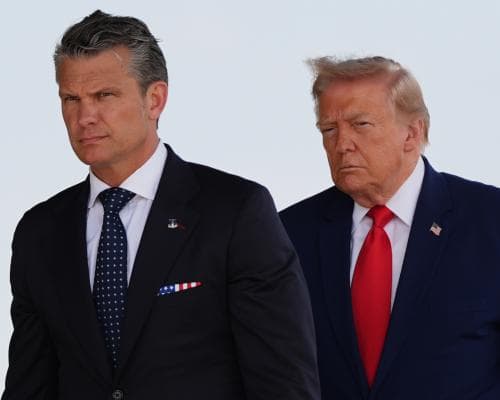
Donald Trump was on Air Force One this week, doing what he does best: mixing menace with a dealmaker’s wink. He’d just authorized five months of sustained bombing against Iran. He’d also just told reporters that Tehran had “requested a meeting” and that the two sides were having “good talks.” For anyone managing serious capital, that dissonance isn’t noise—it’s a signal.
Let’s be blunt: this is the most consequential geopolitical trade of 2025 so far. The White House is simultaneously escalating military pressure and opening a diplomatic backchannel. That’s not a contradiction; it’s a classic Trumpian squeeze. He wants Iran at the table, but only after they’ve been hit hard enough to beg. “Without what we did, they wouldn’t even be talking to us,” he said. The message for markets: volatility is the product, and the savvy money is already pricing it in.
The mechanics are brutal but clear. Trump confirmed that his defense secretary, Pete Hegseth, convinced him Iran was approaching “a point of no return.” The result? A pre-emptive bombing campaign that has drained U.S. ammunition stockpiles—though Trump insists “we have a lot, more than we could ever use.” He also blamed Biden for giving too much to Ukraine, which is a pointed reminder that defense budgets are finite. For investors, that means Lockheed Martin, RTX, and their supply-chain cousins are looking at sustained government demand, not a one-off spike.
Then there’s the oil angle. Iran is a major OPEC producer, and five months of bombing has knocked a meaningful chunk of its export capacity offline. Brent crude has been seesawing between $78 and $85 a barrel this quarter, with traders trying to guess whether talks will lead to sanctions relief or a deeper war. Trump’s admission that “we’re having good talks” initially sent crude down 2%—until he added that strikes would resume if negotiations fail. That whipsaw is exactly the kind of move that makes or breaks a commodity hedge fund’s month.
What’s really fascinating is the rarity of this setup. You don’t often see a superpower bombing a country while simultaneously negotiating with it. The last comparable moment might be Nixon’s “madman theory” with Vietnam—or Trump’s own North Korea summitry, which briefly sent Seoul stocks soaring before collapsing. The difference here is that Iran is a linchpin of global energy supply. Any hint of a real deal would open the spigot for Iranian crude, crashing oil prices and reshaping the energy trade. But if talks fail, the bombing escalates, and we could see $95 oil by summer.
For the wealthy, this is a moment to think about portfolio asymmetry. The safe play is to overweight defense contractors and underweight energy-exposed sovereign bonds. The bold play is to buy long-dated Brent call options, betting that the talks are a feint. But the smartest capital is watching one thing: the tone of Trump’s next press conference. If he starts talking about “a great deal” with Iran, sell oil. If he doubles down on “hitting them very hard,” buy defense. Either way, the market is now a mirror of Air Force One’s cabin.
Where does this end? Trump says he sees “a good chance that something could happen.” He also says he’s ready to “go back to doing what we were doing two days ago.” That’s the whole game in one sentence. For investors, the lesson is that geopolitical risk isn’t a binary—it’s a gradient. And right now, the gradient is tilting toward a deal that would shock the oil markets, or a war that would rattle every safe-haven asset. Either way, the smart money is already positioned. The rest of us are just watching the headlines.