The $1.5 Million Chessboard: Why Geneva Is Betting Big on the World's Youngest Title Fight
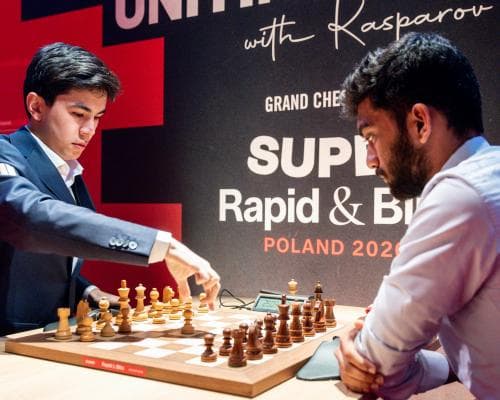
Imagine a board with 64 squares, two kids barely old enough to rent a car, and a pot of money that has Geneva beating out India, the US, and Cyprus for the privilege of hosting them. That's the story of this year's world chess championship — and if you think it's just about pawns and bishops, you're missing the bigger play.
On Tuesday, Fide announced that reigning champion Gukesh Dommaraju, 20, will defend his crown against challenger Javokhir Sindarov, also 20, in Geneva from November 25 to December 15. This isn't just a sporting event. It's the youngest world championship match since 1886, and the financial machinery behind it tells you everything about how elite attention — and the capital that follows — is being rewired for a new generation.
The bidding process was competitive. Multiple countries, including India (home to a chess boom and a tech-fueled billionaire class), the United States, and Cyprus, all threw their hats in the ring. Fide, the game's governing body, ultimately chose Geneva — neutral ground, a city with a long history of hosting high-stakes diplomacy and, not coincidentally, money. The Swiss Chess Federation called it a "landmark moment." They're not wrong. Switzerland last hosted a world championship in 2004, when Vladimir Kramnik beat Peter Leko in Brissago. That was a different era — slower, analog, with a fraction of the global streaming audience.
Here's the wealth angle. The prize fund for this match is expected to be around $1.5 million, but the real money is in the ecosystem around it. Host cities don't just pay for the right to put on a show — they invest in infrastructure, hospitality, and branding. Geneva gets global media exposure for six weeks, a chance to position itself as a hub for intellectual capital, and a direct line to the ultra-wealthy patrons who underwrite chess at this level. Think of it as a live-action alternative to a Davos panel: quieter, sharper, and with fewer canapés.
Sindarov earned his shot by winning the Candidates tournament in Cyprus with a round to spare — six wins, seven draws, zero losses. He's a Grandmaster from Uzbekistan, a country that has quietly become a chess powerhouse. Gukesh, meanwhile, is India's reigning champion, a symbol of the country's rising global footprint in everything from tech to talent. Both are 20. Both represent a generational shift that investors in human capital — venture capitalists, family offices, even sovereign wealth funds — are starting to track. Chess is no longer a dusty hobby. It's a data-rich sport with a massive online audience, and the players are becoming brand assets.
What does this mean for markets? On the surface, not much. But look closer. The bidding war for this match mirrors what's happening in other prestige assets: Formula 1 races, art fairs, even esports tournaments. Host cities are willing to pay for attention, and the wealthy are willing to pay for access. Geneva's win here is a signal that intellectual competition — the kind that requires no stadium, just a table and two minds — is being valued like a cultural commodity. For family offices and private investors, the lesson is simple: follow the talent, and follow the cities that chase it.
The match itself will be a best-of-14-games affair, with millions watching online. The global chess audience has exploded since the pandemic, driven by streaming platforms like Chess.com and Twitch. That audience skews young, affluent, and global — exactly the demographic that luxury brands, wealth managers, and tech companies want to reach. Don't be surprised if you see a Swiss watchmaker or a Geneva-based private bank sponsoring a game or two.
For wealth builders, the takeaway is this: the world's smartest capital is being deployed not just into stocks and real estate, but into moments of concentrated human brilliance. Geneva is betting that a chess match between two 20-year-olds will draw the kind of crowd that also buys art, invests in startups, and thinks about compound interest. They're probably right. The game is the same. The stakes have never been higher.