The $2.2 Billion Presidency: How Crypto Courted Power and Rewrote the Rules of Wealth
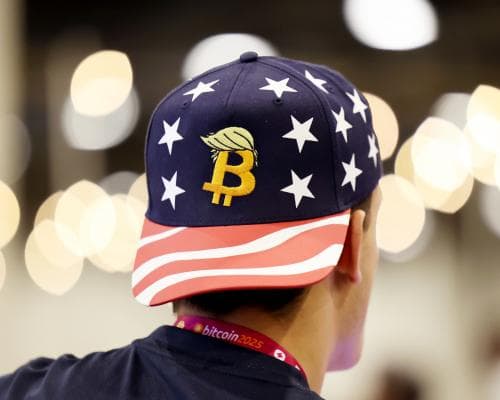
Imagine waking up to find that the most powerful man in the world has quietly added $2.2 billion to his personal fortune—in a single year. Not through a family trust, not through a blind portfolio managed by distant bankers, but through a series of deals so transparent they read like a masterclass in leverage. This is not a conspiracy theory. It is the documented reality of Donald Trump’s first year back in office, and it has utterly redefined what it means to hold power at the intersection of state and capital.
Let’s be clear: the numbers are staggering. Of that $2.2 billion, more than half—$1.2 billion—came directly from cryptocurrency. Not from stocks, not from real estate, not from the usual levers of dynastic wealth. From crypto. The same asset class that, just a few years ago, the president himself called a “scam.” But then the industry poured hundreds of millions into his campaign, and something shifted. He launched World Liberty Financial, sold 49% of it to a UAE-linked investment firm for $500 million, and minted his own memecoin, $Trump, which netted him over $600 million while costing loyal investors nearly $4 billion. The message was unmistakable: if you want to play at the highest table, you don’t just buy influence—you become the influence.
What followed was a regulatory revolution disguised as policy. The Securities and Exchange Commission’s crypto-enforcement unit was gutted. Investigations into money laundering and fraud were quietly shelved. And then came the Genius Act, a bipartisan bill aggressively promoted by the White House that effectively wove crypto into the fabric of the formal banking system. Now, banks, non-banks, even retailers like Walmart can issue their own stablecoins—cryptocurrencies pegged at a fixed value of $1, which until recently were used almost exclusively for trading riskier assets. The guardrails are gone. The moat has been filled. And for the ultra-wealthy, this changes everything.
Here is where the story gets personal for anyone with serious capital. Until now, crypto lived in a kind of aristocratic wilderness—wildly volatile, lightly regulated, and best suited for those who could afford to lose a fortune. But with the Genius Act, stablecoins become a bridge between the old world of sovereign currency and the new world of programmable money. For a family office or a high-net-worth individual, this means liquidity that moves at the speed of code. It means the ability to park millions in a dollar-pegged asset that can be transferred, collateralized, or deployed across borders without a single phone call to a banker. It also means risk. Because when a sitting president can personally profit from the same regulatory shift that opens the door for Walmart to issue its own digital dollar, the line between public trust and private gain becomes vanishingly thin.
What does this signal about wealth and taste in 2025? For one, it signals that the old rules of discretion—the blind trusts, the carefully managed conflicts—are no longer the default. The new playbook rewards those who can move fast, who understand that regulation is not a constraint but a negotiation. The ultra-wealthy who have already placed bets on crypto infrastructure—the custody providers, the stablecoin issuers, the compliance platforms—are now sitting on assets that are suddenly, officially, mainstream. The rest are watching, wondering if the next great wealth transfer will happen in code rather than in court.
Looking forward, the question is not whether crypto will survive this normalization—it already has. The question is who will control the rails. The Genius Act has turned every major bank and retailer into a potential issuer of digital currency. That means the real prize is not the coin itself, but the network. For those with the foresight to build or buy into the infrastructure—the settlement layers, the identity protocols, the regulatory arbitrage engines—the next decade could look like the early days of the internet, but with far more zeros attached. For everyone else, the lesson is simple: when power and money converge so openly, the only safe move is to understand the game before it changes again.
The Experience
For a private briefing on how stablecoin regulation and digital asset infrastructure can be integrated into your family office strategy, contact our concierge desk for a curated introduction to leading crypto-custody and wealth-platform partners.