The $4 Billion Lesson: BP’s New Boss Plays the Long Game, and the North Sea Is Just a Memory
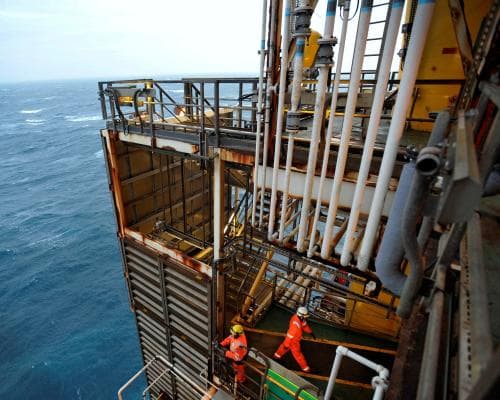
There’s a moment in every great fortune when the patriarch looks at the family silver—the ancestral estate, the vintage yacht, the shares in a fading industrial—and decides it’s not heritage, it’s ballast. That moment has arrived for BP, and its new-ish chief executive, Meg O’Neill, is wielding the gavel with the cool precision of a Sotheby’s auctioneer. Last week, she put the company’s 60-year-old North Sea oil and gas business on the block, a sprawling relic of British industrial might that once fueled empires and paid for wars. Her rationale? “It just doesn’t compete.” No sentiment. No history. Just a cold, hard look at the balance sheet. For the ultra-wealthy, this is a masterclass in portfolio pruning—know when to hold, know when to fold, and never fall in love with an asset that’s dragging down your yield.
The same unsentimental scalpel has now turned to Archaea, the US biogas business that BP bought for $4 billion in 2022, when the company was still chasing a green halo under ousted boss Bernard Looney. Back then, Archaea—which taps methane from landfill sites—was hailed as a “fantastic fast-growing business” that would add “distinctive value” and support net-zero ambitions. Four years later, after a hefty write-down, it’s judged surplus to requirements, too capital-hungry for a group in debt-reduction mode. O’Neill is clearing the decks with a speed that would make a private equity shark blush. The solar unit Lightsource is close to being sold. A major refinery in Gelsenkirchen, Germany, is gone. Austrian fuel stations? Sold. The lubricants business Castrol? Its disposal was already underway before O’Neill arrived. The message is unmistakable: BP is no longer a sprawling conglomerate; it’s a lean, focused cash machine.
And what a machine it is. By the end of the year, BP expects to have net debt below $18 billion—a full 12 months ahead of schedule. That’s not just good management; that’s the kind of financial discipline that makes family offices take notes. The surge in oil and gas profits, fueled by geopolitical tensions and the Iran war, has been a tailwind, but O’Neill’s ruthlessness is the real story. BP’s profits more than doubled to $5.73 billion in the second quarter, with oil averaging $94 a barrel—up from $67 in the first. Refining margins became a license to print money, and BP, with its massive downstream operations, was at the front of the line. Campaign groups are outraged, of course, but City analysts are unsurprised. This is what happens when you put a straight-talking engineer in charge and tell her to fix the ship.
The craftsmanship angle here isn’t in the product—it’s in the decision-making. O’Neill is treating BP’s portfolio like a bespoke watchmaker treating a movement: each gear must earn its place, or it’s out. The North Sea assets, with their aging platforms and high operating costs, are like a vintage Patek that needs a new mainspring every year—beautiful, but a money pit. Archaea, with its capital-hungry landfill projects, is a yacht that’s forever in dry dock. Castrol, once a trusted name in every garage, is a classic car that’s lost its collector’s appeal. The new BP is a stripped-down supercar: no leather, no wood trim, just a screaming engine and a clear road ahead. For the wealthy, this is a reminder that true luxury is not about accumulation—it’s about curation. It’s the art of knowing what to let go.
What does this signal about wealth and taste in 2025? It signals that the era of virtue-signaling investments is over. The green-tinged era of Looney, when sustainability was a buzzword and every acquisition had to support a net-zero narrative, has been replaced by a hard-nosed pragmatism. O’Neill’s advice to Andy Burnham, the new prime minister, was blunt: “The UK gets 75% of its energy from fossil fuels today, so that’s oil and natural gas.” She’s not apologizing for it; she’s stating a fact. For the ultra-wealthy, this is a shift from impact investing back to value investing—where returns matter more than rhetoric. The luxury market is following suit: the buyers of tomorrow want assets that perform, not just assets that look good in a boardroom presentation.
Looking ahead, the next question from investors is when BP will restart share buy-backs, which were suspended in February when the balance sheet was under strain. O’Neill dodged the question on Tuesday, but shareholders expect an answer soon-ish from a chief executive who doesn’t mince words. When it comes, it will be another signal that BP is back in the game—leaner, meaner, and ready to return capital to those who’ve stuck with it through the muddle. For the rest of us, the lesson is simple: in a world of volatility, the ultimate luxury is liquidity. And O’Neill is proving that sometimes, the most valuable asset you can own is the one you’re willing to sell.
The Experience
To channel O’Neill’s unsentimental approach to your own portfolio, consider a private consultation with a wealth strategist who specializes in energy and infrastructure divestitures. Or, for a more tangible taste of the high-stakes world, book a seat at the next energy investment summit in London.