The New Couture: Inside Liberty’s Fabric Emporium for the Discerning Stitch
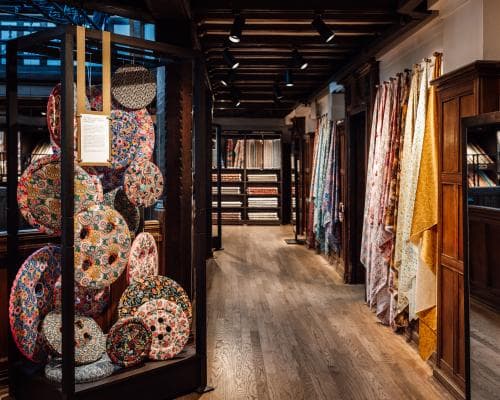
It begins with a bolt of silk taffeta, unfurled like a secret. At Liberty, that bolt might be a William Morris print, a Japanese indigo, or a hand-blocked floral from a mill that has supplied royalty for centuries. The department store, which opened its Tudor-revival doors near Oxford Circus in 1924, has just done something quietly radical: it has more than doubled its fabrics section to 4,630 square feet, housing over 2,500 textiles. This is not a nostalgia play. It is a bet on a new kind of luxury—one that trades fast fashion for the slow, deliberate pleasure of making something with your own hands.
Why does this matter for the collector who already owns a wardrobe of bespoke suits and custom gowns? Because the act of selecting fabric, of commissioning a tailor, of watching a garment take shape from a single piece of cloth, is the ultimate hedge against the homogenized. Liberty’s retail managing director, Lydia King, told me that fabric sales rose 11% last year, and the store expects similar growth as wealthy overseas shoppers—particularly from the Middle East and Asia—stock up on luxury textiles to be tailored into bespoke outfits in their home countries. “More and more department stores have moved away from haberdashery and fabric,” King said, “but we want to celebrate and elevate the customer experience.” Elevation, in this case, means 17 specialist salespeople who can guide a customer from a bolt of Liberty’s iconic Tana Lawn cotton to a silk velvet perfect for an evening cape.
The craftsmanship here is not just in the cloth but in the knowledge. Liberty’s new department is 140% larger than its predecessor, and this autumn the store will expand its haberdashery area with workshops for crafters—quilting, crochet, and sewing classes that mirror the social media boom on TikTok and Instagram, as well as the cult appeal of shows like *The Great British Sewing Bee*. For the ultra-wealthy, this is a quiet revolution. A 13-year-old with her first sewing machine might join the same queue as a Dubai-based socialite who buys a bolt of Liberty’s signature floral to be made into a kaftan. The price of a single yard of Liberty’s Tana Lawn? Around £30 to £50 per metre. But the real value is in the scarcity: many of these prints are exclusive to Liberty, sourced from mills that have been weaving for generations.
In the collector context, this is a signal shift. The same people who chase Hermès Birkin bags and vintage Rolex watches are now turning to fabric as a tangible, personal asset. The trend for buying secondhand clothing—which often requires alteration—has dovetailed with a desire for self-sufficiency and authenticity. About a fifth of Britons sew, rising to 30% among women, but among the global elite, the number is higher because bespoke tailoring is a marker of taste. Liberty’s move is a response to a market that craves not just objects but the story of their making. Online marketplaces like Etsy and eBay have built outlets for handmade goods, but Liberty offers something more rarefied: the physical experience of touching a cloth that has been woven, dyed, and printed with an artistry that cannot be replicated by a machine.
What this signals about luxury taste is a return to the bespoke. The ultra-wealthy are no longer satisfied with off-the-rack, even if that rack is in a Milanese atelier. They want the raw material, the raw act of creation. Liberty’s fabric department is a place where a client can commission a dress that will take weeks to finish, where the choice of thread and button is as important as the cut. It is a rejection of the disposable in favor of the durable, the handmade, the heirloom. As King noted, the customer base spans “a really broad age range from a customer of 13 who has just got her first sewing machine to an international community making things for themselves.” That community now includes the one percent, who see in a bolt of Liberty fabric a canvas for their own vision.
Looking forward, Liberty’s expansion is a harbinger. As the fashion world grapples with sustainability and the desire for meaning, the fabric department becomes a sanctuary. The workshops this autumn will teach skills that were once passed down through generations: how to set a sleeve, how to match a pattern, how to finish a hem. For the collector, this is not a hobby—it is an investment in provenance. The next time you see a gown at a gala, ask not who designed it, but who chose the cloth. At Liberty, the answer is you.