The Privacy Paradox: Why the Ultra-Wealthy Are Reconsidering Meta's Smart Glasses
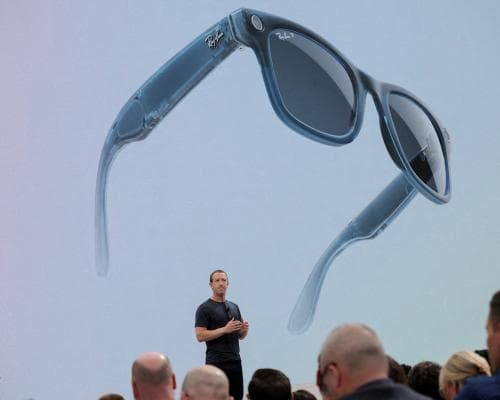
It was a perfect summer moment: the roar of the Tour de France finale, the hiss of a professional espresso machine, and Oliver Hooson, a man who knows his flat whites, capturing it all with a pair of sleek, seemingly innocuous glasses. But within hours of posting the video, the comments section turned into a digital lynch mob. “PERV.” “Out here pushing creep glasses.” Hooson, an interior design and cycling influencer with a devoted following of 224,000, had committed the ultimate social sin—not in what he filmed, but in how he filmed it. He had used Meta’s smart glasses, a device that has been branded with the most damaging epithet in the modern lexicon: “pervert glasses.”
For the ultra-wealthy, privacy is the new currency. And in a single product launch, Meta has managed to create a gadget that screams status while simultaneously stripping away the very discretion that defines the upper echelons of society. The glasses—which can record video with a subtle glance—were meant to be the next must-have accessory, a seamless blend of technology and fashion. Instead, they have ignited a firestorm of backlash, with concerns about surveillance and consent reaching a fever pitch. The fear is not unfounded: these glasses have been used to film women without their knowledge, often by self-proclaimed “pickup artists” who then post disparaging comments online. The result? A product that was designed to make life easier has become a symbol of invasion, a tool for the morally bankrupt.
Hooson’s experience is a cautionary tale. He received the glasses at a PR event, drawn to their potential to capture the artistry of high-end chefs and the beauty of a well-crafted espresso. “It was stupid, poetic and beautiful to watch,” he says of the videos he admired. But his innocent curiosity was met with a torrent of abuse, and he lost dozens of followers in the aftermath. “It definitely caught me off guard,” he admits. “It was a real ignorant move.” He now understands the vitriol, even supporting it: “People do not need any more of their privacy stripped away. I’m fully in support of that.” His wife, who predicted the backlash, wisely refrained from adding to the pile-on, but the message was clear: this technology, in the wrong hands, is a weapon.
The irony is that the glasses themselves are a marvel of engineering. They represent the pinnacle of wearable tech, a seamless integration of camera and style that would have been unthinkable a decade ago. But in the world of luxury, craftsmanship and rarity are prized above all else. And here, Meta has failed. The glasses are not rare; they are ubiquitous. They are not crafted for a specific elite; they are mass-produced for the masses. And their very function—recording without consent—is a violation of the unspoken codes that govern high society. When Kylie Jenner collaborated with Meta to launch her own pair, it was a desperate attempt to inject glamour into a product that had become toxic. But even the Kardashian seal of approval couldn’t save it. Influencers who promoted the glasses were forced to apologize, with Rida Tharana, a creator with 1.6 million followers, publicly “taking accountability” for her role in the campaign. The message was clear: this is not a status symbol; it is a scarlet letter.
What does this backlash signal about the luxury market? It signals a shift in values. The ultra-wealthy have always understood that true luxury is about discretion, about the ability to move through the world without being observed. A private jet, a secluded island, a bespoke suit—these are not just possessions; they are shields. And now, the smart glasses have become the antithesis of that. They are a breach in the armor, a crack in the facade. The backlash is not just about privacy; it is about control. The elite want to control their own image, their own narrative. They do not want to be captured at an unflattering angle, or have their private moments broadcast to the world. The glasses represent a loss of that control, and the market is responding accordingly.
Looking forward, the future of wearable tech in the luxury space will be defined by respect for boundaries. The next generation of smart glasses will need to be invisible, not just in design, but in function. They will need to signal their recording capabilities, not hide them. They will need to be tools for the user, not weapons against the unwitting. For now, the “pervert glasses” have become a cautionary tale, a reminder that in the world of the ultra-wealthy, the most valuable commodity is not gold or diamonds, but the simple, unassailable right to be left alone. And that is a lesson no tech giant can afford to ignore.
The Experience
For those who value discretion above all, consider a private consultation with a luxury tech concierge to explore bespoke, privacy-first alternatives that align with your lifestyle.
More in INNOVATION