The Odyssey’s Secret Shore: Why Christopher Nolan Chose Scotland’s Moray Coast for Cinema’s Most Anticipated Epic
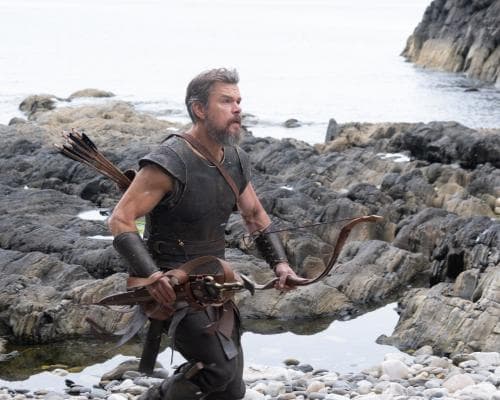
The tide doesn’t just rise here. It rewrites the map. One moment you’re walking on firm, silver sand. The next, rivulets of seawater carve new channels, forcing you inland toward a dark pine forest that smells of salt and resin. There are no crowds. No boardwalks. No signs of the 21st century. Just the hiss of the North Sea and the feeling that you’ve slipped into another age. This is Culbin Sands on Scotland’s Moray coast—a place where a village was swallowed by a sandstorm in a single night in 1694, blamed on a witch’s curse—and it’s where Matt Damon’s Odysseus fights man-eating giants in Christopher Nolan’s adaptation of The Odyssey.
When word leaked last summer that Nolan had chosen this stretch of northeast Scotland as a primary location for his retelling of Homer’s 2,800-year-old epic, the reaction in Hollywood was a blend of surprise and envy. The film’s other settings—Sicily, Morocco, the Peloponnese—are postcard-perfect Mediterranean. But Moray? It’s a coastline that most people, even within Scotland, overlook. Overshadowed by Skye’s jagged peaks and the North Coast 500’s dramatic drives, this 50-mile corridor of shifting dunes, shingle bars, and sandstone skerries has remained a quiet secret. Until now. Nolan, a director famous for guarding his locations like state secrets, chose Moray for its raw, shapeshifting beauty—and for its total absence of the modern world. No tourist crowds. No coastal development. Just the elemental drama of a landscape that looks like it could be anywhere, or any when.
The craftsmanship of this place is not man-made, but it is rare. The dunes at Culbin Sands are among the most dynamic in Europe, sculpted hourly by wind and tide. The beach at Clashach Cove hides a sea cave that locals call the Grin Iron—a shadowy opening in golden sandstone where, according to Moray-based classicist VJ Randle, a “scarier sort of sea-spirit” lives. Randle, author of The Athenian Murders, walked me through a Stygian sea-mist at dawn, pointing out how the cave’s dark mouth evokes Calypso’s home in the epic. “The lore you hear along this coast is worthy of a Homeric epic,” she said. That lore includes tales of sieges, tragedies, and supernatural bargains—stories that cling to the cliffs like barnacles. For a filmmaker who prizes authenticity and physical reality, Moray offered something no CGI can replicate: a landscape that feels haunted by its own mythology.
For the ultra-wealthy, this is a masterclass in how to choose a location that signals both taste and exclusivity. While lesser billionaires flock to Santorini or St. Barts, the truly discerning know that the most covetable experiences are those that remain unwritten. Nolan’s choice of Moray is a quiet declaration: the best things are still hidden. The coast’s lack of infrastructure means that accessing it requires effort—a private helicopter from Inverness, a stay at a discreet estate like the nearby Muckrach Castle, or a guided walk with a local historian who knows where the Grin Iron cave opens at low tide. This is not a place for Instagram influencers. It is for those who understand that true luxury is the ability to stand on a beach, alone, and feel the weight of 3,000 years of storytelling.
What does Moray’s selection tell us about the luxury market? That the value of a place is increasingly measured by its quietness, not its fame. In an era where every corner of the globe has been photographed and geotagged, the rarest commodity is a location that still feels undiscovered. The Moray coast is not a destination you stumble upon. It is a destination you earn. For the billionaires reading this, the lesson is simple: the next great investment isn’t a yacht or a penthouse. It’s a stretch of coastline that no one else knows about—until Nolan puts it on screen.
Looking ahead, Moray will undoubtedly see a surge of interest once The Odyssey releases. But the truly initiated will visit now, before the secret fully escapes. There is a particular magic in walking the same dunes where Damon’s Odysseus clashed with giants, knowing that the sand beneath your feet once buried a village in a single night. The tide will keep shifting the labyrinth. The mist will keep rolling in. And the Grin Iron cave will keep whispering its old, dark stories. That is the kind of wealth that cannot be bought—only experienced.
The Experience
Arrange a private guided tour of the Moray coast with a classicist and a helicopter transfer from Inverness. Contact our travel desk for bespoke access to the film’s key locations.