The Gullah Geechee Diaspora: A Legacy of Movement, Not Isolation
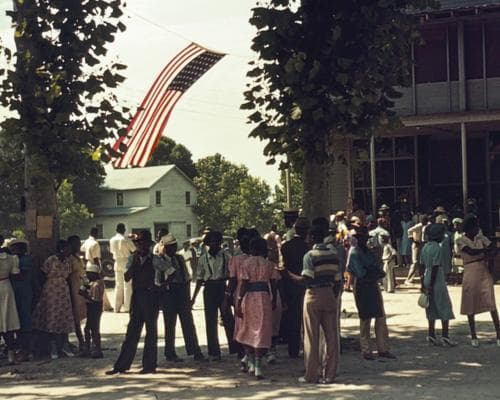
The story of the Gullah Geechee people has long been wrapped in a gauze of romantic isolation. The popular imagination paints them as a living relic—a community of descendants of enslaved Africans, tucked away on the Sea Islands of South Carolina and Georgia, who preserved a language, a cuisine, and a spiritual life untouched by the mainland. It is a compelling narrative, but it is also a lie. A beautiful, seductive, and deeply limiting lie. The truth, as a revelatory new book makes clear, is far more dynamic: the Gullah Geechee did not stay put. They moved. They carried their rice-growing expertise, their rhythmic speech, their healing traditions, and their faith across the American South and into the Caribbean, leaving fingerprints on the very DNA of the nation. For the luxury traveler, this is not merely an academic correction; it is an invitation to see the Lowcountry with new eyes.
The book in question is *Gullah-Geechee Diasporas: Knowledge, Culture, and Black Lowcountry Legacies*, a collection of eight essays edited by Muhammad Fraser-Rahim and Elizabeth J West. It is the kind of work that should sit on the coffee table of every discerning villa on Hilton Head, every private lodge in the Sea Islands. It reframes the Gullah Geechee not as a static curiosity, but as a diasporic force—a people whose influence rippled outward long before the Civil War. The editors, who met a decade ago at a Spoleto Festival talk on the enslaved Muslim scholar Omar ibn Said, have assembled a chorus of voices that trace Gullah language in the Geechee dialects of Texas, their agricultural techniques in the rice fields of Mississippi, and their spiritual practices in the ring shouts of the Caribbean. To read it is to realize that the very notion of a “remote” Gullah Geechee culture is a convenient fiction, one that has for too long denied these communities their full credit as architects of the American South.
What does this mean for the way we travel? Everything. The standard luxury itinerary in Charleston or Savannah offers a polished, sanitized version of the past—historic homes, carriage rides, and mint juleps on verandas. But the real wealth of the region lies in its cultural depth, and that depth is Gullah Geechee to its core. The private chef who sources benne seeds for a dinner on Daufuskie Island is drawing on a West African culinary tradition. The sweetgrass baskets sold at the Charleston City Market are not mere souvenirs; they are direct descendants of the coiled baskets made by enslaved ancestors in Sierra Leone. The spirituals that echo through a private concert at a historic plantation church carry the cadence of the Gullah language. The new book gives the traveler a map to these connections, transforming a simple beach vacation into a journey of intellectual and sensory discovery.
Access to this world is, by its nature, rare. The most profound experiences are not found on a tour bus. They are curated by people like the Gullah Geechee elders who offer private storytelling sessions on St. Helena Island, or the historians who lead small-group walks through the rice fields of the ACE Basin, explaining how the ingenious tidal irrigation systems were a direct import from the Rice Coast of Africa. A truly bespoke trip might include a morning with a seventh-generation basket weaver, a private dinner of purloo and okra soup at a restored praise house, and an evening spent listening to the Gullah spiritual tradition of “shouting” in a wooden church that has stood for two centuries. These are not experiences you can book on a standard website. They require relationships, trust, and a willingness to listen. The price of such a journey is less a number than a commitment—to time, to respect, and to understanding that you are not a spectator, but a guest.
This shift in perspective signals a larger evolution in luxury travel. The ultra-wealthy are no longer satisfied with five-star hotels and Michelin-starred meals alone. They crave authenticity, but more than that, they crave *meaning*. They want to understand the stories beneath the surface, to connect with cultures that have been marginalized, and to do so in a way that is both respectful and enriching. The Gullah Geechee story is a perfect case study: it is a narrative of resilience, creativity, and global influence that has been hiding in plain sight. For the traveler who has been everywhere and done everything, the Lowcountry now offers something truly rare: a chance to discover a hidden America, one that is not frozen in time, but alive, evolving, and finally claiming its rightful place in the story of the nation.
Where do the wealthy go next? They go deeper. They go to the places where the guidebook ends and the conversation begins. They go to the Sea Islands, not for the beaches, but for the stories buried in the sand. They go with a copy of *Gullah-Geechee Diasporas* in their luggage, knowing that the real luxury is not isolation, but connection. And they go with the understanding that the most profound journeys are those that change not just your itinerary, but your mind.