The Last Western Tourist: A Siberian Odyssey on Thin Ice
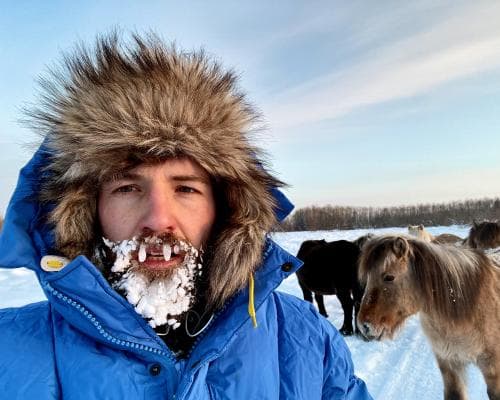
The plan was simple in concept: hike a thousand miles north across the frozen Lena River, then out onto the solid Laptev Sea to the port town of Tiksi, where a flight home to London awaited. The temperature would drop to minus 50 degrees Celsius. The region was populated by wolves, bears, and the ghosts of Soviet gulags. And the country was about to invade Ukraine. For Charlie Walker, a man who has cycled 43,000 miles across three continents and paddled a leaky canoe down the Congo, this was just another Tuesday.
Walker arrived in Yakutsk, the coldest city on Earth, with skis, a sled, a tent, and a comically huge sleeping bag. He was provisioning when the full-scale invasion of Ukraine began. The Foreign Office advised against all travel to Russia. Most Western tourists fled. Walker, however, reasoned that Yakutsk is closer to Anchorage than to Kyiv—and pressed on. He became, by his own reckoning, one of the last Western tourists in Russia, a position he describes as a unique opportunity to record the thoughts and feelings of ordinary Russian people, far from the front lines.
This is not a luxury hotel review. There is no concierge, no turndown service, no infinity pool. The luxury here is of a different order: the luxury of access to a world that is closing, of witnessing history from a front-row seat carved from ice. Walker’s account, On Thin Ice, reads like a dispatch from a planet that is both familiar and alien. He meets reindeer herders, former prisoners, and pensioners who remember Stalin. He drinks tea in huts that have stood for centuries, their windows frosted over, their stoves burning low. The conversations are raw, unfiltered, and achingly human.
The rarity of such a journey cannot be overstated. In an era when the ultra-wealthy fly to private islands or book entire lodges in Patagonia, Walker’s expedition belongs to a different taxonomy of privilege: the privilege of being the last person through the door before it slams shut. This is not a trip you can book online. There is no operator, no price list, no season. It is a journey that exists only because one man decided to walk into a blizzard while the world burned.
What this signals about luxury travel is a quiet but seismic shift. The wealthy, after years of curated safaris and carbon-neutral resorts, are beginning to crave something rawer: not comfort, but consequence. Not a view, but a story. The new luxury is not about escaping the world but walking straight into its most difficult corners—with a good tent, a warm sleeping bag, and the nerve to ask strangers what they really think. Siberia, in all its frozen, wounded majesty, is the ultimate destination for this new breed of traveller.
Where do the wealthy go next? Not to a place, but to a moment. They go to the edge of the map, to the places where the Wi-Fi drops and the certainties dissolve. They go to hear the ice groan under their skis, to sit in a stranger’s kitchen and listen to a story that no one else will ever hear. Charlie Walker went to Siberia and found exactly that. The rest of us can only read about it—and wonder if we have the courage to follow.