The Pied-à-Terre Tax: A Blueprint for the Post-Super-Rich City
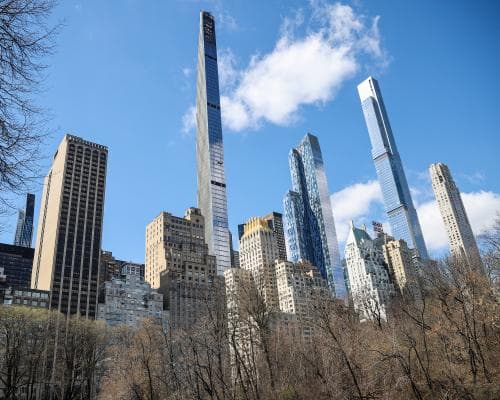
In the rarefied air of Manhattan's ultra-luxury towers, a new kind of disruption is unfolding—one that doesn't involve venture capital or algorithmic breakthroughs but something far more subversive: a tax bill. This spring, 17,000 New Yorkers who own pied-à-terres—those glittering, seldom-used perches for the global elite—received letters from the city informing them they might owe a surcharge under Mayor Zohran Mamdani's new tax. The response from the super-rich has been predictably shrill: invasion of privacy, class warfare, a war on wealth itself. But look closer, and this isn't just a political spat. It's a live experiment in how cities will fund themselves when the old engines of revenue—commercial real estate, congestion pricing, even income taxes—are failing them.
The tax itself is elegantly simple, and brutally targeted. It applies to anyone who owns but doesn't live full-time in a house worth over $5 million or a condo or co-op worth over $1 million. The city has published a tax roll of roughly 960,000 owners who could be liable, with addresses and market values laid bare—a transparency move that has the wealthy fuming about privacy. But the policy's intent is as bold as its implementation: close a budget gap, discourage speculative vacancy, and force the most asset-rich residents to contribute to the city that shelters their wealth, even if they only visit twice a year. For the rest of us, it's a rare glimpse of a government using data to tax the idle rich rather than the working class.
What makes this a genuinely innovative piece of urban policy—not just a redistributive gesture—is that it treats luxury real estate as a form of extractive infrastructure. Empty apartments in New York aren't just wasted space; they're financial instruments that inflate prices and hollow out neighborhoods. By taxing them, Mamdani is effectively imposing a carrying cost on wealth that has long been subsidized by the city's middle class. Emily Eisner, executive director of the left-leaning Fiscal Policy Institute, puts it bluntly: "It places a tax on high earners, people with a lot of resources who can contribute more to the economy." And she dismisses the usual fears—that the rich will flee, that the market will collapse—as overblown. The pied-à-terre crowd isn't leaving; they're just being asked to pay their share.
The backlash, however, reveals a deeper anxiety among the city's billionaire class. The published tax roll—a public list of who owns what and where—feels like an assault on the very privacy that allows the ultra-wealthy to move through the world unnoticed. Some owners have complained they're being targeted even though their property is a primary residence, a bureaucratic glitch that adds to the sense of arbitrary persecution. But experts argue this is the cost of governance in a city with yawning inequality. New York is not alone in this reckoning. London has mulled similar levies on foreign-owned properties; Vancouver has its empty homes tax; and Singapore has long used stamp duties to cool speculative buying. What Mamdani is doing is different: he's making the tax a matter of public record, turning opacity into accountability.
For the innovation economy, this is a signal. The era of the billionaire as untouchable urban patron is ending. Cities are realizing that the ultra-rich consume public goods—parks, security, infrastructure, prestige—without paying their fair share. And as remote work and global capital mobility erode traditional tax bases, local governments are turning to property wealth as the most immovable asset they can capture. The pied-à-terre tax is a test case for this new fiscal logic. If it works—if it raises meaningful revenue without triggering a capital flight—it could become a template for other high-cost cities. If it fails, it will be blamed for everything from a dip in luxury sales to a billionaire's decision to buy a yacht instead of a Fifth Avenue penthouse.
But the deeper story here isn't about taxes. It's about the shifting social contract between cities and their richest residents. For decades, New York has catered to the whims of the global elite—tax breaks for developers, zoning variances for towers that cast shadows on public parks. Mamdani's tax is a blunt instrument, but it's also a moral claim: that wealth should not be allowed to vanish into thin air, or into a portfolio of empty apartments. The city's budget gap is a symptom of a larger disease—the concentration of wealth that leaves municipalities starved for resources. By taxing pied-à-terres, Mamdani is trying to rebalance the scales.
The question now is whether this will spur other cities to act. If New York can tax the super-rich's second homes without sparking a mass exodus, then why not San Francisco, Miami, or Paris? The innovation isn't the tax itself—it's the political courage to make it real. In a world where billionaires are celebrated for disrupting industries, Mamdani is disrupting their comfort. And the data he's published—that dazzling, infuriating list of who owns what—might just be the most powerful tool yet for holding the wealthy accountable. The future of urban finance may not be in AI-driven smart cities or blockchain land registries, but in the simple, radical act of telling the rich: you owe us. The letters are out. The bills are coming. And the rest of the country is watching.