The Oracle Steps Back: Demis Hassabis and the New Power Geometry of AI
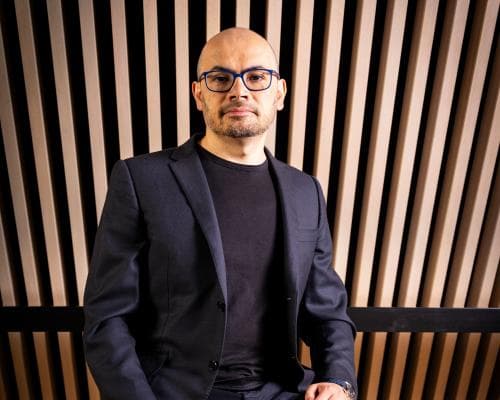
There are moments when the man and the moment are so intertwined that their separation feels like a tear in the fabric of possibility. Think of Steve Jobs handing over the keys to Apple, or Einstein leaving the patent office. Now, Sir Demis Hassabis — the 50-year-old Nobel laureate who taught machines to master Go and then to unravel the secrets of proteins — has quietly stepped back from the daily grind of running Google DeepMind. He's not leaving. He's ascending. But the message is unmistakable: the era of the charismatic founder-CEO as the public face of AI is over. What remains is the chess grandmaster's long game, played from a higher perch.
The announcement, which landed like a well-timed move in a high-stakes match, sees Hassabis relinquish the chief executive title to become chair of DeepMind and chief scientist at Alphabet, its parent. His longtime colleague, the US-based Koray Kavukcuoglu, steps in as senior vice president — notably, not as CEO. It's a structural nuance that speaks volumes. Kavukcuoglu is a brilliant technical mind, but he's no Demis. He's the steady hand, not the inspiring visionary. The shift is a deliberate re-engineering of power, pulling the London-born lab deeper into the gravitational pull of Mountain View. As one former Google executive put it, "The era of DeepMind as an independent actor is over." The days of the lone genius and his band of brilliant misfits, chasing AGI in a north London townhouse, have given way to a corporate colossus where the chess pieces move on a global board.
The timing is exquisite, and not without its ironies. Hassabis himself declared last month that AI had brought the world to a "pivotal moment in human history" — and now he's chosen this exact moment to redefine his own role. It's a classic power move, wrapped in the language of big-picture thinking. He says he wants to focus on the grander strategic questions, the philosophical and existential ones that have always animated him. And who can blame him? He's already secured his legacy: AlphaGo, the system that conquered the ancient game of Go, and AlphaFold, which cracked the 3D structure of proteins and earned him a share of the 2024 Nobel Prize in Chemistry. These are not incremental advances; they are paradigm shifts. With that laurel wreath still fresh, stepping back from the operational trenches is not a retreat — it's a coronation.
But let's not pretend this is purely a victory lap. The competitive landscape has shifted beneath Google's feet. The latest iterations of its flagship Gemini models have ceded ground to rivals like Anthropic and OpenAI, both of which have captured the imagination (and the wallets) of the tech elite. For a man who built his career on being first — first to master Go, first to predict protein folding — watching competitors surge ahead in the generative AI race must sting. The former Google executive called it "galling." And it is. Yet Hassabis's move suggests a deeper strategy: rather than fight the daily battles of model benchmarks and product launches, he's repositioning himself as the elder statesman, the one who can shape the narrative and the regulation, the one who can think beyond the next quarter. It's a role that suits a Nobel laureate far better than a CEO.
Internally, the transition comes amid a simmering of political tensions that would make any boardroom uncomfortable. DeepMind has always been a place of high ideals and intense debate, but recent months have brought discord over the company's work with the Pentagon and the US Department of Homeland Security. A former employee has launched a legal challenge over dismissal related to views on Gaza, and another resigned in protest over military contracts. One insider called Hassabis's departure the "end of an era," lamenting that "the person we were supposed to trust to get the right outcomes for humanity has stepped away." It's a poignant reminder that even the most elevated pursuits are not immune to the messy realities of geopolitics and ethics. For the ultra-wealthy and the ultra-connected, this is the new frontier of influence: not just owning the technology, but shaping its moral compass.
What does this mean for the rest of us, particularly those who move in circles where private jets and rare watches are the norm? It signals a maturation of the AI industry. The era of the founder-god is giving way to a more institutional, distributed form of power. The next phase of AI will be defined not by a single visionary, but by a complex interplay of corporate giants, regulatory bodies, and a handful of elite minds who can navigate both the technical and the political. For investors and collectors of influence, the message is clear: the smart money is on those who can play the long game, who understand that true power lies in shaping the narrative, not just the product. Hassabis has made his move. The question now is who will make the next one.
The Experience
For a front-row seat to this new era, consider an invitation-only briefing at a private AI research summit, or a curated dialogue with leading technologists at a members-only club in London or San Francisco.