A Lion's Second War: Taras, the Ukrainian Cub, Fights a Fungus in Minnesota
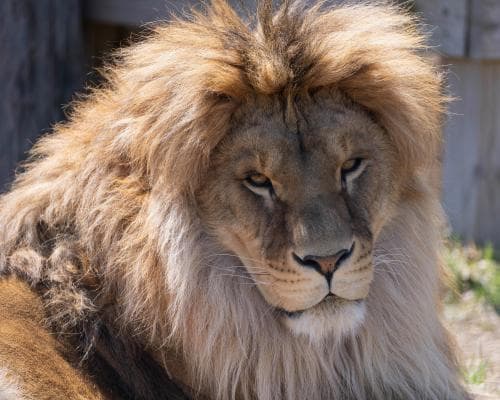
In the quiet pine forests of Sandstone, Minnesota, a lion named Taras is fighting a war no one predicted. He survived the bombs of Odesa and the chaos of Kyiv, only to face a silent, soil-borne enemy that has already claimed lives in American wildlife sanctuaries. Taras, now four, was the vibrant head of his rescued pride until May, when his energy dimmed and his appetite vanished. The diagnosis—blastomycosis, a fungal infection that thrives in damp earth—turned his rescue story into a medical thriller, one that pits the resilience of a war-torn animal against a pathogen that doesn't care about borders.
The saga began in 2022, when Taras and his sisters Lesya and Stefania were found as four-month-old cubs inside a duffel bag at Odesa railway station. An American veterinarian, working under sporadic missile attacks, evacuated them from Kyiv to Poland in a 36-hour land journey, a harrowing escape that captured hearts worldwide. The Wildcat Sanctuary, a secluded private reserve in Minnesota, partnered with the International Fund for Animal Welfare (IFAW) to bring the cubs to safety. They arrived in November 2022, joining Prada, a slightly older cub from Kyiv, in what seemed like a happy ending. But nature had other plans.
Blastomycosis, also known as Gilchrist’s disease, is a non-contagious fungal infection typically contracted from soil. It's rare but often fatal in humans and animals if not caught early. For Taras, the symptoms were subtle—lethargy, loss of appetite—but his keepers knew something was wrong. A 180-mile round trip to a specialist clinic in Minneapolis for an expensive scan and lung biopsy confirmed the worst. The disease had already killed Ginger, a white tiger at a Wisconsin sanctuary in June. The stakes were clear: Taras’s life now depended on aggressive treatment and a team of veterinarians who refused to give up.
The treatment is not for the faint of heart. In the early weeks, Taras received twice-daily injections of extra-strength antifungal medication through an IV line. It was a grueling regimen, but the lion responded. Tammy Thies, the sanctuary’s founder and CEO, says Taras has rejoined his pride, but he’s not out of the woods. He still needs oral medication twice a day, and it could be weeks or months before the staff can be confident the fungus is gone. “He was in a fight for his life,” Thies said, her voice a mix of relief and vigilance. The sanctuary is now a frontline clinic for wildlife’s hidden battles.
This case shines a light on a growing, underappreciated crisis: the health risks faced by animals relocated across continents. As climate change alters soil microbiomes and human encroachment spreads pathogens, diseases like blastomycosis are appearing in new geographies and hosts. Taras’s story is a canary in the coal mine—or rather, a lion in the forest—signaling that wildlife rescue is no longer just about shelter and safety, but about navigating a complex web of emerging infectious threats. The IFAW and Wildcat Sanctuary are pioneers in this space, but they operate on a shoestring budget compared to the scale of the problem.
For the billionaires and philanthropists who fund conservation, Taras’s ordeal is a wake-up call. The cost of a single scan and biopsy—not to mention the specialist care—can run into tens of thousands of dollars, a sum that would be trivial for a tech mogul but is a mountain for a nonprofit. The intersection of animal welfare, global health, and climate change is ripe for innovation. Imagine portable diagnostic tools that can detect fungal spores in soil, or AI-driven monitoring systems that track animal behavior for early signs of illness. The technology exists, but it needs capital and attention.
Taras’s future is uncertain, but his resilience is a testament to the adaptability of life. He has weathered war, displacement, and now a disease that has killed stronger animals. As he roams his Minnesota enclosure, his breath steady on the antifungal meds, he embodies a new kind of survivor—one who teaches us that rescue is only the first chapter. The next chapter is about healing, and it requires the same ingenuity and compassion that brought him across the ocean. For the deep-tech and capital set, the lesson is clear: the next frontier isn’t just space or silicon, but the quiet, desperate fight for life on Earth’s margins. And sometimes, it starts with a lion’s roar.