Why Andrew Lloyd Webber Is Sounding the Alarm on Broadway’s Billion-Dollar Paradox
Imagine pouring $18 million into a glittering, Tony-winning production—only to watch it vanish after five months. That is the reality behind Andrew Lloyd Webber’s Cats: The Jellicle Ball, a revival that earned three Tonys, packed houses, and rapturous four-star reviews, yet still could not survive. Its final curtain falls August 8. For those who treat Broadway as the ultimate cultural trophy—a private box at the Majestic, a post-show supper at Sardi’s—this is not a footnote. It is a tremor.
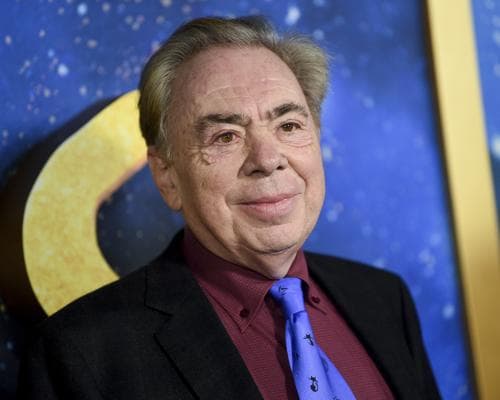
Lloyd Webber, the man who gave us Phantom, Evita, and Cats in its original fur-and-glitter form, took to social media this week with a rare, raw plea. “Broadway is more than a street or a collection of buildings. It is an idea—and one of the greatest cultural ideas America has given us,” he wrote. “That idea is now in dire danger.” He is not crying wolf. The numbers tell a brutal story: since the pandemic, 46 musicals have opened on Broadway at a combined cost of roughly $800 million. Most of them lost money. New shows like Tammy Faye, Boop!, and Smash arrived with massive budgets and splashy buzz, only to close within four months. Even a hit like Cats—grossing around $1 million weekly—could not recoup its investment because the cost of running a Broadway house has become astronomical.
What makes this a story for the ultra-wealthy is not the ticket price. It is the craftsmanship and heritage that money alone cannot save. Broadway is a hand-stitched suit in a world of fast fashion: a fragile ecosystem of set builders, orchestrators, lighting designers, and performers who have spent decades perfecting an art form. Lloyd Webber points out that creators, writers, and directors now often accept minimal royalties just to get their work staged. “Many survive on a fixed weekly fee rather than sharing properly in the success of the work they helped to create,” he says. That is not a sustainable business model. It is a patronage system dressed in sequins. For the collector who owns a first-edition score or a vintage Playbill from 1943, the erosion of that craft is a personal loss.
Yet here is the paradox that should fascinate any student of luxury markets: Broadway just posted a record $1.91 billion season. Audiences are flocking to proven properties—the Lion Kings and Wicked that function like blue-chip stocks. The problem is the pipeline. “Broadway cannot survive creatively or commercially on three old shows,” Lloyd Webber warns. The appetite for the new is there, as evidenced by the critical and audience love for The Jellicle Ball. But the economics have flipped. Investors now count themselves lucky to recover even part of their money. Young creatives cannot live on goodwill. The result is a market that rewards only the safest bets, starving the very innovation that made Broadway a global beacon of status and taste.
Looking ahead, Lloyd Webber is not retreating. His Evita revival, starring Rachel Zegler, is transferring from London’s West End to New York’s Winter Garden Theatre in spring 2027. He also points to Masquerade, a new form of theatrical experience that has run nearly a year in New York. These are experiments in survival. But the question lingers: can Broadway remain the crown jewel of American culture if only the safest shows survive? For the patron who values exclusivity, originality, and the thrill of discovery, the answer matters. Because when the curtain falls on a daring new musical, something more than a show dies. A piece of the idea goes dark.
The Experience
Secure a private box for the final performance of Cats: The Jellicle Ball on August 8 through a VIP concierge service, or book a bespoke behind-the-scenes tour of a Broadway house with a theatrical historian.