The Man Who Said No to $3 Million: How Friedrich Merz Is Defending Democracy Against a New Kind of Foreign Aid
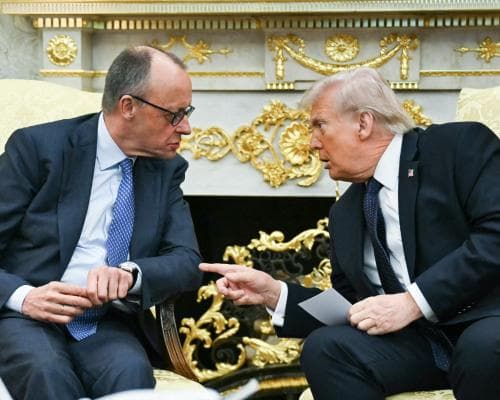
It started with a press conference. A single, sharp sentence that echoed across two continents. “For our part, we do not interfere in American elections,” Friedrich Merz said, standing behind a lectern in Berlin. “Conversely, I do not want the American government or institutions close to the government to interfere in German elections.”
He wasn’t talking about a trade dispute or a diplomatic spat. He was talking about money. Specifically, a new U.S. State Department initiative offering grants of up to $3 million—roughly £2.2 million—to European charities, think tanks, and even individuals. The stated goal: to “address national sovereignty, migration, censorship, and lawfare challenges in line with shared political philosophy, law, and our common Western civilizational heritage.” In plainer terms, it was a checkbook for causes aligned with the MAGA movement, written from Washington to Europe.
Who is Friedrich Merz? He is Germany’s chancellor, a conservative leader from the Christian Democratic Union, and a man who has spent decades in both business and politics. But here, he is something else: a gatekeeper. When the U.S. government began dangling millions of dollars in front of European groups that share its hard-right worldview, Merz didn’t just object—he named the threat. He reminded everyone that it is illegal to finance political parties in Germany from abroad. And he made clear that no amount of American cash would buy influence over German democracy.
The mechanics of this scheme are as troubling as they are vague. The grant announcement, riddled with a typo—“Governmental institution” (sic)—invites applications from “Individuals” and “Governmental institution” without defining what either means. Former U.S. officials say this ambiguity is intentional. It’s part of a months-long effort to repurpose government funds to support far-right groups and potentially even political parties in Europe. The money, in theory, could flow to anyone: a think tank in Warsaw, a blogger in Budapest, a campaign in Berlin.
Merz’s response is not just political—it is philanthropic in the truest sense. Philanthropy, at its core, is about the wise use of private resources for the public good. Merz is using his platform, his moral authority, and the law itself to protect the public good of free and fair elections. He is not writing a check; he is drawing a line. And in doing so, he is reminding the world that the most powerful gift a leader can give is the courage to say no.
The broader impact is still unfolding. Germany’s state elections in September will be the first real test. If Merz’s stance holds, it could set a precedent for other European nations facing similar overtures. It could also force a reckoning in Washington about the limits of foreign aid as a tool of ideological influence. For now, his message is simple: democracy is not for sale. Not for $3 million. Not for any price.
This is a different kind of giving—one that doesn’t make headlines in the philanthropy pages, but should. It is the giving of integrity, of backbone, of a leader who understands that the greatest gift to his people is not money, but freedom from manipulation. In a world awash in dark money and shadowy influence, Friedrich Merz has offered something rare: a clear, bright line.