The Vice-Chancellor Who Fights for the Arts — and Knows Their Power Better Than Most
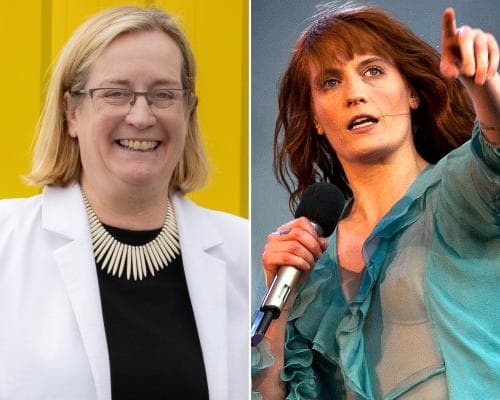
When your daughter is Florence Welch — the flame-haired, ethereal frontwoman of Florence + the Machine — you might expect family conversations to revolve around tour schedules, album drops, or Grammys. But Professor Evelyn Welch, vice-chancellor of the University of Bristol and the singer’s mother, has been talking about something far less glamorous: the quiet, systematic dismantling of arts and humanities education across Britain’s universities. And she is not mincing words. She calls the cuts "absolutely tragic." It is not a phrase you hear often from a university leader — especially one about to chair the Russell Group, the consortium of the UK’s most research-intensive universities. But Welch is not your typical vice-chancellor.
Evelyn Welch is a distinguished academic in her own right — a scholar of Renaissance art and material culture, with a career that spans King’s College London, the University of Sussex, and now Bristol. She has spent decades studying how creativity, history, and critical thinking shape societies. But her most personal argument for the value of the arts comes not from a textbook, but from her own kitchen table. Her eldest daughter, Florence, enrolled in an art foundation course at Camberwell College of Arts before dropping out to pursue music. That foundation year, Welch insists, was not a detour — it was a launchpad. "The rigour, the get-out-of-bed-by-seven-o’clock-every-morning and the feedback on how to control your creativity" gave Florence the discipline to become one of the most distinctive musical voices of her generation. Welch knows that Florence’s trajectory is exceptional. But that is precisely her point: you never know which young person’s creative spark will ignite a cultural phenomenon — or a cure, or a new way of seeing the world.
The scale of the crisis Welch is fighting is staggering. The Guardian recently revealed that thousands of university jobs across the arts, humanities, and social sciences are being slashed. Academic "cold spots" are spreading — entire departments vanishing, courses evaporating, and opportunities closing for the very students who need them most: disadvantaged young people for whom a university education is a ladder out of poverty. The cause is a perfect storm: domestic tuition fees have been frozen for years, losing real value, while international student numbers have plummeted due to tighter visa restrictions. Universities are scrambling to balance budgets. And time and again, the axe falls on arts and humanities — departments that are seen as less "profitable" in the short term, even though they produce the critical thinkers, storytellers, and innovators who drive long-term cultural and economic value.
Welch is not just talking — she is acting. As vice-chancellor of Bristol, she has worked to protect arts and humanities programmes even as financial pressures mount. And as incoming chair of the Russell Group, she will have a powerful platform to advocate for a different approach: one that measures the value of education not just in starting salaries, but in the richness it brings to individuals and to society. She acknowledges the hard numbers — "a degree in fine arts or in drama or creative practice, initially, 18 months after you graduate, does not look like it’s giving you a great return on your investment" — but she refuses to let that be the final word. Her own blended family of six children includes doctors and teachers, careers that are often held up as "safer" bets. Yet it is the artist daughter, she notes wryly, who is "the only child in my family who really is making a very significant amount of money." The point is not that every art student will become a rock star. The point is that a society that starves its creative disciplines starves its own future.
What Welch is doing — by speaking out, by leveraging her institutional power, by telling a deeply personal story — is modeling a different kind of philanthropy. She is not writing a cheque. She is giving her voice, her credibility, and her platform to defend a cause that is often dismissed as frivolous. In doing so, she is challenging the narrow, utilitarian view of education that has taken hold in policy circles. She is arguing, with warmth and authority, that the arts are not a luxury — they are a necessity. They teach discipline, empathy, and the ability to navigate ambiguity. They produce not just artists, but better doctors, better teachers, better leaders. And they give young people from all backgrounds a chance to discover what they are capable of.
The broader impact of Welch’s advocacy could be profound. If the Russell Group — which includes 24 of the UK’s most prestigious universities — adopts a more vocal stance on protecting the arts, it could shift the national conversation. It could pressure the government to rethink tuition fee policy and visa rules. It could encourage other vice-chancellors to resist the temptation to cut "soft" subjects first. And it could send a message to every young person considering an art foundation course: your creativity is not a distraction. It is your strength. Evelyn Welch knows this because she watched it happen in her own home. Now she is fighting to make sure that door stays open for everyone else.