The Optimists of Africa: Why a Quarter of Young People See USAID Cuts as a Chance to Reclaim Their Future
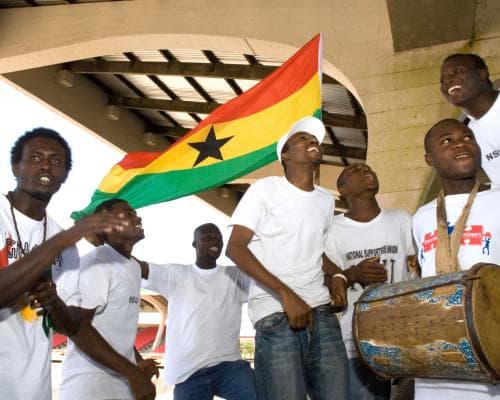
Here’s a number that stops you cold: 25 percent. A quarter of young Africans—nearly half in Ghana and Nigeria—believe that the gutting of USAID, the loss of $60 billion in American assistance, might actually be a good thing. Not because they want people to go hungry. Not because they don’t see the need. But because they are tired of waiting. Tired of foreign powers holding the pen on their future. And tired of leaders who use aid as a crutch instead of a springboard.
This is the finding of the 2025 African Youth Survey, commissioned by the Ichikowitz Family Foundation, a South African philanthropic outfit that has spent years listening to the continent’s loudest, most restless demographic: its young. Ivor Ichikowitz, the foundation’s founder, is an industrialist and philanthropist who believes that the real wealth of Africa isn’t in its minerals—it’s in its median age of 19 and a half years. Seventy percent of sub-Saharan Africa is under 30. By 2030, the continent will hold more than 40 percent of the world’s youth. That is not a statistic. That is a revolution waiting for a stage.
The survey interviewed nearly 5,000 people across 16 countries. It didn’t ask leading questions. It asked honest ones. And what came back surprised even the optimists. In Ghana, 41 percent of 18-to-24-year-olds said the U.S. aid cuts could have a positive impact. In Nigeria, 40 percent. In Liberia, 37 percent. Across the board, roughly one in ten said they weren’t sure. That leaves a majority who are worried—but a vocal, sizeable minority who see the wrecking ball as a wake-up call. As Ichikowitz put it: “What they’re saying is that African governments need to take agency and responsibility for their own reality.”
The mechanics of this kind of philanthropy are unusual. The Ichikowitz Family Foundation doesn’t just write checks for schools or clinics—though it does that too. Its core work is research and advocacy that amplifies African voices in global conversations. This survey, now in its second edition, is designed to be a megaphone. The data is handed to policymakers, journalists, and educators. It’s used to pressure governments to invest in local economies, to build tax bases, to stop outsourcing accountability to Washington or London or Paris. The foundation’s bet is that information is a form of aid that doesn’t create dependency.
The broader impact is already rippling. The Trump administration’s 2025 cuts—eliminating more than 90 percent of USAID contracts—sent shockwaves through the development world. Britain, France, and Germany followed with their own slashes. The U.K. is cutting aid to 0.3 percent of GNI, its lowest ever. The U.N. target is 0.7. In that chaos, the Ichikowitz survey offers a counter-narrative: not all young Africans are victims. Some are pragmatists. Some are even optimists. They see the end of foreign aid as the beginning of something harder—but also more honest.
What does this mean for the culture of giving? It suggests that the next great philanthropic frontier isn’t just about money. It’s about listening. The Ichikowitz Family Foundation is not a billionaire operation—it’s a family foundation with a focused strategy. It doesn’t claim to have all the answers. Instead, it asks the right questions and then gets out of the way. The young people in this survey are telling us that the most powerful gift you can give them is not a handout—it’s a hand off. Let them lead. Let them solve. Let them fail, and let them try again. That is the kind of philanthropy that doesn’t just give hope. It builds a future.