The Robot That Almost Taught High School — and the Community That Said No
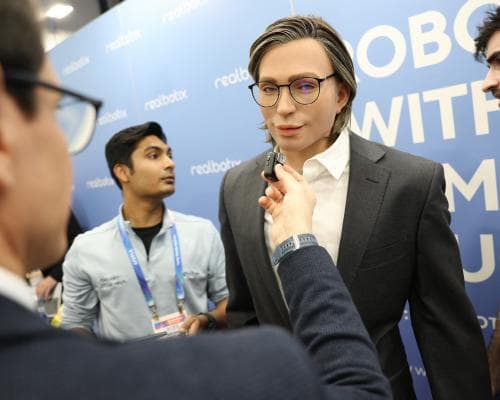
Imagine walking into your high school classroom and finding a teacher with silicone skin, brown hair, and a voice that never gets tired. That was the future Salamanca City Central School District almost bought. A humanoid robot named Sally, built by Toronto-based Realbotix, was set to debut at Salamanca High School for roughly $58,000 — a sleek, unsettling vision of education-as-experiment. But then the backlash came. Not from Luddites. From educators, parents, and a community that asked a simple question: Who is this really for?
The Salamanca district sits on the Seneca Nation reservation in upstate New York, serving a large Native American population. It’s a place where tradition and resilience matter as much as test scores. When the district announced its pilot with Realbotix in June, the plan seemed straightforward: use Sally’s “natural conversation, facial expressions and real-time interaction” to boost student engagement and expose kids to emerging tech. But the company’s past gave many pause. Just two years earlier, Realbotix had acquired Simulacra, a Las Vegas firm that manufactures sex dolls. The connection — however tangential — ignited a firestorm. Melinda Person, president of New York State United Teachers, put it bluntly: “A robot built by a company associated with sex dolls has no business in our classrooms.”
The district’s July 24 announcement walking back the plan was careful, even diplomatic. In a social media post, Salamanca said the pilot was on hold “while we work through enhanced student data privacy agreements with the New York State Education Department and continue engaging with our community and stakeholders.” Translation: They heard the uproar. The reversal wasn’t just about bad optics. It was about sovereignty. For a district on tribal land, data privacy isn’t a checkbox — it’s a treaty obligation. Who owns the data Sally would collect? Could it be shared with law enforcement or advertisers? The Seneca Nation has long fought for control over its children’s education and identity. A robot with a microphone and camera, even one with good intentions, raised red flags that no PR team could smooth over.
What makes this story remarkable isn’t the robot — it’s the people who stopped it. The educators who spoke up weren’t anti-tech. They were pro-kid. They pointed out that the $58,000 price tag could have hired a part-time teaching assistant, funded arts programs, or bought books for the library. The community didn’t just complain; they organized. They asked for transparency, demanded privacy audits, and reminded the district that innovation without consent is just imposition. In an era when tech companies often parachute into under-resourced schools with shiny gadgets, Salamanca’s pushback was a quiet act of philanthropy in reverse — giving the gift of critical thinking.
The broader lesson here is about the culture of giving itself. Philanthropy isn’t always about writing checks. Sometimes it’s about protecting the most vulnerable from well-meaning but poorly vetted experiments. The Salamanca community, by holding the line, modeled a form of generosity that’s rare: the courage to say no. They didn’t reject technology outright — they demanded that it serve students, not the other way around. In doing so, they may have saved other districts from similar missteps. Already, the New York State Education Department is reviewing its data privacy guidelines for AI in classrooms. That’s impact you can’t measure in dollars.
For now, Sally sits in a warehouse somewhere, unplugged and waiting. But the real story isn’t about the robot. It’s about a school district that listened, a union that stood up, and a community that remembered that the most powerful teaching tool isn’t artificial intelligence — it’s human judgment. In the end, Salamanca didn’t just halt a pilot. It taught a master class in ethical philanthropy: start with trust, not tech.
More in PHILANTHROPY