The Last Word: Derryn Hinch, the Journalist Who Turned His Final Act Into a Gift for Free Speech
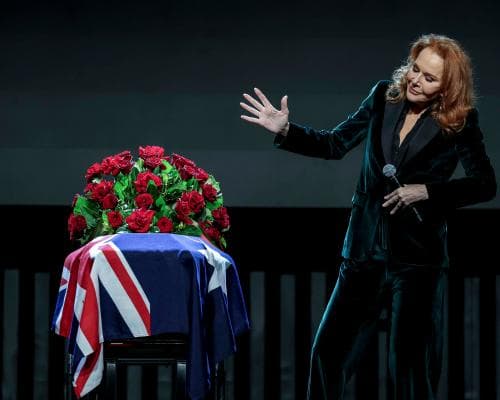
The bagpipes fell silent. The crowd in St Patrick’s Cathedral held its breath. And then, from the pews, came a ripple of laughter — because Derryn Hinch, even in death, had insisted on the last word. A note was passed to the eulogist: 'Don’t be boring. I wasn’t.'
He wasn’t. Derryn Hinch, who died at 79, was a human headline. He wore a red tie so vivid it seemed to shout. He named names in court, went to jail for contempt, and once described himself as a 'journalistic James Bond' — a quip that stuck because it captured something true. He was relentless, theatrical, and utterly convinced that the truth was worth the fight.
But here’s what the headlines didn’t always catch: Hinch was also a philanthropist. Quietly, deliberately, he gave away a significant portion of his wealth — much of it from his media career and later his Senate salary — to causes that mattered to him. Not to buildings or plaques. To people. To young reporters who couldn’t afford to chase a story. To organisations that defended journalists jailed or threatened for doing their jobs.
His most impactful gift came in 2022, when he established the Derryn Hinch Fellowship for Investigative Journalism. The fellowship, funded with a $500,000 bequest, provides two young journalists a year with a full salary, travel budget, and legal protection to pursue long-form investigations. The first fellow, a 26-year-old from Western Australia, spent six months documenting land rights abuses in the Pilbara. Her series led to a parliamentary inquiry.
Hinch worked with the Walkley Foundation to administer the fellowship. The partnership was deliberate: he wanted professional rigour, not sentiment. 'I don’t want sob stories,' he told the foundation’s CEO. 'I want stories that change things.' The foundation selects fellows based on project merit, not need. Hinch’s only condition: the stories must be published in the public interest, not for commercial gain.
The impact has rippled beyond individual investigations. Two of the fellowship’s alumni now train regional journalists in digital safety. Another helped expose a migrant-worker exploitation ring in New South Wales. Hinch’s gift didn’t just fund stories — it funded a culture. A reminder that journalism, at its best, is a public service.
For the cause of press freedom in Australia, Hinch’s philanthropy is a template. He didn’t wait for government grants or corporate sponsors. He used his own platform — and his own money — to build something durable. In a country where media ownership is increasingly concentrated, his fellowship is a small, stubborn counterweight. It says: the fourth estate belongs to the public, not just the billionaires.
What does this mean for the culture of giving? It means that impact isn’t reserved for the ultra-rich. Hinch wasn’t a billionaire. He was a man with a red tie and a conviction that the truth has a price — and that someone should pay it. His legacy is a challenge to every journalist, every reader, every citizen: if you care about a free press, put your money where your mouth is. Or, as Hinch might have said, put it in the story.
More in PHILANTHROPY