The Billion-Dollar Negatives: Why the World’s Rarest Archives Are Hidden in Plain Sight
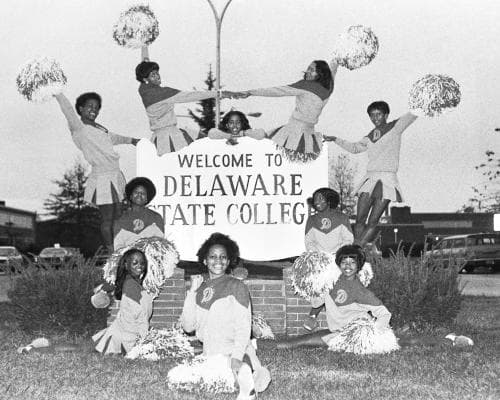
Imagine a vault of one-of-a-kind photographs, each frame a masterwork of American history—and they’ve been sitting in cardboard boxes for decades. Not in a climate-controlled Swiss bunker. Not behind a velvet rope at Sotheby’s. In basements. In storage closets. At risk of turning to dust. That was the reality for eleven Historically Black Colleges and Universities (HBCUs) until a quiet, high-stakes preservation project began rewriting the rules of cultural ownership. Getty Images, in partnership with the Getty family and Stand Together, launched a grant program in 2021 that is doing something the art world rarely sees: giving the institutions full copyright, a steady revenue stream, and a global audience. For anyone who collects, invests, or simply reveres the rare, this is the story of the most undervalued trove of visual heritage in America.
The numbers are modest by hedge-fund standards, but the implications are staggering. Eleven HBCUs have either completed or are in the process of digitizing their archives. Lincoln University—the first degree-granting HBCU—and Jackson State University have already gone a step further, partnering with Ancestry to make their historical documents searchable online. The financial model is as elegant as it is equitable: 50% of licensing fees go directly to the HBCU, 30% funds student scholarships, and 20% is reinvested to digitize the next wave of collections. “We realized there was a lack of content coming through from HBCUs,” Cassandra Illidge, vice-president of partnerships and HBCU programs at Getty Images, explained. “HBCUs hold such a rich history. We wanted to build something unique.” The result is a self-sustaining ecosystem that turns forgotten negatives into both cultural capital and actual capital.
Now, let’s talk about the objects themselves. These are not your grandmother’s faded snapshots. We’re talking about glass-plate negatives from the 1800s. Film reels capturing Reconstruction-era life. Portraits of scholars, activists, and everyday people whose names never made the history books—but whose faces belong in a gallery. The craftsmanship is in the preservation. Getty’s team uses high-resolution scanners and archival-grade digital storage to pull every detail from the original media. One image from Lincoln University shows a group of students in 1890s formalwear, their expressions as sharp as a daguerreotype. Another, from Jackson State, captures a 1920s jazz band mid-note, the brass instruments gleaming. These are not just photographs; they are artifacts of a parallel American narrative, one that has been systematically excluded from the mainstream canon. The price? A single digital license can run from a few hundred to several thousand dollars, depending on rarity and usage. For a collector, owning a print from these archives is like acquiring a lost chapter of history—one that comes with a scholarship attached.
What this signals about wealth and taste is profound. The ultra-wealthy have long chased scarcity: limited-edition Hermès bags, first-edition Hemingway novels, a Patek Philippe with a known provenance. But the true marker of status in 2025 is not what you own—it’s what you save. Funding a digitization grant or licensing a rare image from an HBCU archive is a quiet flex that says, “I understand that culture is the ultimate asset.” It’s the difference between buying a painting at auction and underwriting the museum that houses it. Brenda Allen, president of Lincoln University, put it plainly: “We’re able to monetize or realize some money from images that are really very rare if you’re looking for things that depict African Americans, especially through the centuries. It’s been very helpful in bringing in a few dollars, but also helping to get that history out in the world.” For the discerning patron, this is not charity. It’s curation. It’s legacy.
Looking ahead, the Getty team plans to expand the program to more schools. Ancestry’s involvement hints at a future where these archives become searchable, shoppable, and perhaps even auctionable. Imagine a Sotheby’s sale of limited-edition prints from the HBCU vaults, with a portion of the hammer price funding the next generation of archivists. Or a private dinner where guests can commission a custom research project into a specific era or figure. The infrastructure is being built now. For those who move in the circles of serious collecting, the message is clear: the most valuable images in America are no longer locked in a basement. They’re online, they’re for sale, and they’re backed by a model that turns every purchase into an endowment. That is the kind of investment that compounds in ways no stock ever can.
The Experience
To explore the digitized archives or inquire about licensing a rare print for your private collection, visit the Getty Images HBCU collection portal and contact their partnerships team for a curated consultation.
More in ENTERTAINMENT